
Table of Contents
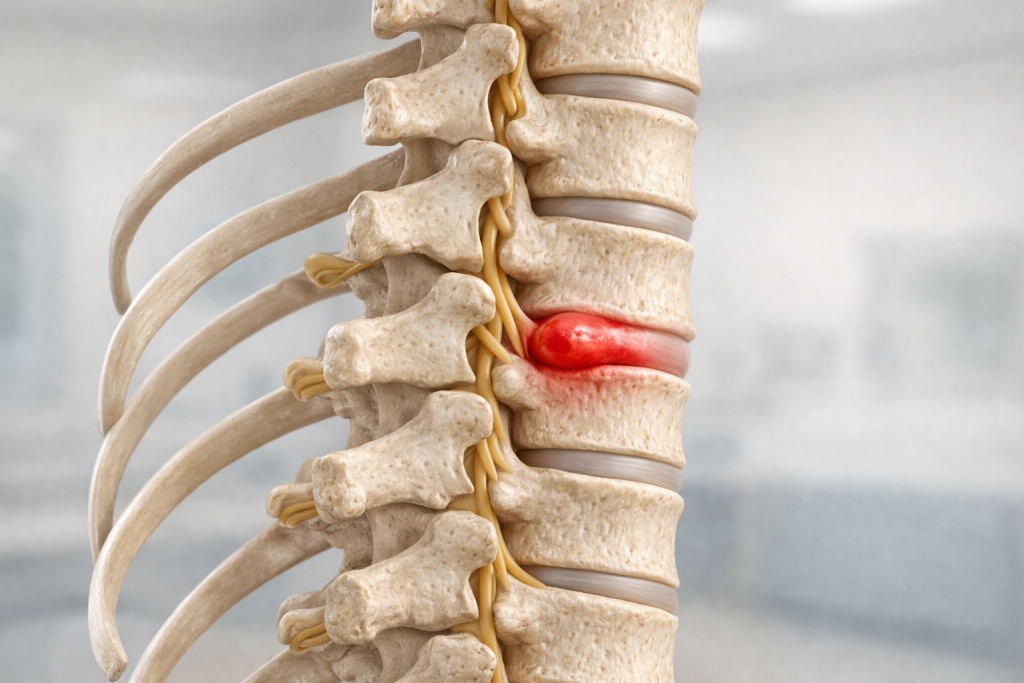
If you’re dealing with persistent back pain, shooting leg pain, or numbness that won’t go away, herniated disc treatment in Laurel may be exactly what you need. A herniated disc occurs when the soft inner core of a spinal disc pushes through its outer layer, pressing on nearby nerves and causing pain that can radiate far from the spine.
Research shows that “lumbar disc herniation affects approximately 1% of the population, 2.8 million people annually” — Shiga, Spine Surgery and Related Research. For many people, this condition disrupts sleep, limits mobility, and makes simple tasks feel impossible.
The multidisciplinary team at RxWellness Spine & Health in Laurel, MD, is here to help you find real, lasting relief through non-surgical, evidence-based care.
Related: Does Insurance Cover a Lower Back Pain Chiropractor Near Me in Laurel?
What Causes a Herniated Disc and When Should You Seek Treatment?
A herniated disc develops through a combination of age-related wear, physical stress, and in some cases sudden injury. Understanding what drives disc herniation helps you recognize warning signs early and seek care before symptoms worsen.
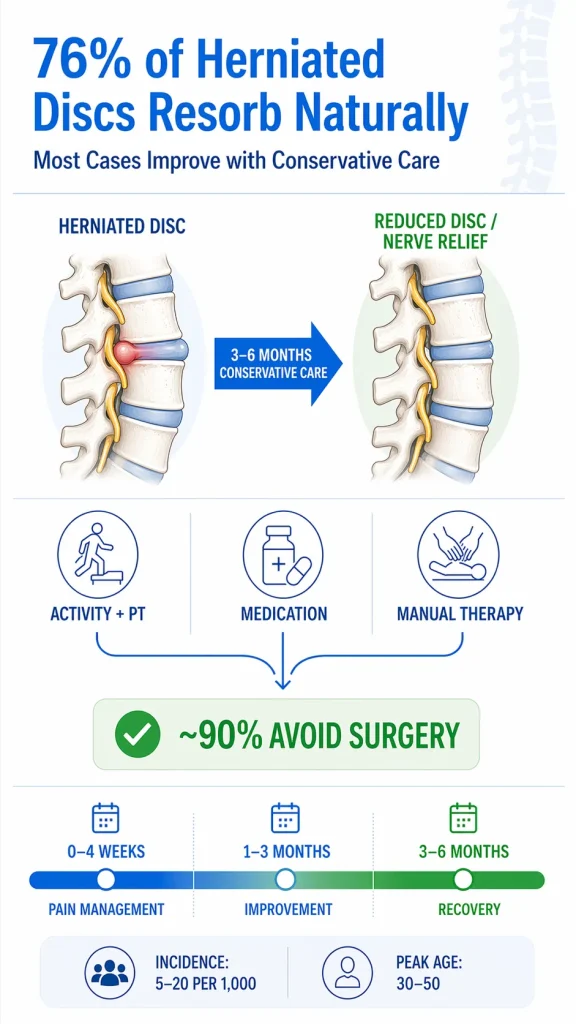
“The incidence of HNP is 5 to 20 cases per 1000 adults annually, predominantly affecting individuals aged 30 to 50, and the ratio of men to women is approximately 2:1… The most commonly affected disk levels are L4 to L5 and L5 to S1, accounting for approximately 95% of cases in adults between 25 and 55 years old” — Stretanski et al., StatPearls 2025.
Age-Related Disc Degeneration
Intervertebral discs naturally lose water and structural integrity with age, reducing their ability to absorb spinal load. Progressive dehydration makes the outer fibrous layer more vulnerable to tearing under pressure.
- Discs begin dehydrating as early as the third decade of life
- Degeneration increases mechanical stress at L4–L5 and L5–S1
- Structural weakening can occur silently before symptoms appear
- Cumulative daily loading accelerates the degenerative process
While degeneration is universal, the degree of nerve involvement determines whether and how much pain you experience.
Trauma, Posture, and Occupational Load
Beyond aging, specific physical stressors can trigger or accelerate disc herniation. Chronic occupational habits pose a significant risk for many working adults in the Laurel area.
- Repeated forward bending and twisting strain the annulus
- Heavy manual lifting concentrates pressure at vulnerable disc levels
- Prolonged sitting compresses the lumbar spine continuously
- Smoking, obesity, and diabetes impair disc nutrition and accelerate breakdown
Postural habits compound over time, which is why many patients trace their first pain episode to an ordinary movement that finally exceeded the disc’s tolerance.
Symptoms That Signal a Problem
Herniated disc symptoms vary depending on which level is affected and the degree of nerve compression. Prompt evaluation prevents minor disc issues from becoming serious conditions.
- Lower back pain radiating into the buttock, thigh, or foot
- Numbness, tingling, or burning sensations along one leg
- Muscle weakness in the leg or difficulty with foot flexion
- Pain that worsens with sitting, bending forward, or coughing
Progressive motor weakness, loss of bladder or bowel control, or signs of cord compression are red flags requiring prompt medical evaluation.
New to RxWellness? Your first visit — including consultation, examination, and treatment — is just $19. Book your new patient appointment today!
What Are the Treatment Options for a Herniated Disc?
Herniated disc treatment in Laurel begins with understanding the full range of available options, from conservative approaches to surgical intervention. The right path depends on symptom severity, duration, and the presence of neurological deficits.
“In the absence of cauda equina syndrome, motor, or other serious neurologic deficits, conservative treatment should be the first line of treatment for LDH… A combination of activity modification, pharmacotherapy, and physical therapy provides good outcomes in most LDH patients” — Yaman et al., World Neurosurgery X 2024.
Rest, Medications, and Activity Modification
Brief activity modification — not complete bed rest — helps prevent further irritation while healing begins. Medications manage acute symptoms but do not address the structural problem driving nerve compression.
- NSAIDs reduce inflammation and provide short-term pain relief
- Muscle relaxants address protective spasm around the affected level
- Short-term activity modification limits movements that worsen symptoms
- Neuropathic agents like gabapentin may manage nerve-related pain
Physical Therapy and Spinal Manipulation
Structured physical therapy and chiropractic spinal manipulation are cornerstones of evidence-based conservative care. The American College of Physicians recommends spinal manipulation as a guideline-supported non-pharmacologic option for both acute and chronic low back pain.
- Targeted spinal adjustments reduce nerve pressure and restore joint mechanics
- Core stabilization exercises protect the disc during daily activities
- Extension-based and postural exercises shift disc material away from nerves
- Spinal manipulation combined with physiotherapy improves outcomes at three months
Injections and Surgical Intervention
When conservative measures provide insufficient relief, epidural steroid injections can reduce nerve root inflammation and support continued rehabilitation. Surgery is reserved for cases where conservative care has failed or a serious neurological compromise is present.
- Epidural steroid injections deliver targeted anti-inflammatory relief around nerve roots
- Microdiscectomy removes the herniated fragment, compressing the nerve
- Minimally invasive endoscopic procedures reduce recovery time versus open surgery
- Less than 10% of herniated disc patients ultimately require surgery
What Are the Benefits of Conservative Herniated Disc Treatment?
The evidence supporting non-surgical treatment for herniated discs in Laurel is compelling, with most patients experiencing meaningful improvement — and many avoiding surgery entirely. “The percentage of NP spontaneous resorption after conservative treatment was 76.6% (1684/2199), ranging from 20% to 96.2%… The resorption process occurred mainly within 3-6 months of conservative treatment” — Xie et al., Orthopedic Reviews 2024.
High Rates of Spontaneous Improvement
The body has a remarkable capacity to resorb disc material on its own. Research consistently shows that a large majority of patients improve substantially with conservative care alone.
- More than 85% of acute herniated disc symptoms resolve within 8–12 weeks
- Spontaneous resorption occurs most reliably within the first 3–6 months
- Extruded and sequestrated herniations show the highest resorption rates
- Improvement in leg pain often precedes full resolution of back pain
Avoiding Surgery and Its Risks
A well-executed conservative program helps many patients avoid the operating room while reducing exposure to complications that can follow discectomy.
- Recurrence after discectomy ranges from 0% to 14% in published studies
- Failed back surgery syndrome can produce new or persistent pain post-operatively
- Epidural scarring and adjacent segment degeneration are recognized surgical complications
- Conservative care preserves surgical options while allowing natural healing to proceed
Restored Function and Long-Term Stability
The goal of herniated disc treatment in Laurel extends beyond pain relief to restoring the strength and postural control that protect the spine from future episodes.
- Improved core stability reduces mechanical load on vulnerable disc levels
- Restored range of motion allows return to work, exercise, and daily activities
- Patient education on posture and ergonomics reduces recurrence risk
- Structured rehabilitation maintains gains achieved during active treatment
If you’re ready to find lasting relief from your herniated disc in Laurel, our team at RxWellness is here to help. Call (301) 888-8947 to schedule your consultation today.
What Should You Expect During Your First Visit for a Herniated Disc?
Walking into your first herniated disc appointment at RxWellness Laurel, you don’t need a prior diagnosis or imaging — just a clear description of your symptoms. The initial visit gives your care team a complete picture of your condition so that treatment can start on a solid foundation.
Consultation and Neurological Assessment
Your first appointment begins with a one-on-one consultation followed by a complete neurological and orthopedic examination. This assessment shapes every element of your care plan.
- Health history review covering onset, duration, and symptom progression
- Neurological testing of sensation, reflexes, and motor strength
- Orthopedic provocative tests, including straight-leg raise and Spurling’s
- Postural and physical assessment to identify biomechanical contributors
Diagnostic Imaging and Findings
When imaging is clinically indicated, RxWellness has on-site digital X-ray technology available. Your doctor will determine whether advanced imaging is warranted based on examination findings.
- X-rays assess bony alignment, disc space height, and postural patterns
- MRI provides the clearest visualization of herniated disc material and nerve involvement
- Imaging results are reviewed with you on the same visit when available
- Clinical findings and imaging together inform your personalized care plan
Your First Treatment Session
At the end of your initial visit, you’ll receive your first treatment before leaving the office. Your full care plan is presented at your second visit.
- Spinal adjustments address joint restriction and reduce nerve pressure
- Soft tissue work prepares the muscles surrounding the affected segment
- Flexion-distraction techniques may be introduced for disc-specific care
- Post-treatment guidance helps you manage symptoms between visits
Is Conservative Herniated Disc Treatment in Laurel Right for You?
Not every herniated disc requires the same approach, and candidacy for specific treatment methods depends on your symptom pattern, duration, and neurological involvement. The team at RxWellness Laurel conducts a thorough assessment before recommending any course of care.
Who Responds Best to Chiropractic Care
Chiropractic spinal manipulation is most effective in a well-defined patient population. Research shows that many patients with MRI-confirmed herniated discs, including those with endplate changes, report substantial pain and disability improvement following spinal manipulation.
- Adults with subacute or chronic lumbar radiculopathy respond well to manipulation
- Patients without significant motor deficits or cauda equina signs are ideal candidates
- Those with MRI-confirmed disc herniation — including with Modic changes — show meaningful improvement
- Individuals who have not yet pursued structured conservative care are strong candidates
Medical Contraindications to Know
Certain presentations require specialist evaluation before conservative treatment begins. Your doctor at RxWellness Laurel screens for all contraindications during the initial examination.
- Cauda equina syndrome — involving bladder, bowel, or saddle sensory loss — requires emergency surgical referral
- Significant progressive motor weakness may warrant imaging and specialist co-management
- Signs of cervical myelopathy call for caution around high-velocity neck manipulation
- Active infection, tumor, or fracture at the symptomatic level is an absolute contraindication
When Surgery Becomes Necessary
Surgery is a valuable option for patients who don’t improve or who present with urgent neurological findings. For the majority of herniated disc patients in Laurel, it remains a last resort.
- Failure to improve after 6–12 weeks of high-quality conservative care warrants reassessment
- Progressive motor weakness or worsening neurological deficit is a surgical indication
- Cauda equina syndrome requires immediate surgical decompression
- Persistent, function-limiting symptoms despite appropriate non-surgical management
How Long Does Herniated Disc Treatment in Laurel Take to Work?
Recovery from a herniated disc unfolds in phases, and meaningful progress typically appears well before full resolution. “Spinal manipulation improves the results of physiotherapy over a period of 3 months for patients with subacute or chronic lumbar radiculopathy” — Ghasabmahaleh et al., American Journal of Medicine 2021.
Short-Term Relief in the First Weeks
Most patients notice meaningful improvement within the first two to four weeks of consistent herniated disc treatment. Initial care focuses on reducing inflammation, relieving nerve pressure, and restoring basic spinal mobility.
- Pain intensity typically decreases within the first several visits
- Leg pain often responds faster than axial back pain in the early phase
- Visit frequency is higher during this stage to build treatment momentum
- At-home guidance and activity modification support progress between sessions
Progress Through the Corrective Phase
Once acute symptoms stabilize, treatment shifts toward correcting the structural and biomechanical factors that led to the herniation. This phase typically spans several weeks to a few months, depending on severity.
- Visit frequency decreases as strength and stability improve
- Active rehabilitation exercises build core support around the affected spinal level
- Postural correction reduces chronic mechanical loading on vulnerable discs
- Range of motion and functional capacity continue to improve progressively
Maintenance and Long-Term Disc Health
After active treatment concludes, ongoing maintenance and self-management strategies reduce the likelihood of recurrence. Research identifies recurrence as a recognized risk, underscoring the need for long-term disc health as an active goal.
- Periodic chiropractic check-ins identify new mechanical stressors early
- Core strengthening and isometric programs reduce recurrence risk
- Ergonomic modifications protect against cumulative spinal load at work and at home
- Maintaining a healthy weight and avoiding smoking support disc nutrition
Related: How Do You Know If Your Lower Back Pain in Laurel Is Serious?
Why Choose RxWellness Spine & Health in Laurel, MD
RxWellness Spine & Health brings a multidisciplinary approach to herniated disc care in Laurel, MD, combining evidence-based chiropractic techniques with a clinical team built to address the full complexity of spinal pain.
- Ranked #1,523 on the 2025 Inc. 5000 Fastest-Growing Companies list
- Ranked #45 on the 2025 Inc. Regionals Mid-Atlantic list
- 150,000+ patients treated across 12 Virginia and Maryland locations
- 7,500+ five-star reviews from patients across our network
- Board-certified chiropractors and a multidisciplinary clinical team
- Same-day appointments available for new patients
- Accepts Aetna, BCBS, CareFirst, Cigna, FSBP, GEHA, Johns Hopkins EHP, Medicare, and UHC
- Comprehensive personal injury support for auto accident and workers’ compensation cases
The RxWellness Three-Phase Care Model
- Relief Care: Reduce pain and inflammation through targeted adjustments and hands-on therapy
- Corrective Care: Address underlying structural dysfunction and rebuild spinal stability
- Wellness Care: Maintain progress and prevent recurrence through ongoing support and education
Herniated Disc Treatment Approaches at RxWellness Laurel
The RxWellness Laurel team integrates several proven modalities to create a comprehensive herniated disc treatment plan tailored to your symptoms, disc level, and recovery goals.
Chiropractic Adjustments
Chiropractic spinal manipulation is the primary conservative treatment for herniated disc pain, restoring proper joint mechanics and reducing nerve irritation at the affected disc level.
- Reduces nerve compression by correcting spinal joint restriction and misalignment
- High-velocity, low-amplitude techniques are effective in MRI-confirmed herniation cases
- Addresses the full kinetic chain, not just the herniation level
- Integrated with soft tissue and rehabilitative techniques for comprehensive care
Flexion/Distraction Tables
Flexion-distraction is a specialized manual decompression technique performed on a segmented table to reduce intradiscal pressure and increase the foraminal space around compressed nerves.
- Directly reduces mechanical pressure on the herniated disc material
- Enlarges the neural foramen, relieving compression on the exiting nerve root
- Gentle, rhythmic technique was tolerated well, even in acute, high-pain presentations
- Can be targeted to the specific disc level identified on imaging
Active Rehabilitation
Active rehabilitation at RxWellness Laurel involves hands-on assisted stretching and guided exercises integrated directly into your office visit. It is essential to rebuild core stability to protect the spine long-term.
- Guided exercise progresses safely within your current neurological and pain tolerance
- Core stabilization reduces mechanical load at vulnerable disc levels
- Stretching addresses muscular tightness that compounds disc-related nerve irritation
- Movement-based care reinforces mechanical improvements from the adjustment
Graston Technique
The Graston Technique uses specialized instruments to perform soft tissue mobilization, targeting fascial restrictions and scar tissue in the muscles surrounding a herniated disc.
- Detects and breaks down soft tissue restrictions in the paraspinal muscles
- Reduces muscular guarding and tension that accompany chronic disc pain
- Improves tissue extensibility and circulation in the affected region
- Supports recovery from both the disc injury and the surrounding soft tissue response
Ready to take the next step toward recovery? Schedule your consultation online to visit RxWellness Laurel today and begin your path to relief.
FAQs About Herniated Disc Treatment in Laurel
Is chiropractic care safe for a herniated disc?
For most patients, chiropractic care is a safe and effective option for herniated disc pain. Clinical guidelines support spinal manipulation as a first-line non-pharmacologic treatment in patients without serious neurological deficits, and your doctor will screen for contraindications and select techniques appropriate for your presentation during the initial examination.
Does insurance cover herniated disc treatment in Laurel, MD?
Yes, RxWellness Laurel accepts most major insurance plans, including Aetna, Blue Cross Blue Shield, CareFirst, Cigna, FSBP, GEHA, Johns Hopkins EHP, Medicare, and UHC. Auto accident and workers’ compensation cases may be covered through your respective carrier. Patients without insurance can access care through the $19 new patient special.
How long does it take for a herniated disc to heal with conservative treatment?
Most patients begin to experience meaningful improvement within the first 2 to 4 weeks of consistent conservative care. Research shows that more than 85% of acute symptoms resolve within 8 to 12 weeks with non-surgical management, and spontaneous resorption of disc material occurs most often within 3 to 6 months.
What should I expect at my first herniated disc appointment at RxWellness Laurel?
Your first visit includes a one-on-one consultation, a complete neurological and orthopedic examination, and your first treatment — all for $19 as a new patient. On-site digital X-ray is available if clinically indicated, and your full long-term care plan is presented at your second appointment.
Who is a good candidate for chiropractic herniated disc treatment?
Adults with back or leg pain consistent with disc herniation who do not have cauda equina syndrome, significant progressive motor weakness, or other serious neurological compromise are typically strong candidates. This includes patients with acute and chronic presentations and those with MRI-confirmed herniation. A thorough initial examination at RxWellness Laurel determines the right combination of care for your case.
Key Takeaways
- Herniated disc treatment in Laurel focuses on non-surgical approaches first — research confirms that over 85% of patients improve with conservative care within 8–12 weeks.
- RxWellness Spine & Health in Laurel, MD, offers a multidisciplinary team, evidence-based techniques, and a structured three-phase care model for lasting spinal recovery.
- Spinal manipulation, flexion-distraction, active rehabilitation, and the Graston Technique work together to relieve nerve pressure, restore disc mechanics, and rebuild spinal strength.
- Conservative herniated disc treatment addresses root causes — not just symptoms — reducing the likelihood of recurrence and the need for surgery in most cases.
- RxWellness Laurel accepts most major insurance plans, including Johns Hopkins EHP and Medicare, and offers a $19 new patient special for uninsured patients.
- Serving Laurel, MD, and surrounding communities, including Maryland City, Fort Meade, Jessup, South Laurel, and Burtonsville.
Related: What to Expect From Your First Visit to a Chiropractor in Laurel?
Find Lasting Relief from Herniated Disc Pain in Laurel, MD
Herniated disc pain doesn’t have to define your daily life. With the right conservative care plan, most patients experience meaningful, lasting relief without surgery. The multidisciplinary team at RxWellness Spine & Health in Laurel, MD, specializes in evidence-based herniated disc treatment that moves you through recovery systematically and sustainably.
RxWellness Spine & Health Laurel Online Reservations
525 Main St, Suite 105, Laurel, MD 20707
Serving Laurel and nearby communities such as Maryland City, Fort Meade, Jessup, South Laurel, and Burtonsville.