
Table of Contents
If you have tight glutes or a sore spot deep in your buttock, gentle, controllable pressure over the fleshy part of the muscle may offer some temporary comfort. The safest way to start is with your hands, a foam roller that carries only part of your body weight, or a soft ball pressed against a wall. Just as important is knowing when to stop: sharp pain, symptoms that travel down your leg, tingling, or numbness are signals to ease off rather than press harder.
It also helps to separate two different experiences. Localized buttock tension that stays in one area is not the same as discomfort that radiates into your thigh, calf, or foot, which can point to something beyond a stiff muscle. In a survey published in BMC Musculoskeletal Disorders, patients commonly associated the feeling of stiffness with restricted movement. That finding describes how stiffness feels to people; it does not show that a muscle is physically shortened or that massage corrects it.
Home massage cannot confirm that your piriformis is the source of discomfort or that a nerve has been “released.” What it can do, when used carefully, is help some people feel more comfortable. This guide covers why glutes feel tight, which methods give you the most control, what a gentle session should feel like, and when your symptoms deserve a professional evaluation.
Related: Is Standing Better Than Sitting for Your Spine?
Why Do Your Glutes Feel Tight, and Which Symptoms Need Attention?
Tight glutes usually describe a feeling of stiffness or soreness rather than a specific diagnosis, and several ordinary factors can contribute. Most localized buttock discomfort is not an emergency, but certain symptoms do change the plan. Knowing the difference helps you decide whether a gentle home trial makes sense or whether you need to be assessed first.
Common Contributors to Local Discomfort
“Tightness” is a way of describing how an area feels, and it can have several possible contributors. Thinking about what changed recently can help you put the sensation in context without jumping to conclusions.
- Recent or unfamiliar exercise can precede soreness.
- Prolonged sitting or reduced movement may accompany stiffness.
- Guarding and pressure sensitivity can feel like muscular tension.
- A tender spot alone does not establish its cause.
Why the Piriformis Is Hard to Identify
The buttock includes a broad, superficial layer of muscle and deeper structures beneath it. This general orientation can help you understand why pinpointing the piriformis by touch is so difficult, but it is not a self-diagnosis map.
- The gluteus maximus covers much of the deeper posterior hip.
- The piriformis lies deeper, near the sciatic nerve.
- Adjacent muscles, tendons, hip structures, and lumbar referral can contribute.
- You cannot identify a trapped nerve or piriformis problem by touch.
Warning Signs That Change the Plan
Some symptoms mean you should stop the massage, some mean you should arrange an assessment, and a few need emergency care. According to the NHS, changes in bladder or bowel control, numbness around the genitals or buttocks (the “saddle” area), and severe or worsening weakness or numbness in both legs require urgent emergency attention. If you notice any of these, go to the nearest emergency department or call 911.
- Stop pressure that produces shooting pain, tingling, or numbness.
- Arrange an assessment for persistent radiating symptoms or declining function.
- Seek emergency care for new bladder or bowel control changes or saddle numbness.
- Severe or worsening weakness or numbness in both legs also requires emergency care.
New patient specials may be available at RxWellness. Schedule online and ask your chosen clinic about current offers.
Which At-Home Massage Method Gives You the Most Control?
Your hands offer the most direct control over pressure, followed by a foam roller with most of your weight supported, and then a soft ball against a wall. None of these is a validated piriformis treatment, so the goal is simply to choose a method you can ease off instantly. Starting with the gentlest option gives you room to adjust without overdoing it.
Start With Broad Hand Pressure
Using your hands lets you feel exactly how much pressure you are applying and back off the moment something doesn’t feel right. It is the simplest place to begin gentle self-massage.
- Sit or lie in a supported position that does not provoke leg symptoms.
- Use a broad palm, the heel of your hand, or relaxed fingers.
- Rub or knead gently rather than digging deeply.
- Avoid hard pressure over pelvic bones or the sitting bone.
Reduce Body Weight on a Roller
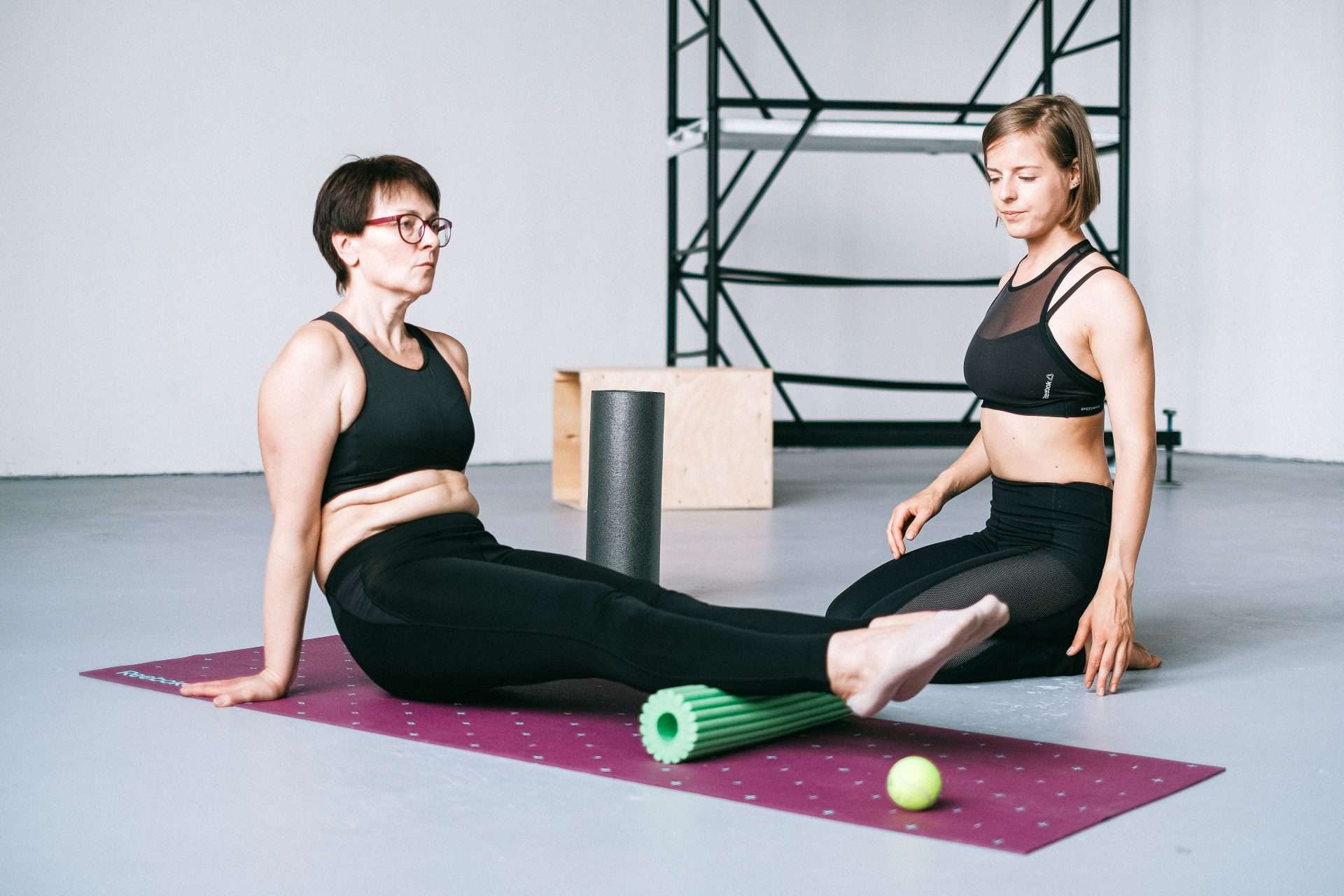
Foam rolling spreads pressure across a broad area, but lying on a roller can load more weight than you expect. Supporting yourself well keeps the pressure manageable, and the floor position itself should feel comfortable.
- Support your weight through your hands and opposite foot.
- Begin with small, slow shifts over fleshy tissue.
- Keep more weight in your limbs to reduce pressure.
- Avoid rolling across bones or through radiating symptoms.
Use a Soft Ball Against a Wall
Leaning into a ball against a wall lets you control pressure more easily than lying on it with your full body weight. Because a ball concentrates pressure into a smaller spot, it calls for extra care.
- Choose a soft, tennis-type ball rather than a hard implement.
- Lean in gradually, and step back to reduce pressure.
- Stay on fleshy tissue without hunting for deep tender points.
- Stop if symptoms spread into the thigh, calf, or foot.
A roller offers broad contact, while a ball focuses pressure on a smaller area; neither has been shown to be better for piriformis-region discomfort. Rest, ice, compression, and elevation is not a universal fix for unexplained tightness, though temporarily adjusting activities you tolerate poorly may be reasonable. Questions about pain-relief medication belong with a clinician or pharmacist, and injections or surgery are specialist options that depend on a confirmed diagnosis rather than routine next steps for mild soreness.
What Can Self-Massage Realistically Change?
Self-massage may provide short-term comfort for tight glutes, but it is unlikely to change the underlying structure of your muscles or nerves. Setting modest expectations helps you judge whether it is worth continuing and keeps you from pressing harder in search of a result that pressure alone cannot deliver.
Temporary Comfort Is a Reasonable Goal
Feeling a little looser or less sore for a while is a realistic aim. It is a possible response, though, not a guaranteed result, and the evidence behind it has important limits.
- Local soreness or tension may feel temporarily reduced.
- Some people find movement more comfortable afterward.
- Much foam-rolling research involves healthy or athletic participants.
- Those findings do not establish treatment of piriformis-related nerve entrapment.
Feeling Released Does Not Prove Repair
People often describe a sense of “release” after massage, but that sensation does not explain what changed inside the tissue. A study protocol published in Trials noted that proposed explanations for foam rolling, such as breaking up fascial adhesions, were not scientifically established at the time. That was background discussion in a planned study rather than completed results, but it is a useful caution against assuming a mechanism.
- A change in sensation does not confirm broken adhesions.
- Improved motion does not prove permanent fascial lengthening.
- Home pressure cannot establish that nerve compression was removed.
- Be wary of claims about flushing toxins, realigning the pelvis, or repairing tissue.
Judge the Response by Everyday Function
A simple check of how you move and feel afterward is more useful than chasing a score. Pay attention to ordinary activities and whether the discomfort is changing in a helpful direction.
- Compare how comfortably you sit or walk before and afterward.
- Check whether discomfort stays local or spreads.
- Stop escalating pressure when there is no benefit.
- Temporary comfort does not resolve an uncertain diagnosis.
If buttock discomfort keeps returning or affects daily activity, schedule a consultation with RxWellness to discuss an appropriate next step.
What Should a Gentle Session Feel Like?
A gentle session should feel comfortable enough that you can stay relaxed and breathe normally the whole time. If you find yourself bracing, wincing, or holding your breath, the pressure is too much. These are practical, symptom-based guidelines rather than tested thresholds, so let your own response guide each step.
Keep Pressure Easy to Reduce
Control is the priority with any home technique. The easier it is to lighten the pressure, the safer the session will be.
- Begin gently enough to remain relaxed.
- Reduce pressure if you brace or hold your breath.
- Skip numerical “good pain” targets.
- Use brief exposure followed by immediate reassessment.
Stop Instead of Pushing Through
Worsening symptoms are a reason to end the technique, not to work through it. Tingling, numbness, or pain spreading down the leg is not a sign of therapeutic release.
- Stop for sharp, burning, electric, or shooting sensations.
- Stop for new or increasing tingling or numbness.
- Do not repeat pressure that sends pain farther down the leg.
- Persistent worsening, bruising, or swelling calls for assessment.
Add Comfortable Movement Only If Tolerated
Movement and stretching are optional extras, not required steps. If you choose to add them, let comfort guide how far you go.
- Gentle walking or comfortable hip movement may be reasonable.
- Avoid forced positions that recreate leg symptoms.
- Stretching is optional; no required massage-then-stretch sequence exists.
- Do not use a massage gun to chase deep piriformis pressure.
Related: Is It Sciatica or a Herniated Disc? How to Tell the Difference
Who Should Get Advice Before Trying Self-Massage?
A gentle home trial for tight glutes may be reasonable when discomfort is mild, localized, and easy to control, but some situations call for individual advice first. If your symptoms are unclear, your health history is complex, or the area looks or feels injured, it is wiser to check before you start.
When a Gentle Trial May Be Reasonable
A cautious home trial fits a fairly specific situation rather than every case of buttock pain. These conditions describe when it may be sensible to try.
- Discomfort is mild, localized, and not progressively worsening.
- You can adjust the pressure immediately.
- Your position feels stable and comfortable.
- No unexplained neurological symptoms are present.
Ask About Your Medical Circumstances
Some health situations make it worth talking to a professional before you begin. The National Center for Complementary and Integrative Health (NCCIH) advises talking with a health care provider about massage safety when you have health conditions that may require precautions. Its observation that massage carries few risks refers to treatment from trained practitioners, so it does not guarantee that self-massage at home is safe for everyone.
- Discuss medical conditions that could affect massage safety.
- Ask whether medications or recent procedures require individual guidance.
- Describe other circumstances that may affect safe pressure or positioning.
- Let a health care provider advise whether to proceed or modify your approach.
Avoid Treating an Injured Area Yourself
Tissue that is damaged, newly injured, or painful for no clear reason is not a good candidate for home massage. In those cases, it makes sense to wait and get checked instead.
- Do not massage open wounds or infected skin.
- Avoid bruised or newly injured tissue.
- Defer self-treatment of unexplained swelling or rapidly worsening pain.
- Seek clinical assessment when symptoms no longer resemble mild soreness.
How Often Should You Massage, and When Should You Seek Evaluation?
There is no proven schedule for massaging tight glutes at home, so short, gentle sessions followed by reassessment are the most sensible approach. If discomfort keeps returning or starts to affect sleep, walking, or work, a professional evaluation is more useful than longer or harder sessions.
There Is No Proven Home Dose
Research has not established how much, how long, or how often home massage should be done. That gap is a reason to stay conservative rather than follow an invented routine.
- No universal pressure, duration, frequency, or number of passes is established.
- Start briefly and reassess rather than holding prolonged pressure.
- Let an irritated area settle instead of repeating treatment.
- Longer or harder sessions do not guarantee better results.
Recurring Symptoms Deserve a Broader Look
When discomfort keeps coming back, a proper assessment can consider more possibilities than home massage can address. A review in Rheumatology Advances in Practice describes history and physical examination as the foundation for assessing buttock pain. Its findings on education and exercise relate to diagnosed hip tendon conditions, not to every case of gluteal tightness.
- Review symptom location, radiation, activity changes, and sitting tolerance.
- Examination may consider lumbar, hip, muscle, tendon, and nerve contributors.
- Tenderness alone does not identify the responsible structure.
- Worsening symptoms or impaired sleep, walking, or work justify evaluation.
Match Follow-Up to the Actual Problem
The right next step depends on what an evaluation finds. Follow-up should be tailored to you rather than built around a promised recovery date.
- Gentle self-care should not replace evaluation of persistent symptoms.
- Exercise and load changes depend on examination findings.
- Diagnosed tendon conditions differ from temporary exercise soreness.
- Referral may be needed when findings exceed conservative-care scope.
Why Choose RxWellness for Persistent Buttock Discomfort?
When buttock discomfort keeps returning, a careful assessment can help clarify what is going on and which conservative options make sense. RxWellness brings evaluation and coordinated conservative care together, with referral when findings point beyond that scope. The figures below reflect the organization’s growth and reach, not evidence that massage works for any particular condition.
- INC 5000 Fastest-Growing Companies — four consecutive years (2023–2026).
- Ranked #1,230 on the INC 5000 list in 2026.
- Ranked #135 in Healthcare and Medical on the INC 5000 list in 2026.
- Grew to a $12 million multidisciplinary healthcare institution.
- Board-certified clinical team under physician oversight at all locations.
- 150,000+ patients treated across all locations.
- 7,500+ five-star reviews across the network.
- Nationwide network of clinics across Virginia, Maryland, Illinois, and Washington.
The Three-Phase Care Model
RxWellness uses a three-phase framework that is tailored to each person’s clinical findings. It is not a mandatory course for everyone, and visit frequency depends on individual needs.
- Relief Care: Focuses on easing presenting discomfort and the functional limitations it causes.
- Corrective Care: Addresses identified movement or biomechanical needs through appropriate rehabilitation.
- Wellness Care: Supports the progress you’ve made with individualized check-ins and education when appropriate.
How Can RxWellness Support Care for Tight Glutes?
When tight glutes keep bothering you despite careful self-care, RxWellness may offer professional options selected after an assessment. These are network services, and availability varies by clinic, so confirm what your chosen location provides.
Massage Therapy
Professional massage therapy can be a comfort-focused part of care when it is appropriate for your situation. A trained therapist adjusts the approach to your symptoms and history rather than simply applying more pressure.
- Pressure and positioning should reflect your symptoms and medical history.
- Goals may include reduced perceived tension and greater comfort.
- Neurological symptoms call for assessment rather than stronger pressure.
- Confirm availability with the clinic you plan to visit.

Active Rehabilitation
Active rehabilitation uses guided, movement-based care chosen to match your examination findings. The focus is on helping you move comfortably and build tolerance for daily activities.
- Care may include assisted stretching and guided active exercises.
- Mobility or strengthening work depends on your identified needs.
- Activity progresses according to comfort, function, and response.
- Service names and availability vary across clinics and markets.
Schedule your consultation online to discuss your symptoms and appropriate care options with the RxWellness team.
Related: Sports Injury Rehabilitation Plan for Runners | RxWellness
Frequently Asked Questions
Is It Safe to Massage Tight Glutes at Home?
A gentle trial may be reasonable for mild, localized soreness, as long as the pressure stays easy to control. Stop if your symptoms worsen, spread, or start to feel sharp, tingly, or numb. If your symptoms are unclear or you have medical conditions that could affect safety, get advice from a health care provider before you begin.
Will Insurance Cover an Evaluation for Buttock Pain?
RxWellness accepts most major insurance plans within its network. However, your benefits depend on your specific plan, the clinic you visit, the service provided, and medical necessity. Coverage is not guaranteed, so confirm your eligibility, expected costs, and any out-of-pocket responsibility directly with your selected clinic and insurer before your appointment to avoid surprises.
How Long Should I Massage a Tight Gluteal Area?
No universal duration for home massage has been established. Begin with a brief session, then pause and reassess how the area feels before deciding whether to continue, and avoid holding prolonged pressure on a single spot. If symptoms persist or keep returning, an evaluation is a better next step than simply making your sessions longer or more intense.
What Happens at My First RxWellness Visit?
Your first visit typically starts with intake and a consultation to review your symptoms, health history, and goals. An examination then helps determine whether conservative care is appropriate or whether a referral makes more sense. Any procedure requires your consent first, and your treatment plan and follow-up will depend on what the evaluation finds.
Who Should Seek Advice Before Trying a Massage Ball?
Anyone with uncertain, radiating, or neurological symptoms should seek guidance before using a massage ball. Certain medical circumstances or recent treatments may also call for a modified approach. Keep in mind that a ball is optional, and even a controllable wall-supported position does not guarantee that self-massage is suitable for your particular situation.
Key Takeaways
- Tightness is a description of how an area feels, not a diagnosis.
- Gentle, adjustable pressure is the practical starting point.
- A soft, wall-supported ball concentrates pressure and calls for caution.
- Temporary comfort does not prove that tissue or a nerve has been released.
- Worsening or neurological symptoms change the self-care plan.
- Persistent problems deserve assessment rather than escalating massage.
Gentle Pressure, Clear Limits
So, how can you safely massage tight glutes at home? Start with controlled, gentle pressure over fleshy tissue, using your hands, a well-supported roller, or a soft ball against a wall, and treat any comfort you feel as a short-term benefit. Deeper pressure and longer sessions are not proven solutions, and pushing harder can make things worse.
Let your symptoms guide every step. Stop when pain turns sharp, spreads down your leg, or brings tingling or numbness, and seek emergency care right away for the warning signs described earlier. When discomfort keeps returning or begins to interfere with sitting, walking, sleep, or work, an evaluation can look at the full picture and point you toward care that fits what is actually going on.
Ready to take the next step toward recovery? Schedule your consultation online with RxWellness today.