

Table of Contents
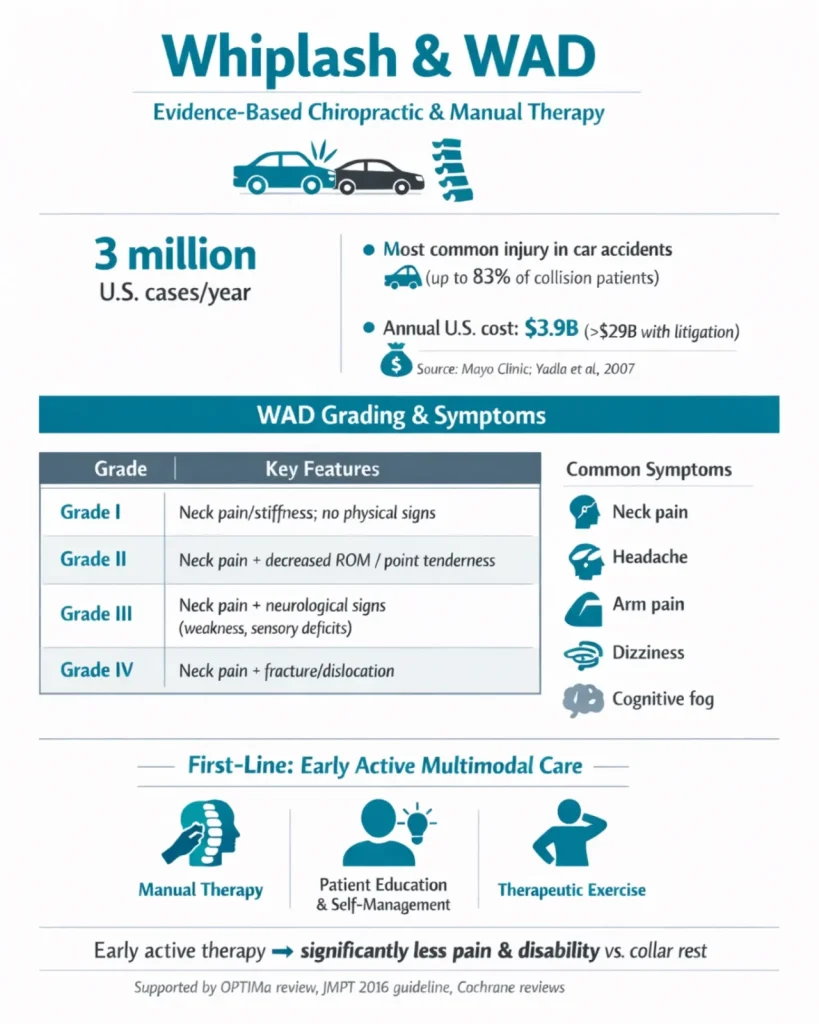
Seeking whiplash treatment in Vienna as soon as possible after a collision — ideally within 24 to 72 hours — gives you the best chance at a full recovery and helps prevent symptoms from becoming chronic. According to the Mayo Clinic Health System, there are an estimated 3 million whiplash cases in the U.S. each year, most commonly caused by rear-end car accidents.
Neck stiffness, headaches, and dizziness can feel manageable at first, then intensify over the following days. At RxWellness Vienna/Oakton, our experienced multidisciplinary team provides evidence-based whiplash care designed to relieve pain quickly and protect you from long-term complications.
Related: Auto Accident Chiropractor Near Me in Vienna, VA
What Causes Whiplash and What Symptoms Should You Watch For After an Accident in Vienna?
Whiplash occurs when the neck is forced into a rapid back-and-forth motion during a collision, stretching and straining soft tissues, joints, and ligaments beyond their normal range. Whiplash is the most common injury associated with motor vehicle accidents, affecting up to 83% of collision patients, with an annual economic burden estimated at $3.9 billion in the U.S. — rising to more than $29 billion when litigation is included. Understanding what’s happening in your body and what symptoms to look for is the first step toward getting appropriate care.
How Whiplash Happens Biomechanically
During rear-end impact, the lower cervical vertebrae hyperextend while the upper vertebrae flex — creating an abnormal S-shape in the neck that concentrates stress on facet joint capsules, intervertebral discs, and surrounding ligaments. Vehicle damage alone is not a reliable indicator of injury severity, which is why some patients with minor fender-benders experience significant pain.
- Facet capsule ligaments are especially vulnerable under S-curve loading
- Disc and uncovertebral joint injury can cause lasting neurological symptoms
- Paraspinal muscles develop edema and trigger points from the impact force
- Injury can occur at modest speeds despite minimal vehicle damage
Early recognition of this mechanism helps explain why symptoms don’t always appear immediately after a crash.
Common Whiplash Symptoms Beyond Neck Pain
Symptoms typically develop within 24–72 hours of injury as inflammation and muscle guarding evolve. Some patients experience only mild discomfort at first, then notice escalating pain, headaches, or cognitive difficulties in the days that follow.
- Neck pain and reduced range of motion
- Headaches originating at the base of the skull
- Shoulder, arm, or upper back tenderness
- Dizziness, fatigue, or difficulty concentrating
- Tingling or numbness in the arms
Recognizing this full spectrum — not just neck pain — is critical to getting a complete diagnosis.
Why Whiplash Is Often Missed Early
Standard imaging frequently appears normal in the acute phase. X-rays and early MRI scans often show no structural damage even when significant soft-tissue injury is present. Whiplash is diagnosed clinically, through a detailed history, functional examination, and neurological screening rather than imaging alone.
- Normal imaging does not rule out whiplash injury
- Delayed symptom onset leads some patients to dismiss the need for care
- Soft-tissue damage to facet capsules and ligaments is invisible on X-ray
- Early clinical assessment captures findings that imaging misses
Waiting for symptoms to worsen — or assuming a clean scan means no injury — can allow treatable conditions to progress into chronic pain.
What Are the Treatment Options for Whiplash Injury?
Effective whiplash treatment ranges from conservative self-care to hands-on clinical care. Understanding all available options allows you to make informed decisions alongside your care team.
Rest, Medication, and Soft Collars
In the immediate aftermath of a collision, short-term rest and over-the-counter pain management are reasonable first steps. NSAIDs can reduce inflammation and provide temporary relief, and muscle relaxants are sometimes prescribed for acute spasm. Soft cervical collars were once standard, but current evidence shows that prolonged use leads to worse outcomes than early active movement.
- NSAIDs provide short-term anti-inflammatory relief
- Muscle relaxants address spasm but are not a long-term solution
- Soft collars are no longer recommended as primary treatment
- Rest alone does not resolve the underlying soft-tissue injury
These options address immediate discomfort but do not correct the biomechanical dysfunction at the root of whiplash symptoms.
Manual Therapy, Chiropractic, and Physical Therapy
Clinical guidelines recommend multimodal care — including spinal manipulation or mobilization, soft-tissue therapy, and patient education — as first-line treatment for WAD Grades I and II. Chiropractic care restores cervical alignment, reduces pressure on irritated nerves and joints, and improves range of motion. Physical therapy rebuilds strength and corrects the biomechanical deficits that develop after injury.
- Chiropractic adjustments restore cervical joint alignment and mobility
- Spinal mobilization reduces pain and improves the range of motion
- Soft-tissue manipulation addresses myofascial trigger points
- Manual therapy combined with exercise outperforms passive care alone
These approaches treat the injury directly rather than masking pain.
Exercise and Active Rehabilitation
Early active movement consistently outperforms immobilization in the recovery from whiplash. Guided exercise programs produce significantly greater improvements in pain and disability compared to rest and collar therapy. Exercise also guards against central sensitization — a process in which the nervous system becomes hypersensitive and amplifies pain signals, which drives chronic whiplash.
- Cervical range-of-motion exercises restore flexibility and reduce stiffness
- Strengthening programs stabilize injured spinal structures
- Active care reduces the risk of long-term pain sensitization
- Self-management education supports recovery between visits
Beginning active rehabilitation early is one of the most impactful steps toward preventing acute whiplash from becoming chronic.
What Are the Benefits of Seeking Early Whiplash Treatment in Vienna?
Seeking prompt whiplash treatment in Vienna offers meaningful clinical and practical advantages over waiting. Research confirms that approximately 38% of whiplash patients report residual neck pain and headaches at one-year follow-up — a risk that early, active care reduces. The window immediately following your accident is when conservative treatment has the greatest impact.
Better Short-Term Pain and Disability Outcomes
Patients who begin multimodal care early consistently experience faster reductions in pain and disability compared to those who delay or rely on passive management. Early intervention prevents the cycle of guarding, stiffness, and deconditioning that accelerates symptom escalation.
- Early care reduces acute pain faster than rest alone
- Cervical range of motion improves more rapidly with active treatment
- Prompt intervention prevents compensatory movement patterns
- Short-term outcomes directly influence the long-term recovery trajectory
Getting ahead of inflammation and muscle guarding in the first few days sets the foundation for a smoother recovery.
Reduced Risk of Chronic Whiplash
High initial pain and disability — left unaddressed — are the strongest predictors of long-term whiplash. Central sensitization, in which the nervous system amplifies pain across the body, is well documented in chronic whiplash and is much harder to treat once established. Early chiropractic and manual therapy directly address the peripheral pain sources that drive this process.
- Untreated whiplash significantly increases chronic pain risk
- Central sensitization is easier to prevent than to reverse
- Myofascial trigger points perpetuate widespread pain if left untreated
- Early active care interrupts the chronification cycle
Addressing your injury now is the most effective way to protect your long-term quality of life.
Stronger Insurance and Legal Documentation
Virginia maintains a pure contributory negligence standard — meaning any finding of patient fault can potentially bar financial recovery. Comprehensive clinical documentation from the earliest stages of treatment is critical for establishing a causal link between the collision and your injuries.
- Early documentation establishes the injury timeline and mechanism
- Objective functional findings corroborate injury claims
- Treatment records demonstrate medical necessity
- RxWellness coordinates with all major auto insurers
Starting care promptly protects both your health and your legal interests.
If you’re looking for expert whiplash treatment in Vienna following a car accident, our team at RxWellness Vienna/Oakton is ready to help. Call Vienna at (703) 242-1415 to schedule your evaluation today.
What Should You Expect During Your First Whiplash Treatment Visit in Vienna?
Your first visit to RxWellness Vienna/Oakton is thorough, straightforward, and immediately therapeutic — you won’t leave without having received your first treatment. Clinical evidence confirms that patients who engage in early active therapy (exercise/mobilization) experience significantly less pain and disability than those managed with rest and a soft collar. Randomized trials show lower VAS pain and disability scores in exercise groups compared to collar-only management at 6–8 weeks.
Initial Consultation and Injury Assessment
Your visit begins with a one-on-one consultation with one of our doctors. You’ll walk through the details of the collision — impact direction, speed, seatbelt use, and headrest position — as well as a full symptom inventory. This structured history-taking is clinically important because whiplash diagnosis is primarily clinical, not imaging-dependent.
- Detailed crash history establishes the mechanism of injury
- The symptom timeline is documented from the initial onset
- Prior neck conditions and health history are reviewed
- Functional goals and concerns are discussed with your doctor
Functional Examination and Imaging
Your doctor performs a comprehensive physical exam, including neurological screening, cervical range-of-motion assessment, and palpation for joint and myofascial tenderness. On-site digital X-ray is available when medically necessary, and patients can view results the same day. Even when imaging is normal, the functional exam produces meaningful objective findings that support your clinical record.
- Neurological screening evaluates reflexes, strength, and sensation
- Cervical range of motion is measured as a baseline for tracking progress
- Palpation identifies segmental joint dysfunction and trigger points
- X-ray available on-site when clinically indicated
Your First Treatment Session
At the close of your visit, you receive your first treatment, which may include chiropractic adjustments, soft-tissue therapy, or other hands-on interventions depending on your exam findings. No procedure is performed without your explicit consent. A follow-up is scheduled before you leave, and your full care plan is presented at that second visit.
- Chiropractic adjustments begin restoring cervical alignment
- Soft-tissue work addresses initial muscle guarding and tension
- You leave with a follow-up scheduled and a clear next step
- Full care plan and cost discussion happen at visit two
Who Is a Good Candidate for Chiropractic Whiplash Treatment in Vienna?
Chiropractic care is appropriate for a broad range of whiplash presentations. The key factors are injury grade, symptom profile, and ruling out conditions that require emergency care.
WAD Grade I and II Patients
The Quebec Task Force (QTF) classification grades whiplash from I to IV. Grade I involves neck pain or stiffness without measurable physical findings. Grade II includes a restricted range of motion and point tenderness. Both grades represent the majority of whiplash presentations and respond well to conservative chiropractic care.
- Grade I: neck pain or stiffness without physical signs
- Grade II: restricted range of motion and tender points present
- Both grades respond well to multimodal chiropractic care
- No neurological deficits or fractures present
Delayed-Onset Symptom Cases
Patients who felt fine immediately after an accident — or had only mild discomfort — often develop worsening symptoms over the following 24–72 hours. This is clinically normal and does not reduce eligibility for care. The early-care window remains open even as symptoms are just emerging.
- Delayed symptoms are a normal feature of whiplash, not a red flag
- Evaluation within 72 hours is still within the early-care window
- Beginning care promptly still offers a meaningful protective benefit
When to Seek Immediate Emergency Care
Chiropractic care is not appropriate as a first response to severe or progressive neurological symptoms, structural instability, or suspected fractures. WAD Grades III and IV require imaging and specialist consultation before manual therapy begins.
- Seek emergency care for loss of consciousness or progressive limb weakness
- Severe midline neck pain with restricted motion may indicate a fracture
- Loss of bladder or bowel control requires ER evaluation
- RxWellness doctors refer to appropriate specialists when indicated
How Long Does Whiplash Treatment in Vienna Take to Work?
Recovery timelines vary by injury grade and the speed of care. Most patients with Grade I or II whiplash notice meaningful improvement within the first few weeks. Evidence confirms that multimodal care, including manual therapy, education, and exercise, benefits patients with Grade I and II whiplash-associated disorders across both acute and persistent presentations.
Acute Phase Recovery (Weeks 1–4)
The first four weeks focus on reducing pain, restoring cervical mobility, and preventing early guarding and muscle-shortening patterns. Most patients experience meaningful reductions in pain and improved range of motion within the first two to three weeks.
- Pain intensity decreases with targeted chiropractic adjustments
- Cervical range of motion improves with mobilization and soft-tissue work
- Muscle guarding lessens as trigger points are addressed
- Home exercise and self-management begin early
Subacute and Corrective Phase (Weeks 4–12)
Once acute symptoms stabilize, treatment shifts to correcting the underlying structural and functional deficits from the injury. Visit frequency decreases as active rehabilitation — strengthening, posture correction, and movement retraining — becomes the primary driver of recovery.
- Strengthening exercises rebuild cervical and upper thoracic stability
- Postural correction addresses compensatory patterns from injury
- Progress is tracked against baseline range-of-motion measurements
- Most patients reach functional recovery during this phase
Long-Term Outcomes and Preventing Chronic Whiplash
For patients at higher chronicity risk — those with more severe initial pain, older age, or pre-existing neck conditions — the Wellness phase focuses on maintaining progress and preventing regression. Ongoing exercise, periodic care, and ergonomic guidance form the backbone of long-term management.
- Periodic maintenance visits support long-term cervical health
- Home exercise remains the primary long-term strategy
- Lifestyle guidance reduces future injury risk
- Early treatment is the single best predictor of a good long-term outcome
Related: Accident Chiropractor Near Me in Vienna, VA
Why Choose RxWellness Vienna/Oakton for Whiplash Treatment
RxWellness Spine & Health Vienna combines board-certified chiropractic expertise with a multidisciplinary approach that addresses every dimension of whiplash recovery — from acute pain relief to functional restoration and injury documentation.
- 150,000+ patients treated across Northern Virginia and Maryland
- 7,500+ five-star reviews from satisfied patients
- Three consecutive INC 5000 fastest-growing healthcare company designations (2023–2025)
- Board-certified chiropractors with advanced musculoskeletal injury training
- Same-day appointments available for acute post-accident cases
- Accepts Aetna, BCBS, CareFirst, Cigna, GEHA, Medicare, and UHC
- Works with all major auto insurers, including Geico, State Farm, Allstate, and Progressive
- Experienced in personal injury documentation and insurance coordination
The RxWellness Three-Phase Care Model
Our whiplash recovery follows a structured framework that takes you from pain management to full functional restoration and long-term resilience.
- Relief Phase: Targeted adjustments and hands-on therapy reduce acute pain and inflammation fast
- Corrective Phase: Rehabilitation and strengthening address the underlying structural causes of injury
- Wellness Phase: Periodic maintenance and home exercise keep you protected long-term
Every modality we use is chosen to move you forward through this model — efficiently and completely.
Whiplash Treatment Approaches at RxWellness Vienna/Oakton
The RxWellness Vienna team draws on a focused set of evidence-based modalities to build a fully integrated whiplash care plan, personalized to your injury grade, symptom presentation, and recovery goals.
Chiropractic Care
Chiropractic care is the cornerstone of whiplash treatment at RxWellness Vienna/Oakton, directly addressing the spinal misalignments and joint dysfunction caused by collision forces. Targeted adjustments restore proper cervical alignment, reduce nerve irritation, and improve range of motion — without surgery or medication.
- Restores cervical alignment disrupted by collision forces
- Reduces pressure on irritated joints and nerve roots
- Improves range of motion and reduces protective muscle guarding
- Personalized to your WAD grade and symptom pattern
Massage Therapy
Massage therapy addresses the muscle tension, spasm, and myofascial restrictions that develop in the neck, upper back, and shoulders after trauma. By improving circulation and reducing tissue adhesions, it accelerates recovery and prepares the musculature to respond better to chiropractic adjustments.
- Reduces cervical and upper trapezius muscle spasm
- Breaks down early myofascial adhesions and restrictions
- Improves tissue circulation and reduces inflammatory buildup
- Enhances the effectiveness of chiropractic care
Dry Needling
Dry needling targets the myofascial trigger points that develop in cervical and upper thoracic muscles following whiplash. Active trigger points are directly linked to central sensitization — the mechanism behind widespread, persistent pain. Deactivating them produces immediate improvements in range of motion and significant reductions in pain intensity.
- Targets active trigger points in the upper trapezius and cervical muscles
- Reduces central sensitization by eliminating peripheral pain drivers
- Produces immediate improvements in cervical range of motion
- Effective for cervicogenic headache patterns linked to trigger points
Inflammation Management
RxWellness’s Inflammation Management program uses advanced blood analysis and allergen testing for up to 68 triggers to identify systemic factors that are slowing your recovery. Personalized dietary protocols and targeted supplementation address the root causes of inflammation, enabling more effective local tissue repair.
- Advanced blood analysis identifies systemic inflammatory markers
- Personalized anti-inflammatory protocols support tissue healing
- Targeted supplementation addresses specific inflammatory pathways
- Coordinated with chiropractic care by licensed medical professionals
Ready to take the next step toward recovery? Schedule your consultation online at RxWellness Vienna/Oakton and begin your path to relief.
FAQs About Whiplash Treatment in Vienna
How soon after a car accident should I seek whiplash treatment in Vienna?
As soon as possible — ideally within 24 to 72 hours. Even if you feel relatively okay immediately after a crash, symptoms often worsen over the following days. Early evaluation accelerates recovery and establishes the clinical documentation needed for insurance and legal purposes. Delaying care significantly increases the risk of acute whiplash progressing into a chronic condition.
Can whiplash symptoms appear days after an accident?
Yes. Delayed-onset symptoms are well documented in whiplash. Neck pain, stiffness, and headaches may be mild or absent right after the collision, then escalate as inflammation and muscle guarding develop. High initial pain intensity — even appearing a day or two later — is one of the strongest predictors of long-term symptoms.
Does insurance cover whiplash treatment in Vienna, VA?
RxWellness Vienna/Oakton accepts Aetna, BCBS, CareFirst, Cigna, GEHA, Medicare, and UHC. If your whiplash resulted from a car accident, treatment can typically be billed through the at-fault driver’s liability insurance or your own Med-Pay or PIP coverage. We work directly with all major auto insurers and handle the coordination so you can focus on recovery.
What happens if I don’t treat whiplash right away?
Delaying treatment significantly increases your risk of chronic whiplash. Research shows approximately 38% of patients experience persistent pain at one year, particularly when acute care is inadequate. Untreated injury allows inflammation to persist, muscles to shorten around guarded positions, and the nervous system to develop central sensitization — all of which become increasingly difficult to reverse over time.
Is chiropractic care safe and effective for whiplash?
Yes. Clinical guidelines and systematic research as first-line treatment for WAD Grades I and II support chiropractic care. Multiple randomized controlled trials confirm that multimodal chiropractic care produces superior outcomes compared to rest, collar therapy, and medication alone, with a strong safety profile when delivered by licensed chiropractors.
Key Takeaways
- Seek whiplash treatment within 24–72 hours of your accident — early care produces significantly better outcomes than delayed treatment.
- Approximately 38% of whiplash patients experience persistent pain at one year; early multimodal care meaningfully reduces that risk.
- Chiropractic care combined with massage therapy, dry needling, and exercise is first-line treatment for WAD Grades I and II.
- Virginia’s contributory negligence law makes early, thorough clinical documentation especially important after any accident.
- RxWellness Vienna/Oakton treats whiplash through the three-phase model — Relief, Corrective, and Wellness — progressing you from acute pain management to lasting structural recovery.
- RxWellness accepts major health insurance and works directly with all major auto insurers.
Related: Neck Adjustment in Vienna, VA
Find Lasting Relief from Whiplash in Vienna
If you’ve been in a car accident or suffered a neck injury in the Vienna or Oakton area, don’t wait. Research confirms that multimodal care, including manual therapy, education, and exercise, benefits patients with Grade I and II whiplash across both acute and persistent presentations. Every day matters when it comes to reducing your risk of long-term symptoms.
At RxWellness Spine & Health Vienna/Oakton, our experienced team is ready to evaluate your injury, build your personalized recovery plan, and begin your first treatment the same day.
RxWellness Spine & Health Vienna/Oakton Online Reservations
360 Maple Ave W, Vienna, VA 22180
Serving Vienna and nearby communities such as Braddock, Fairfax, Dunn Loring, Merrifield, and West Falls Church.