
Table of Contents
Knowing how chiropractic care fits into the imaging process helps you move forward faster and smarter. Neck pain rarely arrives with a simple explanation. Some days it’s a dull ache. Other times it’s sharp, radiating discomfort traveling into your shoulder or down your arm. When that happens, your doctor may order a cervical spine MRI to take a closer look. But a question usually follows right after: Should you see a chiropractor before the scan or after? The answer isn’t one or the other.
What Does a Cervical Spine MRI Actually Show?
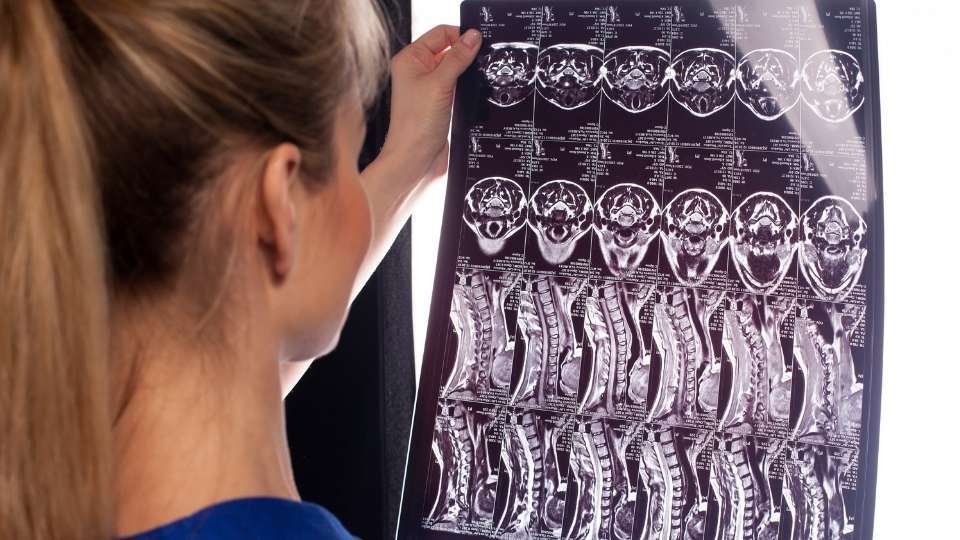
A cervical spine MRI gives your provider a detailed look at the soft tissues of your neck, including discs, nerves, ligaments, and the spinal cord. It captures structural information that X-rays can’t. This makes it one of the most useful diagnostic tools for understanding the root cause of neck pain and related symptoms.
Common cervical spine MRI findings include:
- Herniated or bulging discs at levels such as C4-C5, C5-C6, or C6-C7
- Spinal canal stenosis narrowing the space around the cord
- Neural foraminal stenosis that compresses nerve roots
- Disc degeneration and reduced disc height
- Vertebral endplate signal changes linked to neck disability
- Post-traumatic ligamentous injuries and subluxations
- Spinal cord compression or cord signal changes
Research found spondylodegenerative changes in 52.2% of cervical MRI samples, with C5-C6 as the most frequently affected level in 65% of cases.
Not every finding on a cervical spine MRI directly causes pain. One study found no significant association between clinical symptoms of pain and disability and several MRI findings, including disc degeneration severity and posterior disc height measurements. That’s exactly why clinical context from a chiropractor matters just as much as the imaging itself.
Related: How a Chiropractor Treats Neck Pain
Why Would a Chiropractor Recommend a Cervical Spine MRI?
Chiropractors don’t issue MRI orders directly in most states, but they coordinate with your medical providers to request imaging when it’s warranted. A chiropractor recommends a spine MRI when your clinical exam points to something a physical assessment alone can’t fully confirm.
Situations where a cervical spine MRI may be recommended:
- Persistent arm numbness, tingling, or weakness that doesn’t improve with initial care
- Severe or worsening neck pain following trauma or a car accident
- Signs of myelopathy, including balance issues or grip weakness
- Headaches with a suspected cervical spine origin
- Dizziness or vertigo connected to the upper cervical spine
- Prior cervical surgeries that complicate physical assessment
- Symptoms that don’t match what your exam findings reveal
A PMC case report found that MRI of the upper cervical spine identified previously undetected ligamentous injuries, spinal subluxations, and a spinal cord abnormality, allowing chiropractors to refine care protocols and achieve a favorable outcome.
Related: Neck Adjustment: Safety, Benefits, and Types
Neck pain that radiates, tingles, or won’t go away is your body’s signal that something needs attention. At RxWellness Spine & Health, our providers evaluate your cervical spine, work with your imaging, and build a care plan around your actual findings. Call the nearest RxWellness Spine & Health clinic to speak with a provider today. You can also request an appointment online at your convenience.
What Happens When You See a Chiropractor Before a Cervical Spine MRI?
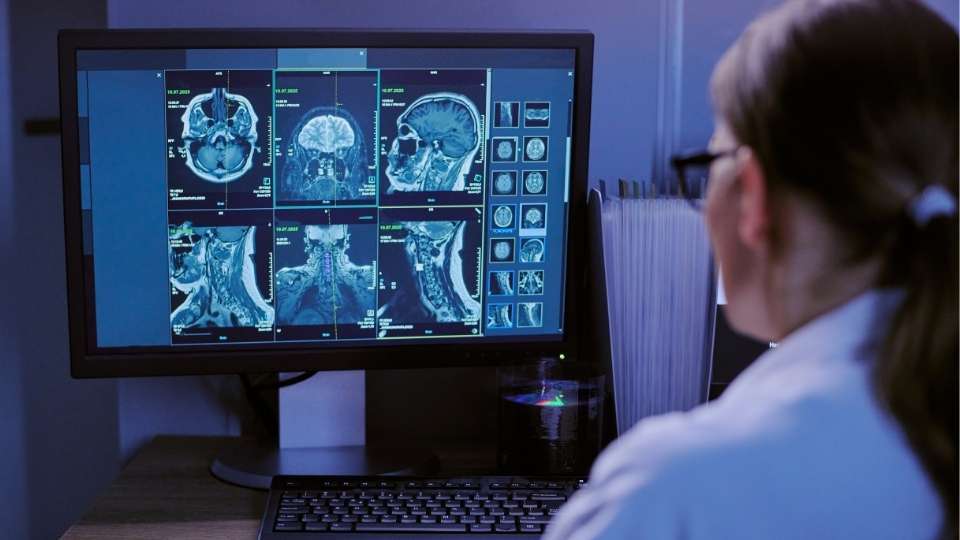
Visiting a chiropractor before your cervical spine MRI builds the clinical foundation that makes your imaging more useful. It’s not skipping ahead. It’s making sure you and your imaging team are working with the same picture when results come in.
Here’s how a pre-spine MRI chiropractic visit helps your care:
- Your chiropractor documents your pain patterns, range of motion, and neurological signs
- Orthopedic and neurological tests help narrow down the pain source before imaging
- Red flags that make a cervical spine MRI more urgent get identified and flagged early
- Initial care may reduce muscle tension, making the scan more comfortable
- Pre-visit clinical notes give your radiologist important context for interpreting results
- It helps prevent cervical spine findings from being read in isolation without symptom context
One key point: our providers at RxWellness typically avoid aggressive cervical spine manipulation until imaging confirms the underlying structure. If disc herniation, cord compression, or cervical fracture is suspected, adjustments hold off until the cervical spine MRI provides clarity.
Related: Can a Chiropractor Help With Nerve Compression?
What Are the Benefits of Seeing a Chiropractor After a Cervical Spine MRI?
Once your cervical spine MRI results are in, your chiropractor can match every treatment decision to what the scan actually confirmed. That precision makes care more targeted and more effective than a generic approach would be.
Post-spine MRI chiropractic care at RxWellness can include:
- Targeted adjustments based on the specific disc levels identified in your scan
- Spinal decompression therapy for confirmed disc herniation or stenosis
- Soft tissue treatment for inflammation around compressed nerve roots
- Rehab and stretching protocols matched to your cervical spine MRI findings
- Upper cervical chiropractic adjustments for confirmed C1 or C2 misalignments
- Coordinated referrals when a cervical spine MRI reveals findings beyond chiropractic scope
A study found statistically significant improvements in neck pain and disability scores after an average of 5.7 office visits using specific upper cervical chiropractic care, with results appearing in as little as 13.6 days.
Imaging tells part of the story. Knowing what to do with your cervical spine MRI results is where we come in. Our RxWellness providers specialize in evidence-based chiropractic care and upper cervical chiropractic techniques built directly around your scan findings. Call your nearest RxWellness Spine & Health location and let’s talk through your next steps. You can also request an appointment online right now.
Related: Gentle Chiropractic Techniques for Neck Pain
Is Upper Cervical Chiropractic Different From a Standard Cervical Approach?
Yes. Upper cervical chiropractic focuses specifically on the atlas (C1) and axis (C2), the top two bones of the cervical spine. This region sits directly below the skull and has a direct influence on nervous system function throughout the entire body.
Here’s what distinguishes upper cervical chiropractic from a general neck approach:
- It targets only C1 and C2, not the full cervical spine
- Adjustments use low force and don’t involve twisting or cracking
- It addresses the neurological root of many cervical conditions
- It’s often guided by cervical spine MRI findings that confirm upper cervical subluxation
- It can help with headaches, vertigo, arm symptoms, and chronic neck pain
- Assessment often includes digital thermography and precise X-ray or imaging analysis
If you’ve been searching for an upper cervical chiropractor in Virginia or Maryland, our RxWellness providers are trained in upper cervical chiropractic techniques. We work directly with your cervical spine MRI results to guide each adjustment.
Finding a “cervical chiropractor near me” who understands upper cervical instability takes more than a general neck exam. Our providers have the training to assess and treat the upper cervical spine precisely and effectively.
Related: Neck Pain Chiropractic Treatment Options
FAQs
Can a chiropractor read or interpret my cervical spine MRI?
Chiropractors are trained in spinal anatomy and can review cervical spine MRI reports alongside their clinical findings. They won’t replace a radiologist’s official reading, but they can use the report and images to guide your treatment plan directly. At RxWellness, our providers integrate your MRI results into their clinical assessment to build a care plan that fits your actual findings.
Does a cervical spine MRI need to happen before chiropractic adjustments can start?
A cervical spine MRI isn’t always required before beginning chiropractic care. Your chiropractor determines whether imaging is necessary based on your symptoms, exam findings, and medical history. For most patients with routine neck pain, adjustments can begin safely without imaging, but a spine MRI becomes important when neurological signs, trauma history, or other red flags are present.
What’s the difference between seeing an upper cervical chiropractor and a general chiropractor for neck pain?
An upper cervical chiropractor focuses specifically on C1 and C2, the two vertebrae at the very top of the cervical spine. General chiropractors address the full spine and may use different adjustment techniques across more vertebral levels. Upper cervical chiropractic uses low-force, precise techniques that are especially helpful for headaches, vertigo, and conditions where cervical spine MRI findings point to upper cervical subluxation or instability.
How soon after a cervical spine MRI can I see a chiropractor?
You can typically see a chiropractor as soon as your cervical spine MRI results are available and shared with your provider. There’s usually no waiting period unless your scan reveals something requiring urgent medical attention, such as a fracture or severe cord compression. At RxWellness, we review your results and schedule care around your findings as quickly as possible.
How do I know if I need a cervical spine MRI before seeing a cervical chiropractor near me?
You don’t always need a cervical spine MRI before your first chiropractic visit. Your chiropractor will decide whether imaging is needed based on your clinical exam, symptom pattern, and whether neurological signs are present. If you’re searching for a cervical chiropractor near me and you already have imaging, bring it to your first visit so we can start with the full clinical picture.
What does upper cervical chiropractic care feel like during a treatment session?
Upper cervical chiropractic uses gentle, low-force adjustments that don’t involve the sharp twisting or cracking associated with traditional chiropractic techniques. Many patients describe the sensation as mild pressure at the base of the skull or the top of the neck. The process is calm and controlled, making upper cervical chiropractic a comfortable option even for patients with post-traumatic neck conditions or heightened sensitivity.
Can chiropractic care help with symptoms that show up on a cervical spine MRI?
Yes, depending on the finding, chiropractic care can effectively address many conditions identified on a cervical spine MRI. Disc herniations, neural foraminal stenosis, and upper cervical subluxations often respond well to targeted adjustments, spinal decompression therapy, and soft tissue care. Your chiropractor will review your spine MRI and let you know honestly whether your findings fall within chiropractic scope or whether a referral to another provider is the better path.
Key Takeaways
- Seeing a chiropractor before a cervical spine MRI helps build the clinical picture that makes imaging more accurate and useful for your care team.
- Chiropractors recommend a spine MRI when physical exams reveal signs like nerve compression, myelopathy, or post-traumatic symptoms that imaging alone can confirm.
- Post-spine MRI chiropractic care is more targeted because your provider can match every adjustment and therapy to your confirmed cervical spine findings.
- Upper cervical chiropractic focuses on the atlas (C1) and axis (C2), which directly influence nervous system function and can be accurately identified on a cervical spine MRI.
- Not all cervical spine MRI findings cause symptoms, which is why working with a chiropractor who understands clinical context is essential for interpreting your results correctly.
- Ideally, you’ll see a chiropractor both before and after a cervical spine MRI for a complete, coordinated approach to your neck care.
- If you’re searching for a cervical chiropractor near me in the DMV, RxWellness offers evidence-based chiropractic care guided by your imaging and clinical findings.
- RxWellness providers will hold off on cervical manipulations when fracture, cord compression, or disc herniation is suspected until a spine MRI provides structural clarity.
- An upper cervical chiropractor uses low-force, precision-based techniques that don’t involve twisting or cracking, making them especially effective for post-imaging cervical care.
Related: Treating Neck Pain With Chiropractic Care
Wrapping Up: Should You See a Chiropractor Before or After Your Cervical Spine MRI?
Here’s the direct answer to the question in this title: both. Ideally, you’ll see a chiropractor before your cervical spine MRI and continue care once your imaging results are ready.
A pre-spine MRI visit at RxWellness:
- Builds the clinical foundation for an accurate imaging referral
- Identifies exactly what the cervical spine MRI needs to confirm
- Flags red flags that require urgent attention
A post-cervical spine MRI visit at RxWellness:
- Matches your care plan to your confirmed structural findings
- Guides safe, precise adjustments informed by imaging
- Allows your upper cervical chiropractor to address confirmed C1 or C2 subluxations
Whether you haven’t had a cervical spine MRI yet or you’re holding results that haven’t been fully explained to you, RxWellness Spine & Health is ready to help you take the next step. Our team includes experienced upper cervical chiropractors and multidisciplinary providers across Virginia and Maryland who use imaging to guide every decision.
RxWellness was named a Top Chiropractor in ABC7’s Good Morning Washington Top Docs series, with Dr. Philip Golinsky recognized for delivering trusted, patient-centered natural healthcare throughout the DMV.
Schedule your consultation at the RxWellness location nearest you. If you’d prefer to speak with someone directly, find your closest RxWellness clinic and reach out today.