

Table of Contents
Spring is the season most runners wait for. The weather’s better, the motivation is high, and the miles start adding up fast. But ramping up too quickly puts your lower legs at serious risk.
Two of the most common spring running injuries are shin splints and plantar fasciitis. Learning how to avoid these can keep you training all season long. At RxWellness Spine & Health, we see these exact injuries every spring at our clinics across Virginia and Maryland. The encouraging part? Most of them are preventable.
Knowing how to avoid shin splints and plantar fasciitis isn’t complicated. It takes smart mileage increases, the right footwear, and targeted exercises.
What Are Shin Splints and Plantar Fasciitis?
Both conditions are overuse injuries common in runners who increase mileage too quickly. Shin splints cause pain along the shinbone. Plantar fasciitis causes sharp heel pain from strain on the foot’s connective tissue.
What shin splints feel like
Shin splints, or medial tibial stress syndrome (MTSS), cause a dull ache along your inner shin. Research confirms that MTSS affects between 13.6% and 20% of runners. Pain usually starts during or after a run and eases with rest.
- Dull or sharp pain along the inner edge of your shinbone
- Tenderness when pressing on the mid-to-lower shin
- Pain that worsens during a run and improves after rest
- Mild swelling or soreness along the lower leg
What plantar fasciitis feels like
Plantar fasciitis causes stabbing heel pain that’s worst with your first steps in the morning. Runner prevalence rates reach as high as 22%. It can also flare up after long runs or sitting for extended periods.
- Sharp heel pain with your first steps after rest
- Aching along the bottom of the foot after sitting
- Pain that improves mid-run but returns when you stop
- Stiffness along the arch of the foot, especially in the morning
Related: How Chiropractic Care Can Help Plantar Fasciitis
Why Do Spring Runners Get These Injuries So Often?
Spring runners often push too hard after a winter off. That sudden mileage spike overwhelms muscles and bones before they’ve adapted. It’s the leading reason runners develop both conditions. Knowing how to avoid shin splints and plantar fasciitis when running starts with recognizing this pattern.
The “too much, too soon” problem
The 10% rule states: don’t increase weekly mileage by more than 10% at a time. Breaking this rule is the top training error behind both injuries. Peer-reviewed research confirms that sudden increases in training volume are a primary MTSS risk factor.
- Add no more than 10% to your weekly mileage per week
- Avoid consecutive high-mileage days early in a training cycle
- Include at least one full rest day per week
- Build an easy mileage base before adding speed or hill work
Footwear and running surface choices
Each footfall generates ground reaction forces of two to three times your body weight. Running on concrete amplifies those forces. Worn-out shoes can’t absorb that impact properly.
- Replace running shoes every 300 to 500 miles
- Alternate between pavement, trails, grass, and rubber tracks
- Avoid starting a new season on concrete without a gradual buildup
- Use motion-control or stability shoes if you overpronate significantly
Related: Athletic Recovery and Chiropractic Health
Your lower legs shouldn’t slow you down this spring. If you’re already feeling shin or heel pain, don’t wait for it to get worse. Contact the nearest RxWellness Spine & Health clinic for a same-day evaluation today. You can also request an appointment online and our team will get you started right away.
What Stretches Help You Avoid Shin Splints and Plantar Fasciitis?

Targeted stretching is one of the most proven ways to know how to avoid shin splints and plantar fasciitis. Stretches to avoid shin splints focus on the calf, tibialis anterior, and foot muscles. Plantar fasciitis exercises target the arch and heel. Here are the movements that matter most.
Stretches to avoid shin splints
These stretches to avoid shin splints reduce tension in the muscles that pull on your shinbone. Do them after a warm-up, not cold.
- Calf stretch: Press your hands against a wall, step one foot back, and hold each side for 30 seconds.
- Toe raise: Stand flat, then lift your toes off the floor while keeping your heels down. Repeat 15 times.
- Seated shin stretch: Kneel with the tops of your feet flat on the floor. Gently sit back toward your heels.
- Ankle circles: Rotate each ankle clockwise and counterclockwise to improve mobility and reduce tightness.
- Tibialis anterior stretch: Stand on one leg, point your toes down and back, and hold for 20 seconds per side.
Plantar fasciitis exercises for runners
These plantar fasciitis exercises strengthen the arch and reduce heel strain. Consistency is key, especially in the morning before your first steps.
- Towel toe curls: Lay a towel flat and curl it toward you using only your toes. Repeat 10 times per foot.
- Plantar fascia stretch: Cross one foot over your knee, pull your toes back gently, and hold for 20 seconds.
- Calf raises: Stand on a step edge, drop your heels below the ledge, then rise to your toes. Do 3 sets of 15.
- Frozen bottle roll: Slowly roll a frozen water bottle under each arch for 5 minutes to ease soreness.
- Short-foot exercise: While seated, try to shorten your foot by pulling the ball of your foot toward your heel.
Related: Electrotherapy for Plantar Fasciitis
How Can You Avoid Shin Splints and Plantar Fasciitis When Running?
How to avoid shin splints and plantar fasciitis when running comes down to training smarter. You need the right shoes, the right surfaces, and a smart mileage plan. Good biomechanics protects both your shins and your heels.
Shin splints treatment and prevention tips
Early shin splints treatment helps you stay on track. Don’t push through pain hoping it resolves on its own.
- Rest from high-impact running for a few days when shin pain starts
- Apply ice for 15 to 20 minutes after runs to control inflammation
- Shin splints treatment often includes soft-tissue therapy on tight calf muscles
- Compression sleeves reduce swelling and support the lower leg during recovery
- How to avoid shin splints when running also means correcting your foot-strike mechanics
- Strengthen your hips and core to reduce lower-leg overcompensation during runs
- How to avoid shin splints when running on pavement means alternating with softer surfaces regularly
Plantar fasciitis treatment and prevention tips
Plantar fasciitis treatment is most effective before pain becomes chronic. Plantar fasciitis affects approximately 10% of the general population. How to avoid plantar fasciitis comes down to consistent habits, not just reactive care.
- Wear supportive footwear from the moment you wake up, not only during runs
- Plantar fasciitis treatment may include night splints to keep the arch gently stretched while you sleep
- How to avoid plantar fasciitis also means stretching your calf and Achilles tendon daily
- Custom orthotics redistribute pressure and reduce stress on the plantar fascia over time
- Avoid walking barefoot on hard floors during an active plantar fasciitis flare-up
- Plantar fasciitis exercises done consistently, even on rest days, help maintain tissue flexibility
Related: Plantar Fasciitis Relief: Natural Treatments for Persistent Heel Pain
Pain in your shins or heels is your body sending a signal. Don’t push through it without professional support. Our team at RxWellness Spine & Health has helped hundreds of runners across Virginia and Maryland get back on their feet. Find a clinic near you or request your appointment online today.
When Should You See a Chiropractor for These Conditions?
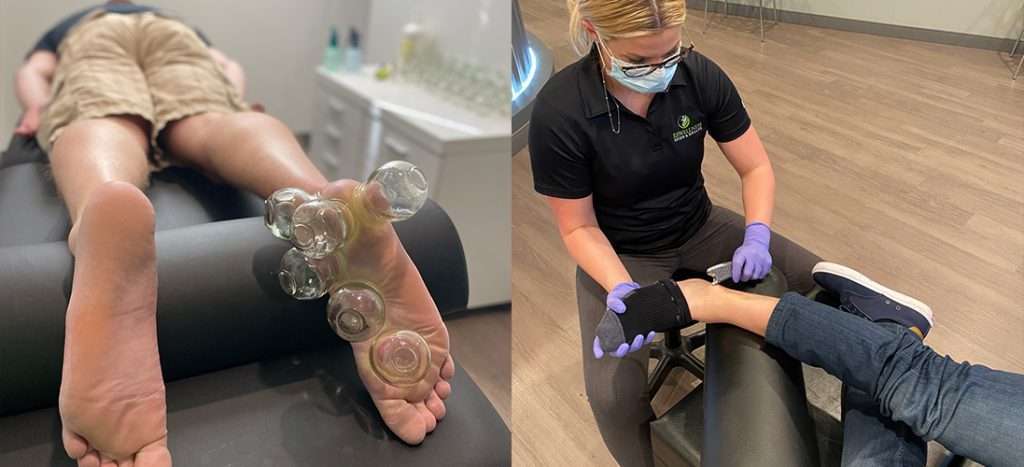
If shin or heel pain persists for more than two to three weeks, it’s time to get professional support. Chiropractors assess your gait, biomechanics, and muscle imbalances to find the root cause. This approach is one of the most effective paths to knowing how to avoid shin splints and plantar fasciitis long-term.
What a chiropractic evaluation covers
A chiropractic evaluation for running injuries typically covers several key areas. Our multidisciplinary team provides both immediate shin splints treatment and lasting plantar fasciitis treatment.
- Gait analysis to identify overpronation or problematic heel-strike patterns
- Soft-tissue therapy to release tight calf, tibialis, and plantar fascia tissues
- Spinal and lower extremity adjustments to improve alignment and reduce strain
- Guided plantar fasciitis exercises and stretches to avoid shin splints
- How to avoid plantar fasciitis and shin splints with orthotics or footwear recommendations
- A structured return-to-running plan that prevents reinjury over the long term
Related: Do Chiropractors Help With Foot Pain?
Frequently Asked Questions
Can shin splints turn into a stress fracture if you ignore them?
Yes, shin splints are an early warning sign of tibial bone stress. Continuing to run through significant pain can progress to a tibial stress fracture, which requires six to eight weeks of rest from impact activity. If your pain becomes pinpoint and doesn’t ease during a run, get imaging done right away.
How long does shin splints treatment take to work?
Mild cases with early shin splints treatment often resolve in two to four weeks. More significant cases can take six to eight weeks or longer depending on how much tissue irritation exists. Continuing to run on inflamed tissue without treatment extends recovery time considerably.
Is it safe to run with mild plantar fasciitis?
Mild discomfort that resolves quickly after warming up may be manageable with training modifications. However, running through plantar fasciitis without plantar fasciitis treatment regularly risks turning an acute case into a chronic one. Reduce your mileage, start plantar fasciitis exercises, and get a professional assessment before returning to full training.
What’s the difference between shin splints and a stress fracture?
Shin splints cause diffuse, aching pain spread across a wide stretch of the shin. A stress fracture causes sharp, point-specific tenderness at a single spot on the tibia that doesn’t ease during the run. If your pain is pinpoint and worsens with activity, get imaging done rather than waiting it out.
Do orthotics really help with plantar fasciitis treatment?
Custom orthotics can help redistribute pressure away from the plantar fascia origin and correct overpronation patterns. They work best as part of a broader plantar fasciitis treatment plan that also includes stretching and footwear changes. Off-the-shelf insoles may offer temporary relief, but custom devices address your specific foot mechanics.
How to avoid shin splints when running on pavement all the time?
Pavement creates the highest ground reaction forces of any running surface. To know how to avoid shin splints when running on hard surfaces, alternate with softer terrain like trails or grass whenever possible. Fresh, cushioned shoes and stronger hip and core muscles also significantly reduce the load on your shins.
When should I see a chiropractor instead of resting and stretching on my own?
If your pain doesn’t improve after two to three weeks of self-care, it’s time to see a professional. Chiropractors address the biomechanical root causes of both conditions with soft-tissue therapy, adjustments, and personalized plantar fasciitis exercises and stretches to avoid shin splints. They can also build a return-to-running plan that keeps how to avoid plantar fasciitis and shin splints recurring a priority.
Key Takeaways
- Shin splints affect between 13.6% and 20% of runners, making them one of the most common running injuries.
- Plantar fasciitis affects up to 22% of runners and is the most common cause of heel pain in active adults.
- Knowing how to avoid shin splints and plantar fasciitis starts with understanding training errors like doing too much too fast.
- The 10% rule is your best defense: don’t increase your weekly mileage by more than 10% at a time.
- Stretches to avoid shin splints include calf stretches, toe raises, and tibialis anterior stretches done after warm-up.
- Plantar fasciitis exercises like calf raises, towel curls, and arch stretches help strengthen the foot and reduce heel strain.
- Shin splints treatment and plantar fasciitis treatment are far more effective when started early, before pain becomes chronic.
- A chiropractic evaluation can identify gait problems and biomechanical imbalances before they lead to injury.
Your Spring Running Season Doesn’t Have to End Early
You’ve worked hard to build your base. Knowing how to avoid shin splints and plantar fasciitis as you add miles is what keeps that effort from going to waste. Whether it’s your first 5K or your tenth half-marathon, the principles are the same. Listen to your body, strengthen your supporting muscles, choose the right footwear, and don’t rush your mileage increases.
Plantar fasciitis exercises and stretches to avoid shin splints are tools you can use right now. If pain is already present, early shin splints treatment and plantar fasciitis treatment are far more effective than waiting.
Spring is here, and so is your chance to run pain-free. Our multidisciplinary team combines chiropractic care, soft-tissue therapy, and customized exercise plans to address root causes. Request your appointment today or contact a clinic near you to start your recovery.