

Table of Contents
If you’re asking, “What are the symptoms of a herniated disc in Bowie?” The short answer is this: radiating pain, numbness, tingling, and muscle weakness that follow a specific nerve pathway from your spine outward to your arms or legs.
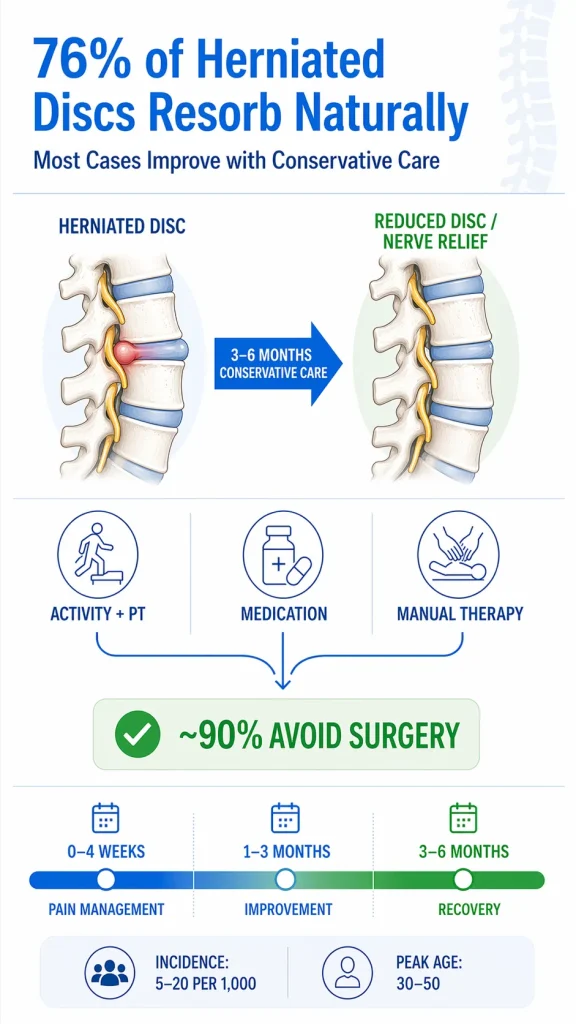
“The incidence of HNP is 5 to 20 cases per 1000 adults annually, predominantly affecting individuals aged 30 to 50, and the ratio of men to women is approximately 2:1… The most commonly affected disk levels are L4 to L5 and L5 to S1, accounting for approximately 95% of cases in adults between 25 and 55 years old” — Stretanski et al., StatPearls.
For Bowie residents juggling demanding careers and active family lives, identifying these symptoms early and pursuing conservative care is the key to getting back to normal — without surgery.
Related: How Long Does Sciatica in Bowie Last?
What Are the Symptoms of a Herniated Disc in Bowie and What Causes Them?
Herniated disc symptoms develop when part of the soft inner disc pushes through a tear in the outer fibrous ring and presses against a nearby nerve root.
“Lumbar disc herniation is the most common degenerative disease of the spine, with a prevalence of 2–3%. Nevertheless, only a small percentage of patients (<10%) are candidates for surgical intervention… In the absence of cauda equina syndrome, motor, or other serious neurologic deficits, conservative treatment should be the first line of treatment for LDH” — Yaman et al., World Neurosurgery X.
Understanding the root causes and which symptoms signal your specific nerve level helps you and your care team build the most effective path to recovery.
Lumbar vs. Cervical Disc Herniation
The lumbar and cervical spines are the two most commonly affected regions, each producing a distinct symptom pattern. Cervical herniations at C5–C6 or C6–C7 cause neck pain with radiating arm pain and weakness, while lumbar herniations at L4–L5 or L5–S1 produce low back pain with radiating leg pain and sensory changes.
- Cervical herniation: neck pain, arm numbness, hand weakness
- Lumbar herniation: low back pain, sciatica, leg weakness
- Most herniations occur at the most mobile spinal segments
- Location of symptoms maps directly to the compressed nerve root
Radicular Pain and Nerve Compression
Direct mechanical compression combined with a local inflammatory cytokine response drives symptoms far from the spine itself. Paresthesias, dermatomal sensory loss, and myotomal muscle weakness are all hallmarks of this process of nerve irritation.
- Sharp, shooting pain that radiates away from the spine
- Numbness or tingling in arms, hands, legs, or feet
- Muscle weakness in the affected nerve distribution
- Pain that worsens with prolonged sitting, bending, or coughing
Red Flags That Require Prompt Attention
Most cases of herniated disc follow a favorable natural course. Still, certain symptoms indicate serious nerve or spinal cord involvement requiring prompt evaluation. Progressive motor weakness, saddle anesthesia, and any loss of bowel or bladder control are red flags for cauda equina syndrome and require immediate medical attention.
- Sudden loss of bowel or bladder control
- Saddle anesthesia (numbness in the groin and inner thighs)
- Rapidly worsening or bilateral leg weakness
- Gait disturbance or loss of coordination
New to RxWellness? Your first visit — including consultation, examination, and treatment — is just $19. Book your new patient appointment today!
What Are the Treatment Options for a Herniated Disc in Bowie?
Herniated disc treatment spans a wide spectrum, from home-based activity modifications to surgical intervention in the most severe cases. “A combination of activity modification, pharmacotherapy, and physical therapy provides good outcomes in most LDH patients” — Yaman et al., World Neurosurgery X.
For the majority of patients experiencing herniated disc symptoms in Bowie, non-surgical and manual therapy approaches form the foundation of an effective care plan.
Conservative First-Line Approaches
Initial management begins with activity modification — avoiding aggravating movements while maintaining normal activity as tolerated. NSAIDs reduce nerve root inflammation, while short-term muscle relaxants and neuropathic agents address spasm and radicular burning.
- Activity modification to reduce disc load and irritation
- NSAIDs for nerve root inflammation and pain relief
- Short-term muscle relaxants for associated muscle spasm
- Neuropathic agents for radicular burning or shooting pain
Manual Therapy and Spinal Manipulation
Structured physical therapy, exercise rehabilitation, and spinal manipulation are central to most evidence-based herniated disc programs. Chiropractic spinal manipulation has demonstrated meaningful improvements in pain, disability, and range of motion in clinical trials, and the flexion-distraction technique reduces intradiscal pressure and expands the neural foramen to relieve nerve root compression.
- Spinal manipulation for pain reduction and mobility improvement
- Targeted exercise to restore disc loading mechanics
- Flexion-distraction to reduce intradiscal pressure
- Traction-based decompression for nerve root relief
When Surgery Becomes Necessary
Surgery is reserved for patients with cauda equina syndrome, significant progressive motor deficit, or persistent symptoms unresponsive to a full conservative program. Randomized trials confirm that surgery provides faster early relief. Still, long-term outcomes at one to two years are comparable between surgical and well-managed conservative groups.
- Surgery is reserved for cauda equina, motor deficit, or failed conservative care
- Microdiscectomy and endoscopic options for appropriate candidates
- Long-term outcomes are similar between surgery and conservative care
- Post-surgical recurrence risk supports a conservative-first approach
What Are the Benefits of Conservative Care for a Herniated Disc?
Conservative care offers a compelling case for most patients: the majority improve without surgery, and the body’s own healing mechanisms can resolve a herniated disc in Bowie material over time.
“The percentage of NP spontaneous resorption after conservative treatment was 76.6% (1684/2199), ranging from 20% to 96.2%… The resorption process occurred mainly within 3–6 months of conservative treatment” — Xie et al., Orthopedic Reviews.
For Bowie patients, lasting relief is achievable through non-surgical means with the right care team and a structured program.
Spontaneous Resorption and Natural Healing
The body frequently reabsorbs herniated disc material on its own, and sequestrated and extruded herniations — which often cause the most intense initial symptoms — are the most likely to resorb naturally.
- The body reabsorbs herniated disc material in the majority of cases
- Resorption typically occurs within three to six months
- Extruded and sequestrated types have the highest resorption rates
- Clinical improvement often precedes complete imaging resolution
Avoiding Surgery Through Multimodal Care
A multimodal conservative program combining manual therapy, targeted exercise, and appropriate pain management allows the vast majority of patients to avoid surgery. WFNS guideline reviews indicate that conservative treatment should be first-line for most lumbar disc herniation cases, and only a small minority of patients—generally fewer than 10%—ultimately become candidates for surgery — Costa et al., World Neurosurgery X.
- Fewer than 10% of herniated disc patients require surgery
- Multimodal programs produce good outcomes for most patients
- Chiropractic aligns with WFNS-endorsed conservative care guidelines
- Integrated care reduces reliance on long-term medication use
Functional Restoration and Long-Term Recovery
Conservative care aims to restore full functional capacity — returning patients to work, recreational activities, and daily life. Core stabilization, posture correction, and movement retraining address the biomechanical vulnerabilities that contributed to the herniation and reduce the risk of future episodes.
- Core stabilization reduces recurrence risk after symptom resolution
- Posture correction addresses the root biomechanical contributors
- Functional restoration returns patients to work and activity
- Movement retraining supports long-term spinal health
If you’re ready to find lasting relief from a herniated disc in Bowie, our team at RxWellness is here to help. Call (301) 901-0851 to schedule your consultation today.
What Should You Expect During Your First Herniated Disc Appointment?
Your first visit to RxWellness Bowie combines a thorough clinical history with hands-on neurological assessment and, when needed, diagnostic imaging. So your care plan is built on objective findings, not assumptions.
Initial Consultation and Neurological Assessment
Your appointment begins with a one-on-one consultation reviewing your health history, symptom timeline, and treatment goals, followed by a comprehensive neurological examination. Dermatomal sensation, myotomal strength, deep tendon reflexes, and provocative tests, including the straight-leg raise and Spurling’s test, confirm the affected nerve level.
- Detailed intake covering symptom onset, location, and severity
- Neurological exam assessing reflexes, strength, and sensation
- Straight-leg raise and Spurling’s test for nerve root involvement
- Postural and range-of-motion assessment included
Imaging and Diagnostic Evaluation
On-site digital X-ray is available at RxWellness Bowie for same-day evaluation of spinal alignment and structural factors. Imaging findings are interpreted alongside your clinical presentation, and your chiropractor will review results with you during the same visit.
- On-site digital X-ray available on your first visit
- MRI is recommended when soft tissue or nerve visualization is needed
- Imaging interpreted alongside clinical exam findings
- Results reviewed with you during the same appointment
Your Personalized Care Plan
At the end of your first visit, you’ll receive your initial treatment, which may include a spinal adjustment and soft tissue work. A comprehensive long-term care plan, including recommended visit frequency and an expected timeline, is presented at your second appointment, tailored to your specific disc level and functional goals.
- First treatment delivered at the end of your initial appointment
- Comprehensive care plan presented at the second visit
- Plan tailored to your specific herniation level and goals
- Insurance coordination and scheduling are handled before you leave
Is Chiropractic Care Right for Your Herniated Disc in Bowie?
Chiropractic care is appropriate for a broad range of herniated disc presentations. Still, fit depends on the severity of nerve involvement, symptom duration, and your health history. Most patients with radicular symptoms and no significant motor deficit or red flags are strong candidates for a chiropractic-centered conservative program.
Ideal Candidates for Conservative Management
Patients who respond best have subacute or chronic symptoms lasting more than 4 weeks, mild-to-moderate neurological signs, and no cauda equina involvement. Working-age adults in Bowie dealing with desk-job strain, commuting posture issues, or physically demanding work frequently match this profile.
- Subacute or chronic radicular symptoms lasting over four weeks
- Mild to moderate neurological signs without progressive deficit
- Adults aged 30–55 represent the primary herniation demographic
- Patients are motivated to engage in active rehabilitation
Conditions That Respond Well to Chiropractic
Lumbar disc herniations at L4–L5 and L5–S1 producing sciatica and sensory changes are among the most studied presentations for spinal manipulation, with evidence supporting meaningful improvement in pain, function, and disability. Cervical herniations causing neck and arm pain without myelopathy also benefit from mobilization and traction-based approaches.
- L4–L5 and L5–S1 herniations with sciatica respond well to manipulation
- Cervical herniation without myelopathy benefits from mobilization and traction
- Degenerative disc disease and spinal stenosis respond to the same framework
- Concurrent biomechanical contributors are addressed within the same care plan
When a Referral May Be Recommended
RxWellness chiropractors are trained to recognize presentations requiring prompt referral to a spine specialist or emergency provider. Progressive motor weakness, bilateral symptoms, saddle anesthesia, or bowel and bladder involvement are indicators that chiropractic alone is insufficient.
- Progressive motor weakness triggers specialist referral
- Bilateral symptoms and bowel/bladder changes require urgent evaluation
- RxWellness coordinates referrals when the chiropractic scope is exceeded
- Appropriate triage is built into every new patient evaluation
How Long Does It Take to Recover from a Herniated Disc?
Recovery timelines vary depending on herniation type, symptom severity, and the consistency of the care plan. Still, the evidence suggests a favorable prognosis for patients who pursue structured conservative treatment. “Spinal manipulation improves the results of physiotherapy over a period of 3 months for patients with subacute or chronic lumbar radiculopathy” — Ghasabmahaleh et al., American Journal of Medicine. For most Bowie patients, meaningful improvement begins within the first few weeks and builds across a full conservative program.
Short-Term Relief vs. Long-Term Correction
Most patients notice improvement within the first eight to twelve weeks, with research confirming that more than 85% of acute disc herniation symptoms resolve within this window. Early improvement reflects symptom reduction rather than full structural correction — corrective phase adherence is what converts early relief into durable recovery.
- Most acute symptoms improve within eight to twelve weeks
- Over 85% of patients see meaningful resolution with conservative care
- Early symptom relief differs from full structural correction
- Corrective phase adherence drives long-term outcomes
Factors That Influence Recovery Speed
Extruded and sequestrated herniations tend to resorb faster than contained protrusions, despite causing more intense initial symptoms. Body weight, smoking status, cardiovascular health, and fear-avoidant behavior all influence how quickly patients move through recovery.
- Herniation type and morphology influence resorption timeline
- Smoking, BMI, and cardiometabolic health affect disc healing
- Fear-avoidant behavior can slow functional recovery
- Active participation in rehabilitation accelerates outcomes
Preventing Recurrence After Symptom Resolution
Recurrent disc herniation occurs in an estimated 5% to 14% of cases, most often at the same spinal level within one to five years. Core stabilization, posture correction, and ergonomic adjustments are the primary prevention strategies — especially relevant for Bowie residents who sit at desks, commute long distances, or perform physical labor.
- Recurrence risk ranges from 5–14% following treatment
- Core stabilization is the primary evidence-based prevention strategy
- Ergonomic adjustments are essential for desk workers and commuters
- Wellness phase care reinforces long-term spinal resilience
Related: How Do You Choose the Best Chiropractic Deal in Bowie?
Why Choose RxWellness Bowie for Herniated Disc Care?
At RxWellness Spine & Health in Bowie, our multidisciplinary team delivers evidence-based herniated disc care that addresses the underlying causes of disc-related pain — not just the symptoms.
- Ranked #1,523 on the Inc. 5000 list of America’s fastest-growing companies (2025)
- Ranked #45 on the Inc. Regionals Mid-Atlantic list (2025)
- 150,000+ patients treated across 12 Virginia and Maryland locations
- 7,500+ five-star patient reviews
- Board-certified chiropractors with specialized training in spinal conditions
- Same-day appointments available for new patients
- Major insurance accepted, including Aetna, BCBS, CareFirst, Cigna, FSBP, GEHA, Medicare, and UHC
- Multidisciplinary team including chiropractors, nurse practitioners, and patient care specialists
The RxWellness Three-Phase Care Model
Every herniated disc patient at RxWellness Bowie moves through a structured progression designed to deliver lasting results.
- Relief Care: Reduce pain and inflammation through targeted chiropractic adjustments and hands-on therapy
- Corrective Care: Address underlying biomechanical contributors through rehabilitation and postural correction
- Wellness Care: Maintain progress with periodic check-ins and proactive strategies to prevent recurrence
What Herniated Disc Treatments Are Available at RxWellness Bowie?
The team at RxWellness Bowie delivers integrated, condition-centered care using a focused set of treatments matched to your specific presentation. Each modality is selected to complement the others, addressing nerve compression, spinal alignment, muscle function, and long-term resilience.
Chiropractic Care for Herniated Disc in Bowie
Chiropractic care is the cornerstone of herniated disc treatment at RxWellness Bowie, using targeted spinal adjustments to correct misalignments at the affected disc level and decrease mechanical compression on the irritated nerve root. Technique selection is individualized based on your herniation level, neurological findings, and treatment response.
- Targeted adjustments reduce nerve root compression and pain
- Technique selection tailored to your specific disc level and presentation
- Non-surgical, drug-free approach supported by clinical guidelines
- Directly addresses the biomechanical contributors to herniation
Flexion/Distraction Tables
Flexion/distraction uses a segmented treatment table to gently flex and distract the spine — reducing intradiscal pressure, increasing neural foramen dimensions, and encouraging retraction of herniated disc material away from the nerve root. Its low-force approach makes it well-suited to acute and subacute presentations.
- Reduces intradiscal pressure to relieve nerve root compression
- Increases the neural foramen space to decompress affected nerves
- Low-force technique appropriate for acute and subacute presentations
- Directly targets the mechanical source of herniated disc pain
Active Rehabilitation
Active rehabilitation guides patients through hands-on assisted stretching and targeted active exercises integrated directly into the clinical visit. For patients with herniated discs, this movement-based care improves core stability, restores normal spinal motion patterns, and addresses the muscular deconditioning that often accompanies prolonged pain.
- Guided active exercises restore spinal motion and core stability
- Hands-on assisted stretching addresses muscular deconditioning
- Integrated into the clinical visit — no separate appointment needed
- Accelerates the transition from pain relief to functional recovery
Ready to take the next step toward recovery? Schedule your consultation online to visit RxWellness Bowie today and begin your path to relief.
FAQs About Herniated Disc Symptoms in Bowie
Is chiropractic care safe for a herniated disc in Bowie?
Yes — chiropractic care is supported by clinical guidelines as a first-line non-surgical option for most herniated disc presentations. Your chiropractor will conduct a thorough neurological evaluation before any treatment to confirm that manual techniques are appropriate for your case. Patients with significant motor deficits or red flags for cauda equina syndrome are referred to the appropriate specialist.
Does insurance cover herniated disc treatment in Bowie, MD?
RxWellness Bowie accepts most major insurance plans, including Aetna, BCBS, CareFirst, Cigna, FSBP, GEHA, Medicare, and UHC. Our team will verify your benefits before your first visit. Uninsured patients or those preferring a cash-pay option can be seen for just $19 — including consultation, examination, and initial treatment.
How long does it take for a herniated disc to heal with conservative care?
Most patients experience meaningful improvement within 8 to 12 weeks, with more than 85% of acute disc herniation symptoms resolving during this window. Spontaneous resorption of herniated disc material occurs in the majority of conservatively managed cases, typically within 3 to 6 months. Individual timelines depend on herniation type, symptom severity, and adherence to the care plan.
What should I expect at my first herniated disc appointment at RxWellness Bowie?
Your first visit includes a one-on-one consultation, comprehensive neurological and orthopedic examination, and initial treatment — all for $19 as a new patient. On-site digital X-ray is available if needed. A full care plan with visit recommendations is presented at your second visit.
Who is a good candidate for chiropractic treatment for a herniated disc?
Most adults with herniated disc symptoms — radicular leg or arm pain, numbness, tingling, or back and neck pain — without severe progressive neurological deficit are good candidates. Patients aged 30–55 with subacute or chronic symptoms and no red flags for cauda equina syndrome tend to respond well to a structured chiropractic and rehabilitation program.
Key Takeaways
- Herniated disc in Bowie symptoms — including radicular pain, numbness, and weakness — most commonly occur at L4–L5 and L5–S1, affecting adults aged 30–50 most frequently.
- Conservative care is the evidence-based first-line treatment for most herniated disc cases, with fewer than 10% of patients ultimately requiring surgery.
- RxWellness Bowie offers a condition-centered approach using chiropractic adjustments, flexion/distraction tables, and active rehabilitation to address herniated disc pain without surgery.
- The RxWellness three-phase model — Relief, Corrective, and Wellness Care — moves patients from acute pain management through structural correction and into long-term spinal health.
- Most herniated disc symptoms improve within 8 to 12 weeks, with spontaneous resorption in the majority of conservatively managed patients within 3 to 6 months.
- RxWellness Bowie serves patients throughout Prince George’s County, including New Carrollton, Greenbelt, Lanham, Crofton, and Woodmore.
Related: How Long Does It Take to Heal a Pinched Nerve in Bowie?
Find Lasting Relief from Herniated Disc Symptoms in Bowie
If herniated disc pain is limiting your life in Bowie, the right team and the right plan can make a measurable difference — without surgery. At RxWellness Spine & Health Bowie, our chiropractors deliver targeted, evidence-based care designed to reduce nerve compression, restore spinal function, and build long-term resilience to prevent symptoms from returning.
We accept most major insurance plans and offer a $19 new patient visit to make getting started simple.
RxWellness Spine & Health Bowie Online Reservations
4345 Northview Dr., Bowie, MD 20716
Proudly serving Bowie and nearby communities, including New Carrollton, Greenbelt, Lanham, Crofton, and Woodmore.