
Table of Contents
Cupping in Ashburn is a therapeutic technique that uses suction cups placed on the skin to decompress soft tissue, increase local blood flow, and reduce muscle tension — without medication or surgery.
Research published in Frontiers in Neurology found that cupping therapy is a “a promising, safe, and effective non-pharmacological therapy” for managing chronic, low back, and neck pain — Frontiers in Neurology.
At RxWellness Ashburn, cupping is one of several hands-on therapies our team uses to help patients move, feel, and function better.
Related: Chiropractor Near Me With Massage in Ashburn, VA
What Is Cupping Therapy and Where Does It Come From?
Cupping has been used for thousands of years across traditional Chinese medicine, Middle Eastern Hijama practice, and ancient Egyptian healing traditions. Today, it’s a standard tool in sports medicine, chiropractic clinics, and integrative health settings throughout Northern Virginia.
Ancient Roots, Modern Application
Cupping in Ashburn — and across the country — has moved well beyond its traditional roots into mainstream clinical settings, including physical therapy offices, chiropractic clinics, and sports medicine programs.
- Practiced across cultures for over 3,000 years
- Used in TCM, Hijama, and Ayurvedic traditions
- Now common in integrative and sports rehabilitation settings
- Gaining traction among athletes for post-training recovery
How Negative Pressure Works on Tissue
Modern rehabilitation literature frames cupping as myofascial decompression — the mechanical opposite of massage or foam rolling. “Cupping therapy involves creating suction on the skin using glass, ceramic, bamboo, or plastic cups, with negative pressure generated either by applying a flame to the cup to remove oxygen or by using a mechanical suction pump before the cup is placed on the skin” — Journal of Traditional and Complementary Medicine. This tensile force separates fascial layers, induces local hyperemia, and simultaneously stimulates mechanosensitive nerve fibers.
- Suction ranges from 80–250 mmHg in clinical practice
- Lifts skin and superficial fascia away from deeper structures
- Stimulates Aβ nerve fibers to reduce pain signal transmission
- Increases capillary dilation and local oxygen delivery
Types of Cupping Used in Clinical Settings
- Dry cupping: Cups placed on intact skin — most common in U.S. rehab settings
- Sliding cupping: Cup moved across oiled skin for a massage-like myofascial effect
- Dynamic cupping: Patient moves actively under suction to enhance fascial release
- Fire cupping: Flame creates a vacuum in the glass cup — traditional technique
- Wet cupping (Hijama): Small incisions allow blood draw — not standard in U.S. clinical care
Dry, sliding cupping with plastic or silicone vacuum-pump cups is the predominant approach in Northern Virginia chiropractic clinics — effective, non-invasive, and well-tolerated by most patients.
What Conditions Does Cupping in Ashburn Help Treat?
Cupping is most commonly sought for musculoskeletal complaints. Here’s where the clinical evidence is strongest.
Chronic Low Back and Neck Pain
Low back and neck pain have the most research behind them. A 2025 systematic review and meta-analysis covering 10 studies found that cupping produced a statistically significant reduction in pain intensity for chronic musculoskeletal pain patients (SMD −1.17, 95% CI −1.93 to −0.42, p = 0.002) — PMC / 2025 meta-analysis.
A BMJ Open review of 18 RCTs reported a mean neck pain reduction of −2.42 compared with no intervention.
- Significant pain reduction across low back and neck pain trials
- Improvements in both pain intensity and functional disability scores
- Benefits are seen with as few as one to five sessions
- Evidence is strongest for patients with chronic, persistent complaints
Muscle Tension, Soreness, and Myofascial Pain
Cupping’s decompressive mechanism makes it well-suited for myofascial pain from repetitive strain, poor posture, or overuse. A 2024 case series found that static and dynamic cupping decreased pain sensitivity and improved hamstring extensibility in low back pain patients, with effects attributed to changes in blood flow, tissue biomechanics, and nociceptive processing — Journal of Sport Rehabilitation.
- Targets myofascial trigger points and fascial adhesions
- Reduces localized muscle tone without compression
- Often combined with active movement for greater tissue release
- Effective for the shoulder, upper back, hip, and lumbar regions
Headaches and Systemic Complaints
Research on wet cupping for migraines has reported reductions in headache severity and frequency. However, evidence-mapping papers classify the evidence as low to very low quality. Cupping is best positioned as a supportive adjunct for headache patients, not a primary intervention.
- Explored as an adjunct therapy for tension and migraine headaches
- The evidence quality for headache is lower than for back and neck pain
- Best used alongside guideline-directed headache care
What Are the Benefits of Cupping in Ashburn for Muscle and Joint Pain?
The benefits of cupping come from circulatory, neurological, and structural mechanisms working simultaneously.
Pain Reduction and Functional Improvement
The most consistently reported benefit across cupping research is short-term pain reduction. “Cupping therapy has low to moderate evidence in musculoskeletal and sports rehabilitation and might be used as a useful intervention because it decreases the pain level and improves blood flow to the affected area with low adverse effects” — PubMed / 2022 evidence-based analysis.
- Measurable decreases in self-reported pain across multiple conditions
- Improvements in Oswestry Disability Index scores for low back pain
- Short-term pressure-pain threshold increases at treated sites
- Quality-of-life improvements reported in neck pain trials
Circulation, Inflammation, and Tissue Recovery
Suction causes capillary dilation and local hyperemia, delivering oxygen and nutrients while clearing inflammatory waste such as cytokines and creatine kinase. A 2025 hypothesis paper found that dry cupping may also stimulate muscle-derived myokine secretion. However, the authors noted that additional research is needed to confirm this mechanism.
- Local hyperemia aids tissue oxygenation and nutrient delivery
- May accelerate the clearance of inflammatory biochemical byproducts
- Circular marks are a normal result of capillary dilation — not injury
- Proposed myokine secretion may support systemic recovery signaling
Safety Profile and Adverse Events
Cupping has a favorable safety record, with the most common side effects being localized erythema, mild edema, and ecchymosis at cup sites — all resolving within a few days. Evidence mapping found no frequent, serious adverse events in the reviewed literature.
- Localized redness, mild swelling, and cup marks are expected
- Marks typically fade within 3–7 days
- No frequent serious adverse events reported in clinical reviews
- Contraindicated over open wounds, skin infections, or for anticoagulant users
If you’re dealing with persistent muscle pain or tension in Ashburn, our team at RxWellness is ready to help. Call (571) 535-3565 to schedule your consultation today.
What Should You Expect During a Cupping Session in Ashburn?
Knowing what happens before, during, and after your session helps you get the most from cupping therapy in Ashburn.
Before Your Appointment
Your provider will review your health history, symptoms, and treatment goals to confirm cupping is appropriate and identify any contraindications. Wear loose clothing that allows easy access to the treatment area.
- Complete online intake forms before arriving
- Discuss current symptoms, goals, and medical history
- Avoid heavy meals and intense exercise immediately before
- Wear loose clothing for easy access to treatment areas
During the Session
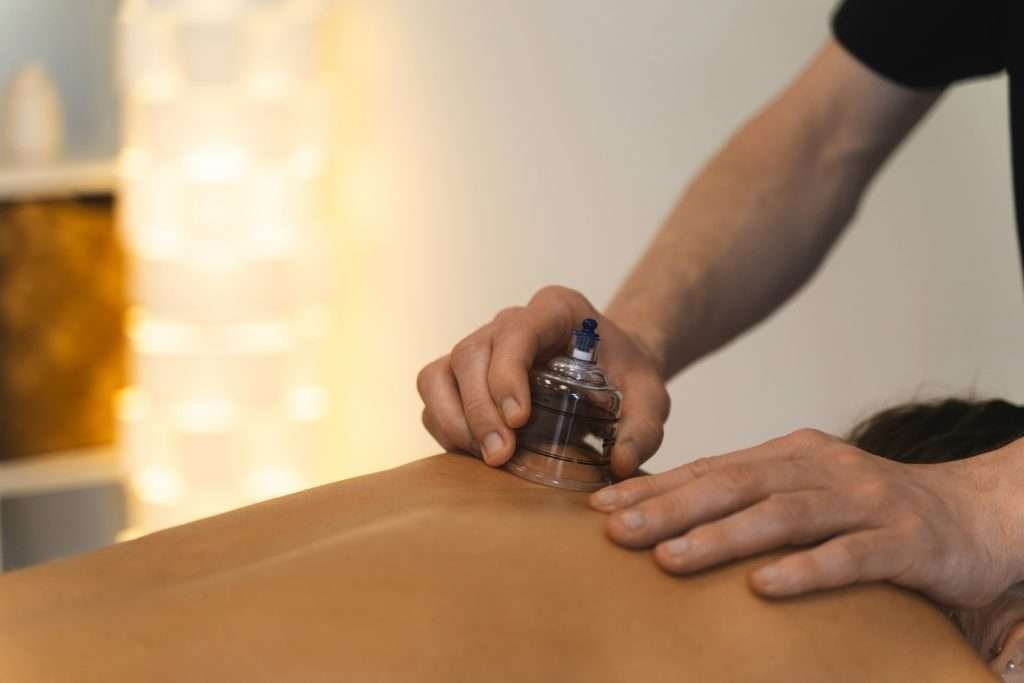
Cups are applied using a hand pump or suction mechanism and left in place for 5–15 minutes, or moved across the skin in a sliding technique. The sensation is typically described as a firm pulling pressure — not painful for most patients.
- Sessions typically last 20–40 minutes, depending on the treatment plan
- Suction sensation is milder than deep tissue massage for most patients
- Dynamic cupping may involve gentle active movement during the session
- Pre-adjustment cupping helps reduce muscle guarding before spinal manipulation
After Treatment and the Cupping Marks
The circular marks result from capillary dilation — not tissue injury — and fade within three to seven days. Mild post-session soreness is normal, particularly after a first session.
- Circular marks are a normal, expected response to suction
- Marks typically resolve within 3–7 days
- Hydration and light movement support recovery between sessions
Who Is a Good Candidate for Cupping in Ashburn?
Cupping tends to work best for specific patient profiles. Here’s how to think about cupping candidacy in Ashburn before booking your first session.
Ideal Patients and Use Cases
Cupping is most effective for patients with myofascial restrictions, chronic soft-tissue pain, or muscle tension that hasn’t responded to massage or stretching alone. The 2018 systematic review of cupping in athletes identified benefits for pain, disability, and range of motion across 11 trials involving 498 participants in soccer, football, and track and field — Journal of Alternative and Complementary Medicine.
- Chronic low back and neck pain with myofascial involvement
- Athletes seeking non-pharmacologic recovery support
- Desk workers with persistent upper back or shoulder tension
- Patients with fibromyalgia or regional soft-tissue pain syndromes
Contraindications and Who Should Avoid Cupping
- Active skin infections or open wounds at treatment sites
- Bleeding disorders or current anticoagulant medication use
- Severe anemia or blood cell disorders
- Active malignancy in the region to be treated
- Pregnancy-related restrictions for lumbar and abdominal applications
Cupping as Part of a Multimodal Care Plan
A BMJ Open systematic review found that combining cupping with conventional care produced greater pain reduction than conventional care alone. At RxWellness Ashburn, cupping is integrated with chiropractic adjustments, dry needling, and massage therapy to address both joint-level and soft-tissue contributors to pain in the same visit.
- Most effective when paired with chiropractic and exercise
- Allows providers to treat both structural and soft-tissue issues together
- Pre-adjustment cupping may improve joint mobility and comfort
How Long Does It Take to See Results from Cupping Therapy?
One of the most common questions from patients considering cupping in Ashburn is how quickly it works — and whether results last.
Short-Term vs. Long-Term Outcomes
Most clinical research documents outcomes over one session to six weeks, consistently showing meaningful pain reduction. A 2025 randomized controlled trial of 50 athletes with DOMS found that “at week 6, the cupping group showed significantly lower VAS scores (M = 3.08, SD = 1.55) than the control group (M = 5.56, SD = 1.04; t = −6.63, p < 0.001, Cohen’s d = −1.88)” — Journal of Preventive Medicine and Care.
- Benefits are often noticed after the first two to three sessions
- Meaningful results typically develop over four to six weeks
- Consistent sessions and complementary care support lasting outcomes
Athletes and Sports Recovery Timelines
Research found that cupping produced a significant delayed effect on EMG markers of muscle fatigue at 24 hours post-exercise, making it more effective as a post-training recovery tool than a pre-performance intervention.
- 24-hour delayed effect on neuromuscular fatigue markers
- Useful for athletes in soccer, track, strength sports, and CrossFit
- Works alongside training load management and exercise therapy
Frequency and Cumulative Benefits
Most patients begin with one to two sessions per week during the active care phase, tapering as symptoms improve. Providers at RxWellness Ashburn incorporate cupping into a personalized plan that accounts for condition severity, overall health, and concurrent modalities.
- Initial phase: 1–2 sessions per week for the most active complaints
- Benefits accumulate with consistent treatment over 4–6 weeks
- Individualized plans produce better outcomes than fixed protocols
Related: Sports Injury Treatments Near Me in Leesburg, VA
Why Choose RxWellness Ashburn for Cupping Therapy?
At RxWellness Spine & Health Ashburn, cupping is part of a broader clinical approach built around your condition, activity level, and recovery goals. Our multidisciplinary team collaborates on every treatment plan, ensuring cupping works in concert with every other therapy you receive.
- 150,000+ patients treated across Northern Virginia and Maryland
- 7,500+ five-star reviews from patients throughout the DMV
- Ranked #1,523 on the 2025 INC 5000 — three consecutive years recognized
- Three-time Best of Ashburn winner
- Board-certified medical team with advanced musculoskeletal training
- Same-day appointments available for acute pain and muscle conditions
- Accepts Aetna, BCBS, CareFirst, Cigna, GEHA, Medicare, and UHC
The RxWellness Three-Phase Care Model
Every patient’s plan at RxWellness Ashburn follows this proven recovery framework:
- Relief Phase: Reducing your acute pain and muscle tension as quickly as possible
- Corrective Phase: Rebuilding strength, mobility, and tissue health at the root level
- Wellness Phase: Maintaining progress and protecting against future flare-ups
What Cupping and Wellness Treatments Are Available at RxWellness Ashburn?
RxWellness Ashburn offers one of the most complete integrative care menus in Loudoun County, combining soft-tissue and structural therapies within a single visit.
Cupping
Cupping at RxWellness Ashburn uses dry and sliding techniques with mechanical vacuum-pump cups, targeting the upper back, lower back, shoulders, and hips. Sessions can be standalone or integrated into a chiropractic visit before an adjustment.
- Dry and sliding cupping using silicone and plastic cups
- Targets myofascial trigger points and areas of fascial restriction
- Non-invasive, drug-free, and appropriate for most patients
Chiropractic Care
Chiropractic adjustments address the structural and joint-level contributors to pain that cupping alone cannot reach, making the combination more effective than either approach in isolation.
- Targeted spinal and joint adjustments to restore proper alignment
- Reduces nerve pressure contributing to pain and muscle tension
- Personalized to your condition, age, and comfort level
Dry Needling
Dry needling inserts thin, sterile needles into muscular trigger points to release localized spasm and reduce pain. Where cupping works at the fascial level, dry needling penetrates deeper into the muscle belly — making the two genuinely complementary for pain with both superficial and deep tissue involvement.
- Targets active trigger points causing referred pain and restriction
- Effective for neck, shoulder, lumbar, glute, and hip pain
Massage Therapy
Massage uses compression-based techniques — the mechanical opposite of cupping’s decompression — making the two therapies complementary rather than redundant. Many patients receive a massage after cupping to integrate the tissue changes produced during the session.
- Reduces overall muscle tension and supports lymphatic drainage
- Effective for post-cupping integration and soft-tissue recovery
Decompression Table
Spinal decompression uses a motorized traction table to reduce intradiscal pressure and relieve nerve compression — particularly effective for disc herniation, sciatica, and stenosis where structural drivers contribute to soft-tissue tension.
- Effective for herniated discs, sciatica, and stenosis-related pain
- Addresses structural drivers that contribute to myofascial tension
Inflammation Management
The Inflammation Management program uses advanced blood analysis and allergen testing across up to 68 triggers to identify root-cause inflammatory patterns, then builds a personalized protocol of dietary guidance, targeted supplementation, and lifestyle optimization.
- Diagnostic blood analysis identifying root-cause inflammation triggers
- Coordinated with chiropractic care by licensed medical professionals
Regenerative Medicine
For patients with joint degeneration or chronic injuries that haven’t responded to conservative care, RxWellness Ashburn offers PRP, PRF, A2M, and HCTP treatments. Ashburn is one of a select group of RxWellness locations offering regenerative medicine.
- PRP and PRF harness the body’s own healing growth factors
- A2M treatments protect and repair joint cartilage
- Available at Ashburn as part of the integrated MedSpa clinic offering
FAQs About Cupping in Ashburn
Does cupping therapy hurt, and will it leave marks?
Cupping is not typically painful — most patients describe a firm pulling pressure, not discomfort. The circular marks result from capillary dilation, not tissue injury, and fade within three to seven days.
How is cupping different from massage therapy?
Massage compresses tissue downward. Cupping lifts tissue upward through negative pressure, decompressing fascial layers through an entirely different mechanical pathway. Most patients benefit from both, which is why RxWellness Ashburn offers them as complementary options within the same care plan.
Can cupping in Ashburn be combined with chiropractic adjustments?
Yes — and it’s a core part of how we approach care at RxWellness Ashburn. Cupping is often used before an adjustment to soften myofascial tissue and reduce muscle guarding. Research confirms that cupping, when combined with conventional care, produces greater pain reduction than conventional care alone.
Does insurance cover cupping in Ashburn at RxWellness?
RxWellness Ashburn accepts Aetna, BCBS, CareFirst, Cigna, GEHA, Medicare, and UHC. Coverage for cupping specifically depends on your plan’s benefits. Our front desk team verifies your benefits before your first appointment, so there are no surprises.
How many cupping sessions will I need before I see results?
Many patients notice reduced tension within the first one to two sessions, with lasting results developing over four to six weeks. Your RxWellness Ashburn provider sets expectations based on your condition and how cupping fits within your overall care plan.
Key Takeaways
- Cupping in Ashburn uses suction to decompress soft tissue, increase circulation, and reduce muscle tension — without medication or surgery
- Research supports its use for chronic low back pain, neck pain, and myofascial pain, with evidence classified as low to moderate quality
- At RxWellness Ashburn, cupping is integrated with chiropractic care, dry needling, and massage therapy for a comprehensive musculoskeletal approach
- The three-phase care model — Relief, Corrective, and Wellness — guides every patient’s recovery plan from first visit to long-term prevention
- RxWellness Ashburn accepts Aetna, BCBS, CareFirst, Cigna, GEHA, Medicare, and UHC
- Results often begin within one to two sessions, with the greatest benefit over four to six weeks of consistent treatment
- Serving patients in Ashburn, Sterling, Brambleton, Lansdowne, Goose Creek Village, and surrounding Loudoun County communities
Related: When Should I Worry About Lower Back Pain in Ashburn?

Begin Your Recovery Journey with Cupping in Ashburn
The evidence supports cupping’s role as a safe, effective adjunct for chronic low back pain, neck pain, and myofascial tension — particularly when integrated into a care plan that also addresses joint alignment and movement.
If you’ve been dealing with persistent muscle pain and want a natural, hands-on approach to relief, cupping in Ashburn at RxWellness is a strong next step.
RxWellness Spine & Health Ashburn Online Reservations
43780 Central Station Dr, Suite 100, Ashburn, VA 20147
Phone: (571) 535-3565
We proudly serve patients throughout Ashburn and nearby communities, including Sterling, Brambleton, Loudoun Valley Estates, Goose Creek Village, and Lansdowne.