

Table of Contents
You don’t always know you’re hurt right after a crash. Your body floods with adrenaline on impact. That rush can hide pain for hours or even days. According to the National Safety Council, medically consulted injuries from motor vehicle incidents reached
According to the National Safety Council, medically consulted motor vehicle injuries reached 5.1 million in 2023 alone. The decision to see a doctor after a car crash isn’t just about pain. It’s about protecting your health and your legal rights. At RxWellness Spine & Health, we treat crash-related injuries every day. We know how quickly symptoms can change after a collision.
Why Should You See a Doctor After a Car Crash Right Away?
Most crash injuries aren’t visible on the surface. Your body releases adrenaline during impact, which temporarily suppresses your sense of pain. To see a doctor after a car crash early means catching hidden injuries before they worsen. It also creates an official medical record tied directly to the collision.
Your body may be hiding serious injuries right now. Don’t wait for the pain to get worse. Call the nearest RxWellness Spine & Health clinic or request an appointment online today. Our team is ready to evaluate your crash injuries and build a recovery plan that works for you.
Adrenaline hides pain after impact
- Adrenaline is a stress hormone your body releases during trauma.
- It temporarily reduces your ability to feel pain.
- You may leave the crash scene feeling completely fine.
- Symptoms like neck stiffness, headaches, or dizziness can appear hours later.
- Don’t wait for pain before deciding to see a doctor after a car crash.
Delayed symptoms can become serious without care
- Whiplash symptoms can take 24 to 48 hours to fully develop.
- Spinal injuries may not cause obvious pain until inflammation sets in.
- Concussions sometimes show no symptoms until days after impact.
- Internal injuries may not trigger pain until organ damage worsens.
- Early evaluation can stop these injuries before they turn chronic.
Related: What to Do After an Auto Accident
How Soon Should You See a Doctor After a Car Crash?

You should see a doctor after a car crash as soon as possible. For severe symptoms, go to an emergency room right away. For minor or no symptoms, seek evaluation within 72 hours. This window is the most commonly recommended timeline by medical professionals and insurers alike.
Go to the ER immediately for these symptoms
- Loss of consciousness or confusion after the collision
- Chest pain, difficulty breathing, or signs of shock
- Visible bone fractures or uncontrolled heavy bleeding
- Severe neck or back pain paired with numbness in the limbs
- Dizziness, blurred vision, or inability to stand without help
See a doctor within 72 hours for minor symptoms
- Mild neck stiffness or soreness that appeared after the crash
- Low-grade headaches that started at or after the time of impact
- General fatigue or body discomfort you didn’t have before
- Limited range of motion in the shoulders, arms, or lower back
- Any new symptom that develops after the crash, no matter how minor
Even a fender-bender can cause soft tissue damage. The Insurance Information Institute advises that crash victims assess their injuries and call 911 if anyone is hurt. Don’t assume a minor crash means minor injuries.
Related: What to Expect Physically After a Car Accident
What Injuries Require You to See a Doctor After a Car Crash?
Several crash injuries don’t show symptoms right away. Whiplash, concussions, herniated discs, and internal bleeding can all develop hours or days after a collision. That’s why every crash victim should see a doctor after a car crash, even without obvious pain or visible injury.
Whiplash and soft tissue injuries
- Whiplash occurs when the head jerks forward and back suddenly during impact.
- Rear-end collisions are the most common cause of whiplash.
- Symptoms include neck stiffness, headaches, and shoulder pain.
- Motor vehicle accidents are the most common cause of neck pain and discomfort
- Untreated whiplash can lead to chronic neck pain and limited mobility over time.
Traumatic brain injuries and concussions
- TBIs can develop without any visible external head injury.
- Symptoms include headaches, confusion, nausea, and disrupted sleep patterns.
- A mild headache after a crash may signal a concussion.
- Brain tissue lacks standard pain receptors, so symptoms appear slowly.
- Cognitive effects can worsen significantly without prompt treatment.
Related: Are There Car Crash Chiropractors?
Spinal injuries and internal damage
- Motor vehicle accidents have been the leading cause of spinal cord injuries in the U.S.
- Herniated discs can cause numbness, tingling, or weakness in the arms and legs.
- Internal bleeding may not cause pain until organs are critically affected.
- Seat belt injuries can bruise abdominal organs without any visible external sign.
- Spinal injuries left untreated can accelerate disc degeneration over time.
Crash symptoms don’t always appear right away. If you’ve been in an accident, now’s the time to act. Call the nearest RxWellness Spine & Health clinic or request an appointment online. We’ll document your injuries, start treatment, and support your recovery every step of the way.
When Should You See a Chiropractor After a Car Accident?
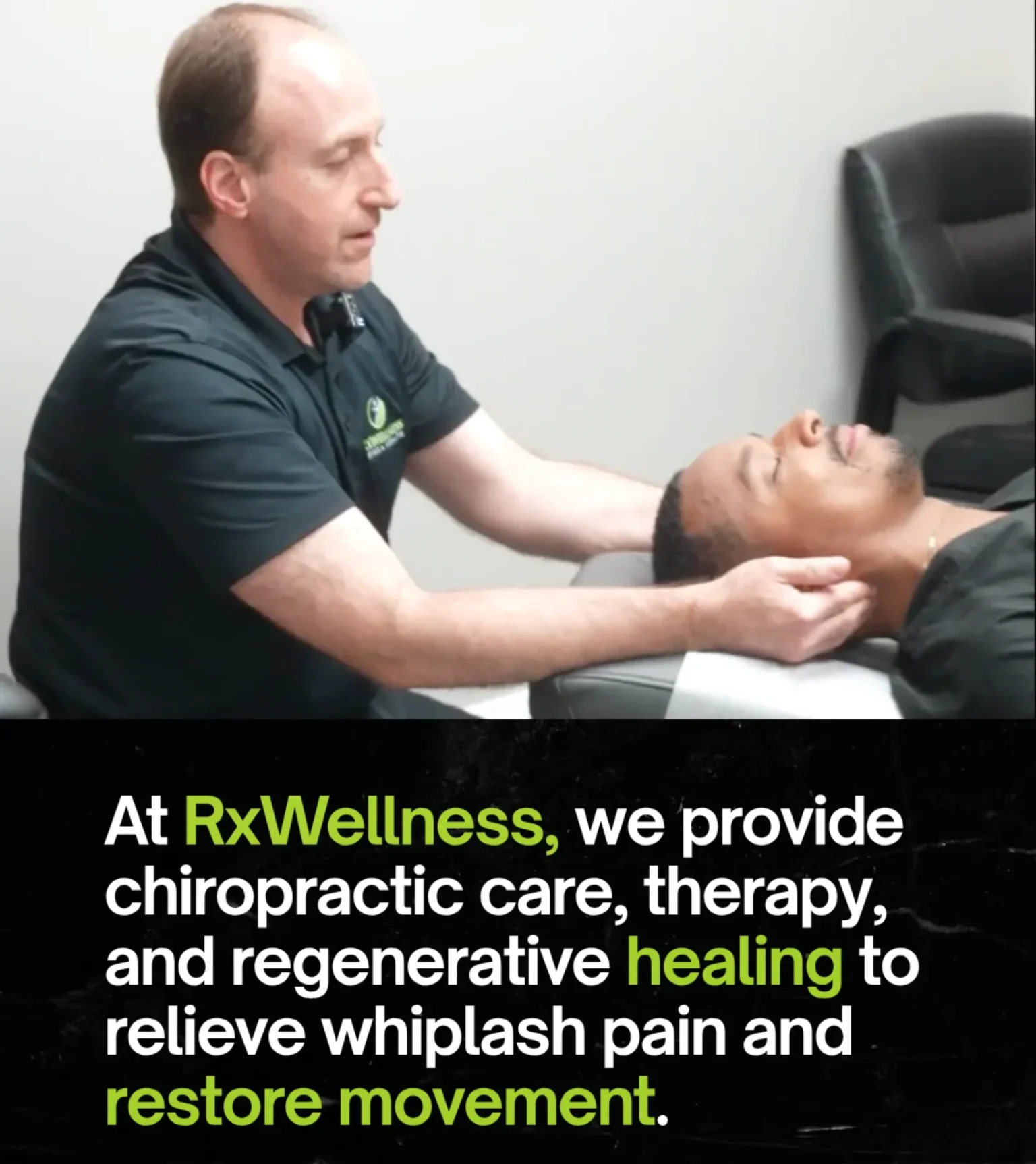
You should see a chiropractor after car accident as soon as possible. Chiropractic care targets the musculoskeletal system directly. It addresses spinal misalignments, soft tissue damage, and nerve irritation without surgery or heavy medication. Early care consistently leads to better outcomes than delayed treatment.
What a chiropractor treats after a crash
- Spinal misalignments caused by the force of impact
- Muscle tension and spasms in the neck and lower back
- Nerve compression contributing to pain, tingling, or numbness
- Reduced range of motion in the cervical and lumbar spine
- Inflammation that limits healing in surrounding soft tissues
How chiropractic care supports your recovery
- Spinal adjustments restore alignment and reduce pressure on nerves.
- Soft tissue therapy decreases muscle spasms and prevents scar tissue formation.
- Rehabilitation exercises rebuild strength in injured areas over time.
- Chiropractic care addresses the source of pain, not just the symptoms.
- A study found that delays in seeking chiropractic treatment lowered improvement levels in motor vehicle accident cases.
- Research also found chiropractic beneficial for patients with chronic whiplash syndrome.
We offer multidisciplinary care at every RxWellness clinic. That means our chiropractors work alongside other providers to give you a full picture of your recovery. Our approach goes far beyond a single adjustment.
Related: How a Car Accident Chiropractor Can Improve Your Recovery Journey
What Happens If You Don’t See a Doctor After a Car Crash?
Skipping medical care after a crash puts your health and your legal case at risk. Untreated injuries can develop into chronic pain conditions. Insurance companies often use delayed treatment as a reason to reduce or deny your claim. The cost of waiting far outweighs the effort of getting checked out quickly.
Long-term health consequences
- Untreated whiplash can cause permanent stiffness and chronic neck pain.
- Undetected TBIs may lead to long-term cognitive and emotional changes.
- Spinal injuries left untreated can accelerate disc degeneration.
- Soft tissue damage may progress into persistent pain syndromes over time.
- Internal injuries that go undetected can become life-threatening.
Insurance and legal consequences
- Insurers can argue your injuries weren’t caused by the crash.
- A gap in care gives adjusters a reason to devalue your claim.
- Medical records are your strongest evidence for linking injuries to the accident.
- Seeing a doctor consistently protects the timeline of your case.
- Your compensation may be significantly reduced without timely documentation.
Related: Car Accident Injury Claim
How Do You Choose the Right Doctor to See After a Car Crash?
Not every provider treats crash-related injuries the same way. You want someone with experience in musculoskeletal trauma, delayed symptoms, and insurance documentation. A multidisciplinary clinic covers the most ground. At RxWellness Spine & Health, we specialize in auto accident recovery across multiple locations in Virginia and Maryland.
What to look for in a crash injury provider
- Experience treating soft tissue, spinal, and neurological crash injuries
- Familiarity with insurance documentation and no-fault coverage processes
- Access to diagnostic imaging like X-rays or MRIs when needed
- A treatment plan that includes monitoring for delayed symptoms
- A team that coordinates care across multiple specialties
Why RxWellness is a trusted choice for crash care
Dr. Philip Golinsky was featured on ABC7’s Good Morning Washington to explain the benefits of chiropractic care for whiplash and auto accident injuries. That recognition reflects the level of expertise our team brings to every crash case we treat.
- Locations across Northern Virginia and Maryland for your convenience
- Multidisciplinary care including chiropractic, physical therapy, and regenerative medicine
- Insurance-friendly documentation process for no-fault and PIP cases
- No-fault and workers’ compensation accepted at our clinics
- Treatment plans tailored specifically to crash-related injury recovery
Related: Find Your No-Fault Doctors Near You After a Car Accident
Frequently Asked Questions
Can I see a doctor days after my car crash?
Yes, you can still see a doctor after a car crash, even if days have passed. It’s always better to seek care late than never, especially when symptoms are developing. Tell your provider exactly when the accident occurred and describe any symptoms you’ve noticed since then. Getting documented care quickly still strengthens your health outcomes and supports your insurance claim.
Does insurance cover seeing a doctor after a car crash?
Many auto insurance policies include medical payments coverage, also known as MedPay, which helps cover doctor visits regardless of fault. Personal injury protection, or PIP, is another common benefit that pays for medical costs after a crash. Always check your specific policy and ask your provider about insurance-friendly treatment options. RxWellness accepts no-fault coverage and works directly with your insurance to simplify the process.
What’s the difference between going to the ER versus seeing a chiropractor after car accident?
The ER handles life-threatening emergencies and acute trauma like broken bones, internal bleeding, and severe head injuries. A chiropractor after car accident specializes in musculoskeletal recovery, including spinal misalignments, whiplash, and soft tissue injuries the ER can’t fully address. Both types of care can be essential at different stages of your recovery. Many crash victims benefit from starting at the ER and then transitioning to chiropractic care for ongoing healing.
How long does recovery take after seeing a doctor for a car crash injury?
Recovery time varies depending on the type and severity of your injuries. Soft tissue injuries like whiplash may resolve in a few weeks with consistent treatment. More serious injuries such as herniated discs or spinal damage can take several months of care to manage. Following your treatment plan without gaps gives you the best chance of a full and lasting recovery.
Do I have to see a doctor after a minor car crash?
Yes, it’s still worth seeing a doctor after a minor car crash. Even low-speed collisions at 5 to 10 miles per hour can cause whiplash and soft tissue damage. Many people assume they escaped injury in a fender-bender, only to develop significant pain days later. A quick evaluation gives you peace of mind and protects you if symptoms appear after you’ve left the scene.
What should I tell a doctor after a car crash?
Tell your doctor the exact date and time of the crash, the direction of impact, and any symptoms you’ve noticed. Describe the full sequence of events, even if some details seem minor or unrelated. Mention symptoms that appeared after the crash, even if they feel mild at first. This information helps your provider connect your injuries to the accident and document your case with accuracy.
Can a chiropractor after a car accident help with headaches?
Yes, headaches are one of the most common post-crash complaints. A chiropractor after car accident can treat these effectively. Many post-accident headaches stem from tension in the neck, cervical misalignment, or whiplash-related muscle strain. A chiropractor addresses these underlying causes through spinal adjustments and soft tissue therapy. Getting evaluated quickly prevents these headaches from becoming a chronic condition that interferes with daily life.
Key Takeaways
- You should see a doctor after a car crash within 72 hours, even without symptoms.
- Adrenaline after a crash can mask serious injuries for hours or days.
- Whiplash, concussions, spinal injuries, and internal damage often show delayed symptoms.
- Delaying medical care gives insurance companies a reason to deny your claim.
- A chiropractor after car accident can treat spinal misalignments and soft tissue damage.
- Early chiropractic care leads to better recovery outcomes than delayed treatment.
- Choosing a crash-experienced provider protects both your health and your legal case.
- RxWellness Spine & Health offers multidisciplinary crash care across Virginia and Maryland.
Take the Right Steps After Your Crash
Don’t wait to see a doctor after a car crash. Whether you feel pain or not, getting evaluated early is the smartest move you can make for your health and your claim. Delayed injuries are common, treatable, and often preventable when you act quickly.
Our team at RxWellness Spine & Health is here to help you recover. We treat crash-related injuries with a multidisciplinary approach that addresses your full recovery, not just your symptoms.
Don’t guess whether you’re injured. Get a professional evaluation at RxWellness Spine & Health. Call your nearest clinic or request an appointment online. We serve patients across Virginia and Maryland with multidisciplinary auto accident care.