
Table of Contents
If you’re searching for a back pain chiropractor near me in Ashburn, RxWellness Spine & Health offers comprehensive, non-surgical care designed to address the root cause of your discomfort — not just the symptoms.
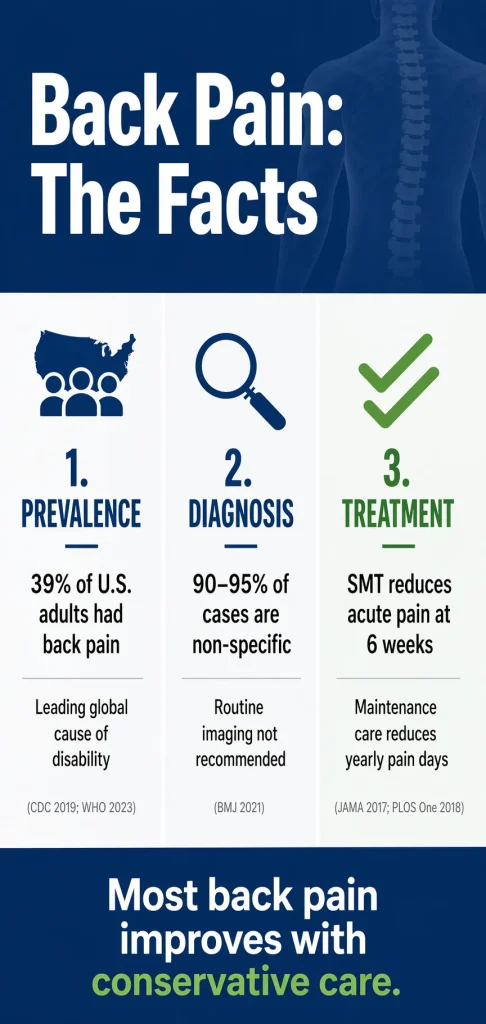
According to the World Health Organization, “low back pain (LBP) has the highest prevalence globally among musculoskeletal conditions and is the leading cause of disability worldwide” — World Health Organization. That pain you’ve been pushing through is far from rare — and untreated, it tends to deepen over time.
At RxWellness Ashburn, our multidisciplinary clinical team creates personalized care plans for patients across Sterling, Ashburn Station, Brambleton, Lansdowne, and Leesburg who are ready to move beyond pain and toward lasting relief.
Related: Where Can I Find Help for Spinal Stenosis Near Me in Ashburn?
What Causes Back Pain and When Should You See a Back Pain Chiropractor Near Me in Ashburn?
Back pain can have many causes, and identifying the underlying cause is the first step toward effective treatment. Most back pain falls into mechanical or non-specific categories — muscle strain, disc degeneration, joint dysfunction, and postural stress — though lifestyle factors and occupational demands frequently compound these issues.
Mechanical Strain and Disc Degeneration
The intervertebral discs between your vertebrae act as shock absorbers, and when they break down, pain follows. “Intervertebral disc (IVD) degeneration is a major contributing factor for discogenic low back pain (LBP), causing a significant global disability” — Mohd Isa et al., J Orthop Transl.
- A disc herniation compresses nearby nerve roots, causing radiating pain
- Nucleus pulposus changes reduce disc height and shock absorption
- Annulus fibrosus tears create localized or referred discomfort
- Mechanical strain from improper lifting strains the paraspinal muscles
Without targeted care, disc-related back pain typically worsens with continued loading and activity.
Facet Joint Dysfunction and Referred Pain
The facet joints along your spine guide movement and share the load your discs carry. When inflamed or arthritic, they generate pain that can radiate deep into the buttocks and thighs — and are frequently underdiagnosed because their symptoms overlap with disc-based conditions.
- Facet arthritis causes stiffness and aching with extension movements
- Referred pain patterns can mimic sciatica without nerve compression
- Degenerative facet changes accelerate with age and excess spinal load
- Physical exam and movement testing help isolate facet joint involvement
Addressing facet dysfunction early prevents compensatory movement patterns that strain surrounding structures.
Sedentary Lifestyle and Occupational Risk Factors
For many Ashburn residents working in tech, government contracting, or professional services, the workday means hours of desk sitting — and that prolonged sedentary time is directly linked to back pain.
Research confirms that “sedentary behavior, whether in work or leisure time, associates with a moderate increase in the risk of LBP in adults, children and adolescents” — Baradaran Mahdavi et al., PMC.
- Prolonged sitting flattens lumbar curvature and loads discs unevenly
- Static posture weakens core stabilizers that protect the spine
- Excess weight and smoking further elevate the risk of back pain
- Manual and construction workers face a high risk from heavy lifting and bending
Occupational risk requires structural intervention and movement retraining to reverse.
What Are the Treatment Options for a Back Pain Chiropractor Near Me in Ashburn?
Effective back pain management depends on accurately matching treatment to the cause and severity of the pain. For the vast majority of patients, non-surgical options are not only appropriate — they’re the evidence-based starting point.
“Less than 5–10% of all low back pain is due to a specific underlying spinal pathology. The remaining 90–95% does not indicate a serious cause and should be managed with conservative treatments such as advice and reassurance, exercise, physical therapy, chiropractic care, cognitive‑behavioural therapy, or pain management” — Hall AM et al., BMJ.
Conservative and Self-Care Approaches
For mild to moderate acute back pain, self-care strategies provide meaningful short-term relief while the body’s natural healing processes take hold. Heat therapy, NSAIDs, and gentle stretching are commonly used first-line measures.
- Superficial heat reduces paraspinal muscle tension and stiffness
- NSAIDs provide short-term inflammation and pain relief
- Activity modification protects the spine without enforcing immobility
- Cognitive-behavioral strategies help prevent pain from becoming chronic
Self-care alone rarely resolves the biomechanical contributors that allow back pain to persist or recur.
Chiropractic and Manual Therapy
Chiropractic care — including spinal manipulative therapy, soft-tissue techniques, and exercise prescription — is one of the most studied and guideline-recommended non-surgical approaches to back pain.
The American College of Physicians explicitly recommends spinal manipulation as a first-line treatment for acute, subacute, and chronic low back pain alongside other nonpharmacologic therapies.
- Spinal manipulation restores motion to restricted or hypomobile segments
- Soft-tissue techniques release muscle tension and myofascial adhesions
- Exercise-based rehabilitation strengthens stabilizers and corrects movement patterns
- Multimodal chiropractic protocols outperform single-modality approaches
Beyond symptom relief, chiropractic care addresses the structural root cause of back pain, which is what makes outcomes more durable.
Interventional and Surgical Options
Surgery — including lumbar fusion or decompression — is reserved for confirmed structural pathology, significant neurological deficits, or failure of comprehensive conservative management.
Studies show 5-year reoperation rates as high as 13.53% for lumbar fusion, reinforcing why exhausting conservative care first is both clinically sound and practically wise. [STAT] — Cummins et al., Global Spine J
- Epidural injections provide temporary relief for radiculopathy
- Trigger point injections address discrete muscular pain sources
- Lumbar fusion is indicated for instability or confirmed structural failure
- Surgery is not appropriate for 90–95% of non-specific back pain cases
What Are the Benefits of Chiropractic Care for Back Pain Relief?
Chiropractic care delivers measurable, evidence-backed benefits for patients dealing with acute and chronic back pain. “In this systematic review and meta‑analysis of 26 randomized clinical trials, spinal manipulative therapy was associated with statistically significant benefits in both pain and function, of on average modest magnitude, at up to 6 weeks” — Paige NM et al., JAMA.
For Ashburn patients tired of managing symptoms rather than resolving them, chiropractic care offers a structured, drug-free path that targets the underlying cause.
Pain Reduction and Functional Improvement
Spinal manipulation restores motion to restricted joints, reduces pressure on irritated nerve roots, and decreases paraspinal muscle guarding that amplifies pain signals. Patients typically notice improvements in pain intensity and mobility within the first several visits.
- Spinal manipulation reduces acute pain intensity and muscle tension
- Improved joint mobility allows for more natural, pain-free movement
- Reduced nerve compression decreases radiating pain and numbness
- Functional improvements are maintained when combined with rehabilitation
Reduced pain quickly translates into better sleep, improved concentration, and greater ability to stay active.
Non-Surgical, Drug-Free Approach
Chiropractic care avoids surgery, opioids, and the side effects associated with long-term medication use. The CDC’s 2026 opioid prescribing guideline explicitly recommends that clinicians “maximize use of nonpharmacologic and nonopioid pharmacologic therapies” before considering opioids for acute pain.
- No recovery time, anesthesia, or surgical complications
- Eliminates reliance on pain medications that mask but don’t resolve dysfunction
- Safe for most adults, including those with comorbidities
- Can be combined with massage, dry needling, and regenerative therapies
Whole-Body Healing and Recurrence Prevention
Chiropractic care addresses the conditions that allowed pain to develop in the first place — not just the painful episode itself. Through exercise rehabilitation, postural correction, and movement retraining, patients build the spinal stability needed to prevent recurrence.
- Core stabilization exercises reduce disability and recurrence risk
- Postural retraining corrects biomechanical drivers of chronic pain
- Ergonomic guidance extends clinical improvements into daily life
- Maintenance care reduces total pain days over the long term
If you’re ready to find lasting relief from back pain in Ashburn, our team at RxWellness is here to help. Call (571) 535-3565 to schedule your consultation today.
What Should You Expect at Your First Visit with a Back Pain Chiropractor Near Me in Ashburn?
At RxWellness Ashburn, the first appointment is designed to give both you and your clinical team a complete picture of what’s driving your back pain — so care starts with precision, not guesswork. Most new patients receive their first treatment on day one.
Consultation and Comprehensive Evaluation
Your first visit begins with a one-on-one consultation covering your full health history, current symptoms, and treatment goals. You’ll discuss onset, aggravating and relieving factors, and any prior treatment history.
- Medical history and symptom timeline reviewed in detail
- Aggravating and relieving factors documented for care planning
- Treatment goals established collaboratively between patient and provider
- Prior imaging or diagnostic records were reviewed if available
This initial conversation directly shapes every aspect of the care plan that follows.
Diagnostic Assessment and Imaging
Your chiropractor conducts a hands-on examination — neurological, orthopedic, postural, and physical assessments that localize the source of your pain. RxWellness Ashburn has on-site digital X-ray capability, so imaging can be taken and reviewed the same day when clinically indicated.
- Orthopedic and neurological testing isolates the pain source
- Postural assessment identifies contributing alignment issues
- Digital X-rays are available the same day when clinically necessary
- Imaging findings are reviewed with the patient before any treatment begins
No procedure is performed without your explicit understanding and consent.
Your First Treatment and Follow-Up Plan
At the conclusion of your evaluation, your chiropractor delivers your first treatment, which may include a spinal adjustment, soft-tissue therapy, or therapeutic modalities. Before you leave, you’ll be scheduled for a follow-up visit where your full care plan and timeline are presented.
- First treatment delivered on day one after evaluation
- Follow-up visit scheduled before leaving the clinic
- Comprehensive care plan presented at the second visit
- Costs, timeline, and treatment goals explained in full
Is Chiropractic Care Right for Your Back Pain Condition?
Chiropractic care is appropriate for a wide range of back pain presentations, but the right treatment depends on your specific diagnosis, health history, and goals. Most patients with non-specific mechanical back pain, disc-related conditions, or postural dysfunction are excellent candidates.
Ideal Candidates for Chiropractic Treatment
The strongest candidates are adults with non-specific back pain, muscle strain, disc herniation without severe neurological involvement, sciatica, or facet joint syndrome. These conditions respond well to spinal manipulation, exercise rehabilitation, and soft-tissue therapy.
- Adults with acute or chronic non-specific low back pain
- Patients with disc herniation and mild-to-moderate radiculopathy
- Individuals with postural-related or occupational back pain
- Patients seeking a drug-free alternative to pain management
Conditions That Respond Well to Spinal Manipulation
Lumbar strain, facet joint syndrome, disc-related radiculopathy, sacroiliac joint dysfunction, and chronic non-specific low back pain are among the most responsive conditions. The 2025 Cochrane review found SMT is as effective as exercise therapy, standard medical care, or physiotherapy for chronic low back pain.
- Lumbar strain and ligamentous sprain respond quickly to manipulation
- Sacroiliac joint dysfunction improves with targeted adjustments
- Facet syndrome and joint arthropathy benefit from mobilization
- Chronic low back pain outcomes comparable to physiotherapy and exercise
When to Consider Additional or Alternative Care
Red flag symptoms — including bowel or bladder changes, unexplained weight loss, fever, significant trauma history, or severe progressive neurological deficits — require urgent medical assessment rather than chiropractic management. At RxWellness Ashburn, red flag screening is built into every initial evaluation.
- Cauda equina syndrome symptoms require emergency evaluation
- Suspected fracture, malignancy, or infection warrants urgent imaging
- Severe nerve compression with motor weakness may need specialist co-management
- Inflammatory arthropathies may require medical management alongside chiropractic care
How Long Does It Take for a Back Pain Chiropractor Near Me in Ashburn to Deliver Results?
Recovery timelines vary based on condition type, severity, and symptom duration. Most patients notice meaningful improvement within the first two to four weeks of consistent care. “During the 12-month study period, the MC group… reported 12.8 fewer days in total with bothersome LBP compared to the control group… MC was more effective than symptom‑guided treatment in reducing the total number of days over 52 weeks with bothersome non‑specific LBP” — Eklund A et al., PLoS One.
Acute vs. Chronic Recovery Timelines
Acute back pain often responds rapidly, with many patients experiencing significant pain reduction within the first three to six visits. Chronic back pain typically requires a more sustained course combining manipulation with targeted rehabilitation.
- Acute back pain often responds within 2–4 weeks of consistent care
- Subacute cases (6–12 weeks) may require 4–8 weeks of treatment
- Chronic back pain benefits from ongoing manipulation and rehabilitation
- Approximately 20% of acute cases become chronic without proper intervention
Maintenance Care and Long-Term Outcomes
For patients with recurrent or persistent back pain, scheduled maintenance visits reduce total pain days over the long term. The Nordic Maintenance Care RCT demonstrated that maintenance chiropractic care reduced the number of bothersome pain days by nearly 13 over 12 months compared with symptom-guided treatment alone.
- Maintenance visits reduce total pain days in recurrent back pain
- Pain-free periods lengthen with scheduled preventive adjustments
- Maintenance care produces no serious adverse events in research populations
- Most maintenance protocols involve monthly or bimonthly check-in visits
Factors That Influence Your Recovery Speed
Recovery speed is shaped by symptom duration, activity level, compliance with home exercises, and whether lifestyle contributors like sedentary behavior and ergonomics are addressed. Your RxWellness Ashburn care team will set realistic, personalized expectations from your first visit forward.
- Longer symptom duration typically means a longer recovery period
- Consistent attendance and home exercise compliance accelerate results
- Core strength and baseline fitness level influence recovery speed
- Addressing sedentary habits and ergonomics extends clinical improvements
Related: Is Chiropractic Care Right for Your Sciatica in Ashburn?
Why Choose RxWellness Spine & Health in Ashburn for Back Pain Treatment?
RxWellness Spine & Health Ashburn combines evidence-based chiropractic care with advanced regenerative therapies, soft-tissue treatments, and personalized rehabilitation — all under one roof, within a care model designed to produce lasting results.
- 150,000+ patients treated across Northern Virginia and Maryland
- 7,500+ five-star reviews from satisfied patients
- INC 5000 fastest-growing healthcare company — ranked #1,523 in 2025
- Board-certified clinical team with advanced training across multiple disciplines
- Same-day appointments available for acute and urgent back pain conditions
- Accepts Aetna, BCBS, CareFirst, Cigna, GEHA, FSBP, Medicare, and UHC
- Three-time Best of Ashburn award winner — recognized by the local community
- Evidence-based protocols aligned with ACP, CDC, and Cochrane clinical guidelines
The RxWellness Three-Phase Care Model
Our structured three-phase model moves every patient from pain relief to full restoration and long-term prevention.
- Relief Phase: Rapid reduction of pain, inflammation, and acute symptoms through targeted adjustments and therapy
- Corrective Phase: Rebuilding spinal stability, strength, and proper biomechanics through guided rehabilitation
- Wellness Phase: Long-term prevention and maintenance to keep pain from returning and spinal health optimized
Back Pain Treatment Approaches at RxWellness Ashburn
At RxWellness Ashburn, back pain treatment is never one-size-fits-all. Our clinical team integrates multiple evidence-based modalities into a coordinated care plan that addresses your specific diagnosis, lifestyle, and recovery goals.
Chiropractic Care
Chiropractic adjustments are the foundation of back pain treatment at RxWellness Ashburn. Spinal manipulative therapy restores mobility to restricted joints, reduces nerve irritation, and corrects the mechanical dysfunctions that generate pain.
- Targeted spinal manipulation reduces pain and restores joint mobility
- Corrects vertebral misalignments that compress nerve roots
- Improves posture, spinal curvature, and load distribution
- Safe and effective for acute, subacute, and chronic back pain
Massage Therapy
Therapeutic massage releases muscle tension, improves circulation, and reduces myofascial restrictions — preparing the soft tissue surrounding the spine for more effective manipulation and accelerating natural healing.
- Releases paraspinal muscle tension that perpetuates back pain cycles
- Improves blood flow to injured and inflamed soft tissue
- Reduces anxiety and stress-related muscle guarding
- Enhances the effectiveness of subsequent chiropractic adjustments
Dry Needling
Dry needling targets muscular trigger points that generate local and referred pain patterns — providing targeted neurological relief for patients who don’t fully respond to manipulation alone.
- Inserts thin sterile needles into active trigger points to release tension
- Reduces localized and referred pain patterns in the back and hips
- Decreases muscle guarding that limits the spinal range of motion
- Effective for chronic paraspinal pain and myofascial back dysfunction
Regenerative Medicine
For back pain driven by degenerative joint disease or chronic inflammation, RxWellness Ashburn offers PRP therapy and A2M injections. PRP harnesses concentrated growth factors from the patient’s own blood to accelerate tissue repair, while A2M inhibits the destructive enzymes responsible for cartilage and disc breakdown.
- PRP delivers concentrated growth factors directly to injured spinal structures
- A2M neutralizes catabolic enzymes that accelerate disc and joint degeneration
- Both treatments use the patient’s own blood for minimal adverse event risk
- Ideal for patients with arthritic or degenerative conditions contributing to back pain
Spinal Decompression Therapy
For back pain driven by herniated discs, spinal stenosis, or nerve root compression, RxWellness Ashburn’s decompression table gently distracts the spine to reduce intradiscal pressure and improve nutrient circulation to damaged discs.
- Gently stretches the spine to reduce disc and nerve root compression
- Encourages retraction of herniated disc material
- Promotes nutrient flow and healing to degenerated disc tissue
- Non-surgical option for patients with radiculopathy or stenosis
Ready to take the next step toward recovery? Schedule your consultation online to visit RxWellness Ashburn today and begin your path to relief.
FAQs About Finding a Back Pain Chiropractor Near Me in Ashburn
Does insurance cover chiropractic treatment for back pain in Ashburn?
Yes. RxWellness Ashburn accepts Aetna, Blue Cross Blue Shield, CareFirst, Cigna, GEHA, FSBP, Medicare, and UHC. Our team verifies your coverage before your first visit. Uninsured patients can access care through our $19 new patient special, which includes a full consultation and first treatment.
How many chiropractic sessions does it take to relieve back pain?
Most patients with acute back pain see meaningful improvement within 2 to 4 weeks. Chronic conditions typically require six to twelve weeks or more. Your chiropractor will present a specific timeline at your second visit based on your diagnosis and initial treatment response.
Is a chiropractor for back pain near me in Ashburn a safe option for a herniated disc or sciatica?
Yes, for most patients. Chiropractic care is well-suited for disc herniation and sciatica when neurological deficits are mild to moderate. RxWellness Ashburn screens all patients for red flag symptoms at the initial evaluation, and cases with severe nerve involvement may require specialist co-management before manual therapy.
What is the difference between chiropractic care and physical therapy for back pain?
Chiropractors focus on spinal manipulation, joint mobilization, and the correction of biomechanical dysfunction. Physical therapists emphasize progressive exercise and functional rehabilitation. At RxWellness Ashburn, elements of both are integrated into a unified care plan within a single multidisciplinary model.
How do I know if I’ve found the right back pain chiropractor near me in Ashburn?
The right chiropractor listens carefully, performs a thorough evaluation, and presents a clear personalized care plan before asking you to commit. At RxWellness Ashburn, every new patient receives a comprehensive consultation, hands-on examination, and first treatment on day one — with a full care plan reviewed at the second visit.
Key Takeaways
- Back pain is the leading cause of disability worldwide, but 90–95% of cases respond to conservative, non-surgical care, including chiropractic treatment
- Chiropractic care delivers clinically proven pain reduction and functional improvement for acute and chronic back pain with a strong safety profile
- RxWellness Ashburn combines spinal manipulation, massage therapy, dry needling, decompression therapy, and regenerative medicine for comprehensive back pain care
- The RxWellness Three-Phase Care Model — Relief, Corrective, and Wellness — moves patients from pain reduction to full rehabilitation and long-term prevention
- Maintenance chiropractic care reduces total days with bothersome low back pain over 12 months, making it a proven recurrence prevention strategy
- RxWellness Ashburn accepts most major insurance plans and serves patients from Sterling, Brambleton, Lansdowne, Leesburg, and throughout Loudoun County
Related: When Should I Worry About Lower Back Pain in Ashburn?
Find Lasting Relief from Back Pain with RxWellness Ashburn
Back pain doesn’t have to be your normal. The vast majority of cases — from disc degeneration to postural dysfunction to chronic muscle strain — respond to conservative, multidisciplinary care when approached correctly.
At RxWellness Spine & Health in Ashburn, our clinical team integrates spinal manipulation, soft-tissue therapy, rehabilitation, and regenerative treatments into a personalized plan tailored to your diagnosis and lifestyle.
RxWellness Spine & Health Ashburn Online Reservations
43780 Central Station Dr, Suite 100, Ashburn, VA 20147
Phone: (571) 535-3565
We proudly serve patients from Sterling, Ashburn Station, Brambleton, Lansdowne, and Leesburg — and we’re ready to help you move forward.