

Table of Contents
That pop when you open wide has a specific cause, and it isn’t your bones grinding. Jaw clicking from TMJ in Baltimore comes from a small cartilage disc that sits between the jawbone and the skull. When it slips forward, it has to snap back into place as you open. Anterior disc displacement is common, with a prevalence of 41.1% in community samples. That’s why so many people have a jaw that pops.
What Actually Makes the Jaw Click With TMJ in Baltimore?
Timing, not damage. The disc is meant to travel with the condyle as your mouth opens, and clicking happens when it lags behind and then catches up suddenly. Temporomandibular disorders affect approximately 5% to 12% of the population. This is an ordinary complaint rather than a rare one.
What happens inside the joint
- A cartilage disc cushions the jawbone against the skull
- The disc normally glides forward as the mouth opens
- Displacement leaves it sitting ahead of the condyle
- The condyle slides underneath it during opening
- The disc snaps back and produces the sound
- It slips forward again as the mouth closes
Why the click often has two beats
- One click as the disc recaptures on the way open
- A second, quieter click as it displaces on closing
- The opening click usually comes first and louder
- The gap between them varies with how wide you open
- Both beats come from the same disc moving twice
- The pattern often stays consistent for years
What the sound is not
- Bone grinding directly against bone
- Air bubbles releasing the way knuckles crack
- Evidence that the joint is wearing out fast
- A sign that surgery is around the corner
- Proof that your bite is misaligned
- Something a single adjustment can silence
Related: How do you know if your jaw pain is TMJ in Rockville?
New to RxWellness? Your first visit — including consultation, examination, and treatment — is just $19. Book your new patient appointment today!
Is Jaw Clicking From TMJ in Baltimore Always Worth Treating?
No, and that’s the part most people are relieved to hear. Painless clicking with normal opening often needs nothing beyond monitoring. When symptoms do warrant care, the field now treats conservative and non-invasive therapies as first line. That shapes how we approach TMJ in Baltimore.
Clicking that usually needs no treatment
- No pain in or around the joint
- Mouth opens to a normal width comfortably
- The sound has been stable for a long time
- Chewing and speaking feel entirely normal
- No headaches or facial aching alongside it
- No locking, catching or sudden restriction
Clicking worth having assessed
- Pain that arrives with the sound
- Opening that has narrowed over recent months
- Aching in the temple or in front of the ear
- Jaw fatigue partway through a meal
- Tightness that builds through the working day
- Neck stiffness that tracks with the jaw symptoms
Symptoms that need prompt dental or medical review
- A jaw that locks open or locks closed
- Clicking that stopped and was replaced by restriction
- Swelling over the joint or a change in the bite
- Numbness across the face or jaw
- Pain following a direct blow to the face
- Fever with a hot, painful joint
Related: Is a Dentist or Chiropractor Better for TMJ in Aldie?
Why Does Neck Tension Show Up Alongside Jaw Clicking?
Because the two regions share muscle, nerve supply and posture. One controlled trial ran a program treating only the cervical region for three weeks. It improved head posture, neck motion and the clinical condition of the temporomandibular joint. That connection is central to how we handle TMJ in Baltimore, since the neck is squarely within our scope.
How the neck and jaw share load
- Jaw muscles attach to the skull the neck supports
- Head position changes resting jaw muscle length
- The upper cervical segments and jaw share nerve pathways
- Clenching recruits muscles down into the neck
- Neck guarding raises tension in the jaw musculature
- Chewing patterns shift when neck motion is restricted
What we look at in the cervical spine
- Range of motion through the upper neck segments
- Resting head position from the side
- Tenderness in the suboccipital muscles
- Tightness through the upper trapezius and levator
- Strength and endurance in the deep neck flexors
- Which movements reproduce the jaw symptoms
Habits that load both regions at once
- Long stretches at a screen with the head forward
- Cradling a phone between shoulder and ear
- Chewing gum for hours at a time
- Sleeping face down with the head rotated
- Clenching through stressful stretches of the day
- Carrying a heavy bag on one shoulder daily
Related: When Is Neck Pain in Baltimore a Serious Problem?
If you’re ready to address TMJ in Baltimore, our team at RxWellness is here to help. Call (410) 609-5750 to schedule your consultation today.
How Is Jaw Clicking From TMJ in Baltimore Assessed?
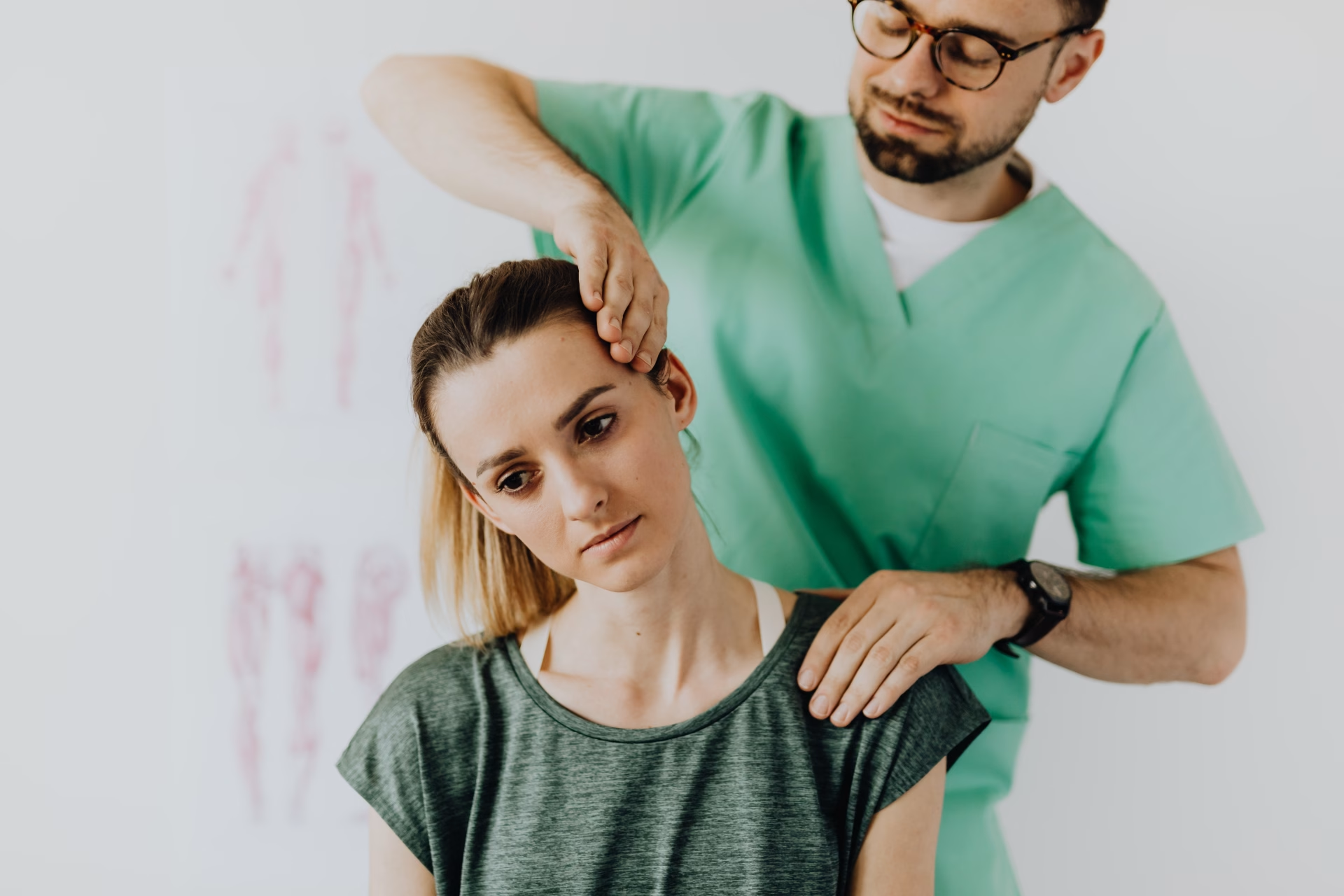
By listening, watching and measuring, in that order. The examination separates a joint that clicks from muscles that hurt, because those two problems respond to different things. Sorting jaw pain from a purely mechanical click is the first useful step.
What the history covers
- When the clicking started and what changed then
- Whether pain arrived before or after the sound
- How wide you can open without discomfort
- Which foods you have started avoiding
- Grinding or clenching noticed by you or a partner
- Stress, sleep and workload over the same period
What the physical examination covers
- Maximum mouth opening measured, not estimated
- Whether the jaw deviates to one side on opening
- Tenderness in the masseter and temporalis muscles
- Palpation over the joint during opening and closing
- Cervical range of motion and segment tenderness
- Head and shoulder posture in standing
Who else belongs on the team
- A dentist for bite assessment and splint therapy
- An orofacial pain specialist for complex cases
- An oral surgeon when imaging shows locking
- A physician for inflammatory or systemic causes
- A sleep clinician when grinding dominates the picture
- A stress or behavioral clinician when clenching drives it
Related: What is Multidisciplinary Care in Baltimore?
What Can We Do About Jaw Pain and Clicking at Our Baltimore Clinic?
Soft tissue work and cervical care. Treatment for TMJ in Baltimore aims at the muscles rather than at the disc. A systematic review of twenty randomized controlled trials of manual therapy found it effective for pain, mouth opening and disability. You can check hours and directions on our Baltimore clinic’s Google Business Profile.
Hands-on care at our Baltimore clinic
- Active Release Technique for the masseter and temporalis
- Graston Technique for restricted fascia around the jaw
- Chiropractic care for the upper cervical segments
- Soft tissue therapy through the neck and shoulder girdle
- Active rehabilitation for deep neck flexor endurance
- Kinesio taping to reduce load on guarded muscle
What we work on around the jaw
- Muscles that clench, guard and refer pain
- Cervical segments that limit head position
- Postural habits that keep the jaw loaded
- Breathing patterns that recruit neck muscles
- Endurance so gains hold through a full day
- Triggers you can change between appointments
What we don’t claim to do
- Reposition a displaced disc inside the joint
- Silence a click that has been there for years
- Replace a dental splint or a bite assessment
- Diagnose or manage an inflammatory joint disease
- Treat the temporomandibular joint surgically
- Substitute for an orofacial pain specialist
Related: Where can I get help for TMJ near me in Bowie?
Does Hands-On Care for TMJ in Baltimore Help Over the Long Run?
The evidence points that way, with the caveat that it treats symptoms rather than anatomy. A network meta-analysis ranked manual therapy highest for mouth opening among the physical approaches compared. Longer-term results from care for TMJ in Baltimore depend more on habit change than on any single technique.
Relief Care, the first phase
- More frequent visits while jaw pain is sharpest
- Soft tissue work on the most reactive muscles
- Chewing load reduced without going fully soft-food
- Sleep position and clenching triggers reviewed
- A baseline recorded for opening width and tenderness
- Simple markers set for moving to the next phase
Corrective Care, the middle phase
- Visit frequency drops as symptoms become predictable
- Neck endurance work added in short daily sets
- Opening width retested rather than assumed improved
- Desk and screen height adjusted for head position
- Harder foods reintroduced in a deliberate order
- Coordination continued with your dentist
Wellness Care, the long view
- Periodic check-ins rather than a course of visits
- Clenching habits revisited during stressful stretches
- Neck strength maintained through the quiet periods
- Flares caught early instead of after weeks
- Any change in opening width reported promptly
- Referral arranged if the picture shifts
RxWellness has been an Inc. 5000 honoree four consecutive years, and the Baltimore Business Journal covered the AllCare Chiropractic and Injury acquisition that brought this clinic into the group.
Why choose RxWellness Baltimore
- Our RxWellness Baltimore clinic sits at 1425 Light Street in Federal Hill
- We accept Aetna, BCBS, CareFirst BCBS, Cigna, FSBP, GEHA, Medicare and UHC
- Johns Hopkins EHP is accepted here as well
- PIP applies here, since this is a Maryland clinic
- Tuesday appointments start at 7am for early schedules
- Jaw symptoms are assessed alongside the neck, not separately
Our founder received the Life University Distinguished Alumni Award, our COO was named to the WPO Women2Watch list, and ABC7’s Good Morning Washington featured him explaining chiropractic care for whiplash.
Related: Sleep Problems & Spine Health in Baltimore
Ready to take the next step toward recovery? Schedule your consultation online to visit RxWellness Baltimore today and begin your path to relief.
FAQs
Should I be worried if my jaw clicks but doesn’t hurt?
Usually not. Painless clicking with a normal opening width is common and often stays unchanged for years. What matters more is whether the sound comes with pain, whether your opening has narrowed, and whether the jaw ever locks. Those three questions separate a harmless noise from something worth assessing.
Can a chiropractor fix jaw clicking?
Not the click itself, and anyone promising otherwise is overselling. The sound comes from a disc inside the joint, and repositioning that disc is difficult even with invasive approaches. What care for TMJ in Baltimore can address is the muscle tension, cervical restriction and postural load around it. Many people find the jaw pain settles while the sound stays.
Why does my neck hurt when the problem is my jaw?
Because the two regions are mechanically and neurologically linked. Jaw muscles anchor to a skull that the neck positions, and upper cervical segments share nerve pathways with the jaw. Research shows that treating the neck alone can improve temporomandibular joint function in people with neck pain. That overlap is exactly why we assess both.
Does grinding my teeth cause TMJ in Baltimore?
It contributes rather than causes. Sustained clenching and grinding load the masticatory muscles heavily, which produces the aching and fatigue people describe. Disc displacement has its own set of contributing factors, including joint loading and anatomy. Managing grinding usually helps the muscle symptoms even when the click remains.
Should I see a dentist or a chiropractor first?
Start with a dentist if your bite has changed, if a splint has been suggested, or if dental pain is part of the picture. Start with us if jaw tightness travels with neck stiffness and headaches. Neither is a substitute for the other, and the strongest results usually come from both working in parallel. We refer readily when a dental assessment is the missing piece.
How long does it take for jaw pain to settle?
Most people notice muscle symptoms shifting within a few weeks of consistent care. Opening width tends to improve more slowly than tenderness does. Progress depends heavily on whether clenching and posture habits change alongside treatment. A stubborn case that hasn’t moved in six weeks deserves a second opinion rather than more of the same.
Will the clicking ever go away on its own?
Sometimes it quiets, sometimes it doesn’t, and it can also come and go. Conservative treatments provide symptomatic relief, though repositioning the disc is genuinely difficult. Because a stable painless click carries no urgency, monitoring TMJ in Baltimore is a reasonable plan. What should not be ignored is a click that disappears and leaves restricted opening behind.
Key Takeaways
- Jaw clicking comes from a cartilage disc slipping forward and snapping back during opening.
- Anterior disc displacement has a prevalence of 41.1% in community samples.
- Temporomandibular disorders like TMJ in Baltimore affect roughly 5% to 12% of the population.
- Painless clicking with normal opening width usually needs monitoring rather than treatment.
- A click that stops and leaves restricted opening behind needs prompt dental or medical review.
- Treating the cervical spine alone improved temporomandibular joint function in a controlled trial.
- Our Baltimore clinic accepts Aetna, BCBS, CareFirst BCBS, Cigna, FSBP, GEHA, Medicare, UHC and Johns Hopkins EHP, and PIP applies in Maryland.
Find Lasting Relief From Jaw Pain in Baltimore
The sound and the symptom are two different problems. A click is a disc moving out of sequence, while the aching, fatigue and headaches usually come from the muscles working around it.
That distinction decides what to do next. Care for TMJ in Baltimore aims at the muscles, the neck and the habits loading both, alongside the dental input that handles the bite. Living comfortably with a jaw that still clicks is a perfectly good outcome, and for many people managing TMJ in Baltimore it’s the realistic one.
RxWellness Spine & Health Baltimore Online Reservations
1425 Light Street, Baltimore, MD 21230
Serving Baltimore and nearby communities, including Federal Hill, Canton, Fells Point, Riverside, and Charles Village, we see patients whose jaw clicking travels with neck tension and headaches.