
Table of Contents
You usually need an MRI for back pain when a clinician suspects a serious underlying condition, notices signs of worsening nerve problems, or needs information that could change your treatment. For many people with uncomplicated back pain, including some with sciatica, an initial scan isn’t necessary. So when do you need an MRI for back pain? The answer depends on your clinical findings and on what the imaging is meant to answer. Pain intensity alone doesn’t decide it, and neither does the number of weeks that have passed.
A review published in The Lancet found that routine, immediate lumbar imaging did not improve clinical outcomes for people without signs of serious underlying disease. The pooled trials mostly involved acute and subacute back pain in primary care, and imaging included X-ray, CT, and MRI, not MRI alone. The finding doesn’t argue against imaging when serious disease is suspected. It shows that a scan is most valuable when it has a clear purpose.
It helps to think about back pain imaging in four groups. Emergency imaging is for symptoms that can’t wait. Earlier diagnostic imaging is for specific risk factors. Elective imaging is for cases where results could guide a planned intervention. Deferred imaging applies when an assessed care plan and follow-up are the more useful first step. Deferring a scan is never the same as dismissing your pain. It should always come with an assessment, a plan, and a clear time to check in again.
Related: Are Back Problems a Sign of a Serious Condition?
Which Back Pain Warning Signs Need Earlier Evaluation?
Part of knowing when do you need an MRI for back pain is recognizing which symptoms call for emergency care, which call for timely medical assessment, and which can be managed with an assessed care plan first. Guidance from the American College of Radiology (ACR) supports avoiding initial imaging for uncomplicated low back pain, recommends MRI when cauda equina syndrome or selected serious conditions are suspected, and notes that other imaging may be preferred when fracture is the concern.
Symptoms That Need Emergency Assessment
Certain symptoms can signal serious compression of the nerves at the base of the spine and need immediate emergency medical assessment. They can raise concern for cauda equina syndrome. You don’t need to have every symptom for it to matter, and a routine office examination can’t reliably rule the condition out. The emergency medical team will decide which imaging is needed.
- New difficulty passing urine, or loss of bladder or bowel control.
- New numbness around the groin or saddle area.
- Severe or rapidly worsening weakness in one or both legs.
- Don’t wait for a routine appointment or try more conservative treatment first.
Other Reasons for Earlier Evaluation
Some situations call for a clinician to look sooner and decide whether imaging belongs in the plan. These factors are interpreted together with your examination and any nerve-related changes, so they aren’t meant to be used as a self-diagnosis checklist. When fracture is the main concern, X-ray or CT may be chosen instead of MRI alone, and how quickly to act depends on the specific concern.
- A history of cancer with new or progressing back symptoms.
- Clinical concern for infection or for problems related to a weakened immune system.
- Trauma, osteoporosis, or prolonged steroid use that raises concern for fracture.
- New or progressing symptoms after previous lumbar surgery.
When a Routine Scan Can Wait
Uncomplicated back pain usually doesn’t need a scan at the start. The ACR’s appropriateness criteria do describe one situation where a noncontrast MRI becomes useful. That situation is tied to treatment planning, though, not to a countdown. It isn’t a required waiting period if concerning symptoms appear, and it isn’t an automatic scan deadline either.
- Initial uncomplicated back pain or sciatica often needs no scan.
- Having symptoms for a long time doesn’t, by itself, create a reason to image.
- The ACR supports noncontrast MRI for selected people who may be candidates for surgery or another intervention.
- That scenario involves symptoms that persist or progress during or after approximately six weeks of optimal management.
New to RxWellness? New patient specials may be available. Contact your nearest location for current offers or schedule online.
What Treatment Options May Come Before an MRI?
Once serious problems have been considered, the first steps for back pain usually focus on staying active and guided exercise, along with medical options chosen with a clinician where appropriate. An MRI is a diagnostic test, not a treatment, so the more useful question is often which care plan fits your current symptoms. The National Institute for Health and Care Excellence (NICE) recommends continuing normal activity and individualized exercise. It supports manual therapy within an exercise-containing package, plus cautious medication use and selected procedures for specific presentations.
Activity Modification and Guided Exercise
After a clinician has checked for warning signs, a tolerable movement plan is usually the starting point, keeping you as active as your symptoms allow. Prolonged rest isn’t the default pathway for nonspecific lower back pain.
- Temporarily adjust activities that clearly aggravate your symptoms.
- Continue appropriate normal activities as your capabilities allow.
- Tailor exercise to your needs, preferences, and current function.
- Combine selected manual therapy with an exercise-containing care plan.
Medication Decisions With a Clinician
Nonsteroidal anti-inflammatory drugs (NSAIDs) may be part of a short-term plan for some people, but they aren’t right for everyone. Whether they suit you depends on your health history, and that decision belongs with a prescribing clinician.
- A clinician considers suitability and any relevant health risks.
- When used, the aim is the lowest effective dose for the shortest appropriate period.
- Medication management doesn’t replace reassessment if your symptoms change.
- Bring questions about pain medication to the clinician managing that part of your care.
Selected Injections and Surgery
Injections and surgery are medical pathways for selected presentations. They aren’t the inevitable consequence of a scan, and they aren’t the default for most back pain. NICE describes specific circumstances in which each may be considered.
- Epidural injections of local anesthetic and steroid may be considered for acute, severe sciatica.
- They are not routine injections for nonspecific lower back pain.
- Decompression surgery may be considered when nonsurgical care hasn’t improved sciatica pain or function.
- Surgical consideration requires imaging findings that are consistent with your symptoms.
How Can MRI Findings Help Without Explaining Every Symptom?
An MRI is most helpful when it answers a specific clinical question, such as whether a nerve-related finding matches the pattern of your leg symptoms. Its limitation is that scans often show changes that are common with age and may have nothing to do with your pain. Reading the report alongside your symptoms and examination is what turns images into a useful decision.
A Finding Needs Clinical Context
A radiology report describes what the images show, and your clinician compares those findings with how you actually feel and function. The two need to line up before a finding can reasonably guide your care.
- Consider where your symptoms are and how they’re distributed.
- Compare findings with your examination and any neurological changes.
- Assess how the problem affects your daily function.
- Ask what the finding actually changes about your care.
Degenerative Changes Can Be Incidental
Spinal changes are surprisingly common in people who have no back pain at all. A review in the American Journal of Neuroradiology pooled 33 studies of 3,110 people without symptoms. It estimated that disc degeneration was present in 37% of people aged 20 and 96% of people aged 80. That doesn’t mean structural findings never matter. It means they need careful interpretation.
- The review examined people who had no back symptoms.
- The age-specific figures were modeled estimates drawn from CT and MRI findings.
- Disc degeneration doesn’t automatically identify the source of your pain.
- An abnormal report isn’t, by itself, a surgical recommendation.
Useful Questions About the Report
If you’ve already had a scan, a few focused questions can help you understand how it fits into your care decisions.
- Which finding, if any, could fit my symptoms?
- Does it change my treatment or referral plan?
- What can safely continue while the plan is reviewed?
- What changes should prompt me to seek reassessment?
If you would like help understanding your back pain care options, schedule a consultation with RxWellness.
Related: Degenerative Disc Disease and a Herniated Disc Explained
What Should You Expect if MRI Is Recommended?
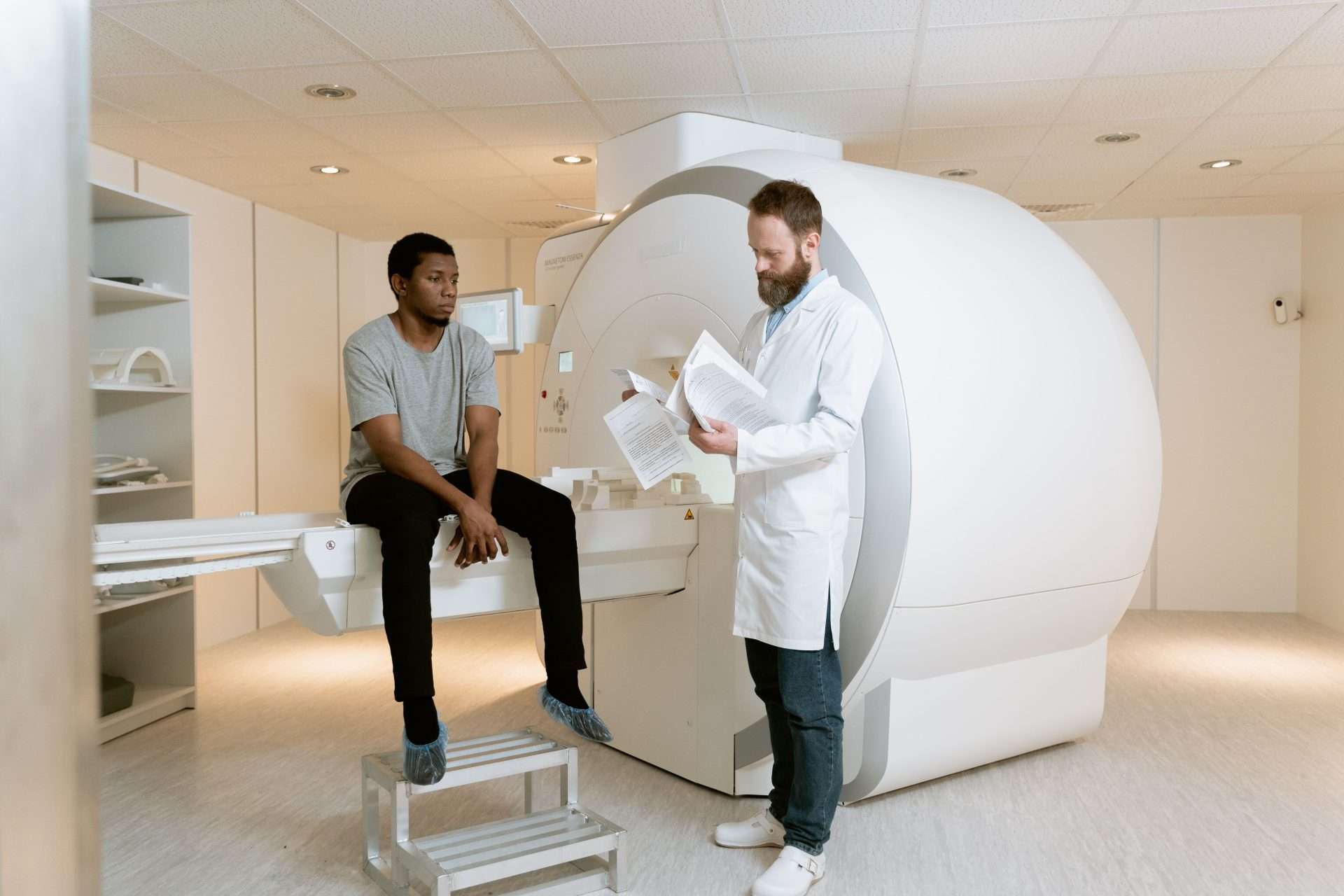
If your clinician recommends an MRI, expect a safety screening first, followed by a scan during which you lie still while images are captured. According to RadiologyInfo.org, a patient resource from the American College of Radiology and the Radiological Society of North America, MRI uses no ionizing radiation, and safety screening covers implanted devices, contrast precautions, and individual health factors. Exact preparation, duration, and protocols vary by facility and by the clinical question being asked.
Share Your Safety Information
Before the scan, the imaging team will ask about anything that could affect your safety. Some implanted devices can be scanned under specific conditions, so share the details rather than assuming you can or can’t have an MRI.
- Disclose implants, devices, and any retained metal fragments.
- Provide device and manufacturer details when you have them.
- Report pregnancy, kidney disease, and any previous reaction to gadolinium.
- Mention claustrophobia or pain that could make lying still difficult.
Understand the Scan Experience
Knowing what happens during the scan can make the appointment feel more manageable. Most share a few practical steps.
- Lie on a table and remain still while images are acquired.
- Expect scanner noise; hearing protection is supplied.
- Communicate with the technologist using the system provided.
- Ask the facility how long your particular examination is expected to take.
Ask About Contrast and Results
Decisions about the scan protocol belong to your referring clinician and the radiology team.
- Some MRI examinations use gadolinium contrast; many don’t.
- Contrast decisions depend on the clinical question and your circumstances.
- Relevant medical history affects safety planning.
- A radiologist reviews the images and communicates findings to your referring clinician.
Who May Be Suitable for Conservative Back Pain Care?
Many people with uncomplicated back pain may be suitable for conservative back pain care, but that’s decided after assessment, which is also where the question “when do you need an MRI for back pain?” usually gets its first answer. Suitability depends on your symptoms, medical history, and examination, and it can change as your situation does. When further evaluation is needed, referral is part of good care rather than a setback.

Assessment Comes Before Treatment
A careful first conversation helps your clinician understand your symptoms and medical context, and decide whether conservative care fits or whether medical evaluation should come first.
- Discuss when symptoms started, how they’ve progressed, and any previous treatment.
- Review how the pain affects movement and daily activities.
- Share relevant health history and any existing imaging reports.
- Determine whether medical evaluation should come before conservative care.
Suitability Can Change Over Time
Being a good fit for conservative care at your first visit isn’t permanent clearance. Your clinician should keep reviewing whether the plan still matches what’s happening, especially if symptoms shift.
- A plan should reflect your current presentation, not just your first visit.
- How well you tolerate treatment matters alongside symptom response.
- New symptoms may call for a different pathway.
- A previously deferred scan can be reconsidered when it’s clinically indicated.
Referral Can Be Part of Appropriate Care
Referral is a coordination step, not a sign that treatment failed. A good referral explains why further evaluation makes sense and keeps everyone working from the same information.
- Consult the appropriate medical provider when further evaluation is indicated.
- Explain the clinical question that prompted the referral.
- Share available findings and treatment history as appropriate.
- Clarify the next step and who is responsible for follow-up.
How Should You Reassess Back Pain Over Time?
Reassess back pain by watching how your symptoms and daily function change, reviewing whether your plan still fits, and agreeing on clear next steps with your clinician. Progress isn’t measured by a single pain score or a fixed date on the calendar. For many people, asking when do you need an MRI for back pain gets a clearer answer through this kind of ongoing review.
Track Symptoms and Function
Meaningful progress shows up in what you can do as well as in how much it hurts. Simple notes between visits help.
- Note whether symptoms are improving, persisting, or worsening.
- Track walking distance and tolerance for daily activities.
- Record limitations that affect work or usual routines.
- Report any new neurological symptoms promptly.
Review the Current Plan
When progress is limited, the plan itself deserves a second look. Reassessment is a chance to check that the explanation and the approach still make sense for you.
- Revisit whether the working explanation still fits your symptoms.
- Discuss whether the plan was suitable and tolerable.
- Identify changing needs or barriers to participation.
- Ask whether further evaluation, including imaging, would alter your care.
Agree on the Next Step
Each review should end with a clear, individualized plan rather than a calendar-driven decision about scanning.
- Clarify when you’ll next review progress.
- Know how to report changes in your symptoms.
- Understand whether to continue, modify, or pause treatment.
- Use the emergency guidance above if those symptoms arise.
Why Choose RxWellness for Back Pain Assessment and Care?
RxWellness focuses on individualized assessment, conservative care where it’s suitable, and coordination with medical providers when your symptoms call for further evaluation. The patient and review figures below reflect our full network, while our INC 5000 recognition reflects company growth rather than clinical-outcome evidence.
- Nationwide network of clinics across Virginia, Maryland, Illinois, and Washington.
- Board-certified clinical team under physician oversight at all locations.
- 150,000+ patients treated across all locations.
- 7,500+ five-star reviews.
- INC 5000 Fastest-Growing Companies — four consecutive years (2023–2026).
- Ranked #1,230 on the 2026 INC 5000 list.
- Ranked #135 in Healthcare and Medical on the 2026 INC 5000 list.
Three-Phase Care Model
Our Three-Phase Care Model is an individualized framework for conservative care, not a fixed sequence every patient must follow. Your clinician will discuss which phase, if any, fits your current needs.
- Relief Care: Focus on presenting pain and discomfort, with visit frequency based on need.
- Corrective Care: Address relevant movement and biomechanical limitations through suitable rehabilitation and care adjustments.
- Wellness Care: Maintain progress through appropriate check-ins, supportive care, and lifestyle education.
RxWellness Care When You Ask: When Do You Need an MRI for Back Pain?
If you’re asking when do you need an MRI for back pain, an RxWellness visit begins with an assessment of your symptoms, history, and examination to decide whether conservative care is suitable or whether medical evaluation should come first. MRI is a diagnostic examination, not one of our treatments. When imaging may help answer a clinical question, we coordinate with the appropriate medical provider. Services vary by location, so please confirm availability with your nearest clinic.
Chiropractic Care
Chiropractic Care can be one component of an assessed, movement-focused plan when it’s appropriate for your presentation. Adjustments are selected based on your examination and tolerance, and they work alongside exercise rather than replacing it.
- Tailor treatment to your symptoms, examination, and individual tolerance.
- Address relevant joint movement and functional limitations.
- Integrate suitable adjustments with exercise-containing care.
- Reassess or pause treatment when findings call for medical evaluation.
Active Rehabilitation
Active Rehabilitation uses guided exercise and assisted stretching to work toward your movement and functional goals after assessment. Availability varies by clinic, and some locations offer comparable services under a different name, such as Functional Rehabilitation, so check with your nearest location.
- Select exercises appropriate to your current capabilities.
- Use guided movement and assisted stretching where suitable.
- Monitor tolerance and progress toward daily activity goals.
- Adjust the plan as your symptoms and function change.
Ready to discuss your back pain and appropriate next steps? Schedule your consultation online with RxWellness.
Related: How Do You Choose a Chiropractor for Back Pain?
Frequently Asked Questions
1. Is It Safe to Begin Back Pain Care Without an MRI?
For many people, yes, but it depends on a proper assessment of your symptoms and history. Some people need medical evaluation before any conservative treatment begins. Deferring a scan should never mean ignoring symptoms. If you notice the emergency warning signs described above, seek immediate medical care rather than waiting for a scheduled appointment or continuing treatment.
2. Will Insurance Cover an MRI or Back Pain Care?
Coverage depends on your specific plan and the service involved. Imaging often has separate rules, so check authorization requirements and out-of-pocket costs with your insurer and the imaging provider. RxWellness accepts most major insurance plans for our services, but please confirm that your clinic participates in your plan and review your benefits before your visit.
3. How Long Should I Wait Before Asking About an MRI?
There’s no universal waiting period that applies to everyone. Timing depends on your symptoms, your examination, and whether imaging would actually change your care. If your symptoms persist, worsen, or change in character, raise it with your treating clinician so the plan can be reviewed. Emergency symptoms always need immediate medical attention, regardless of timing.
4. What Happens at a First RxWellness Visit for Back Pain?
Your first visit typically starts with intake and a consultation about your symptoms, health history, and goals. An examination follows to help determine suitable next steps, and any testing depends on need and clinic availability. Treatment begins only if it’s appropriate and you consent. You can discuss the proposed care plan and any costs before deciding.
5. Can I Receive Conservative Care if My MRI Shows an Abnormality?
Often, yes, but it depends on how the report fits your symptoms and examination. An abnormal finding doesn’t, by itself, determine your care plan, since many changes are common and may not explain your pain. Some findings do need medical or specialist assessment rather than conservative treatment, and your clinician will help you understand which situation applies.
Key Takeaways
- Clinical findings and the purpose of imaging, not pain level or time alone, guide MRI decisions.
- Emergency symptoms, such as new bladder or bowel changes, saddle numbness, or rapidly worsening leg weakness, need immediate medical assessment.
- Uncomplicated symptoms often allow an assessed care plan with regular reassessment instead of an initial scan.
- Persistent or changing symptoms warrant a review of the plan, not automatic repeat treatment.
- Scan findings need clinical context, because many changes are common and don’t always explain pain.
- Conservative care and medical referral serve different, sometimes complementary, roles.
Scanning With a Purpose, Caring With a Plan
So, when do you need an MRI for back pain? You need one when a clinician suspects a serious condition, sees concerning nerve changes, or needs an answer that could change what happens next. Emergency symptoms always come first and need immediate medical care. For many other people, a thoughtful assessment, a tolerable care plan, and regular reassessment are the most useful starting point, and a scan stays on the table if your situation changes.
A useful MRI answers a clinical question. Whether you’re starting care, interpreting a report, or deciding what to do after limited progress, the right next step is an individualized conversation with a clinician who listens to your symptoms and explains the reasoning behind the plan.
Ready to take the next step toward recovery? Schedule your consultation online with RxWellness today.