

Table of Contents
Six weeks before race day, your long run ends with a sore heel, a tight calf or a knee that aches on every downhill. For marathon runners in Vienna, the next question is what good sports injury rehabilitation should include, and how to spot a plan built for your training. Overuse injuries are common in this sport, and researchers in one systematic review reported an overall injury incidence of 40.2% ± 18.8% (mean ± SD) in runners.
What Should Marathon Runners in Vienna Expect From a First Injury Assessment?
At a first assessment, marathon runners in Vienna should expect a provider to look well past the sore spot. Expect questions about weekly mileage, recent long runs, past injuries and your race date, plus hands-on testing of the joints, muscles and tendons you use on every stride.
Training history questions a good assessment covers
- Your weekly mileage across the current training block, including any recent jumps.
- The length and pace of your longest recent runs.
- Changes in shoes, routes, hills or running surfaces.
- Any running injury you’ve had in the past year.
- Your race date and the training weeks you have left.
- Your sleep, work stress and other training like cycling or lifting.
- Your goal for this race, whether that’s a finish or a time.
History matters because researchers in a systematic review of prospective studies found that the main risk factor for running injuries was previous injury in the last 12 months.
Movement and strength tests for marathon runners
- Hip, knee, ankle and spinal motion, compared side to side.
- Single-leg balance and control during a step-down or a squat.
- Calf, hip and thigh strength on the injured and uninjured sides.
- Tenderness along bones and tendons, a possible sign of a bone injury.
- Reflexes, sensation and strength when you report back or leg nerve symptoms.
- Your stride and posture during simple running-like movements, when it’s safe to test them.
- Foot posture and arch control while standing and stepping.
Related: How Can Sports Injury Rehab in Vienna Help Me Recover?
New to RxWellness? Your first visit — including consultation, examination, and treatment — is just $19. Book your new patient appointment today!
Which Running Injuries Do Marathon Runners Report Most Often?
Researchers studying runners overall, not marathon runners alone, report that most running injuries are overuse problems, mainly in the knee, lower leg, ankle and foot. Achilles tendon problems, shin pain, runner’s knee, plantar fasciitis and ankle sprains sit near the top of their list for new injuries.
Overuse injuries researchers see most in runners
In the review cited above, the knee, ankle and lower leg made up the highest share of new injuries. These running injuries topped its lists:
- Achilles tendinopathy, an irritated tendon that aches and stiffens above the heel.
- Medial tibial stress syndrome, often called shin splints, along the inner shinbone.
- Patellofemoral pain, or runner’s knee, felt around or behind the kneecap.
- Plantar fasciitis, a frequent source of heel pain during the first steps of the day.
- Ankle sprains, which ranked in the top five for new injuries.
- Iliotibial band syndrome, which ranked among the most common injuries runners already had.
Running pain we treat in marathon runners in Vienna
- Knee pain that builds around the kneecap on long runs or downhills.
- Plantar fasciitis and heel pain that’s worst with your first steps of the morning.
- Tendonitis in the calf, knee or hip, once a tendon tear is ruled out.
- Hip pain that shows up late in long runs, once a bone injury is ruled out.
- Leg pain in the calves or shins, once a stress fracture is ruled out.
- Back pain that stiffens after long runs or long car rides to races.
- Joint pain in the knees or ankles that lingers between training days.
Call 911 or go to the emergency room for these signs
- You can’t put weight on your leg after a fall.
- A bone or joint looks deformed after a fall.
- Numbness spreads into both legs, or bowel or bladder control changes.
- Chest pain or trouble breathing starts during or after a run.
- Confusion or drowsiness follows a fall with a head injury, so someone else calls or drives.
- Repeated vomiting or a worsening headache follows a blow to the head.
See a physician promptly for these signs
- A bone feels tender at one exact point when you press on it.
- Bone pain starts with everyday walking, keeps getting worse or wakes you at night.
- Pushing off gets hard after a sudden pop at the back of the heel.
- You have a fever along with back pain.
- Weakness or numbness in one leg keeps getting worse.
- Swelling around a bone or joint doesn’t go down with rest.
How imaging and physician input fit a runner’s plan
- Johns Hopkins Medicine notes that stress fractures often don’t show on X-rays because the breaks are so fine.
- A physician may order a bone scan or an MRI when a stress fracture is suspected.
- When we suspect a bone injury during your exam, we refer you to a physician first.
- We share our exam findings with your physician, so both sides work from one picture.
- We time your return to running around the physician’s findings on any bone injury.
Related: How Do I Know If I Have Plantar Fasciitis in Vienna?
How Should Sports Injury Rehabilitation Manage Marathon Training Load?
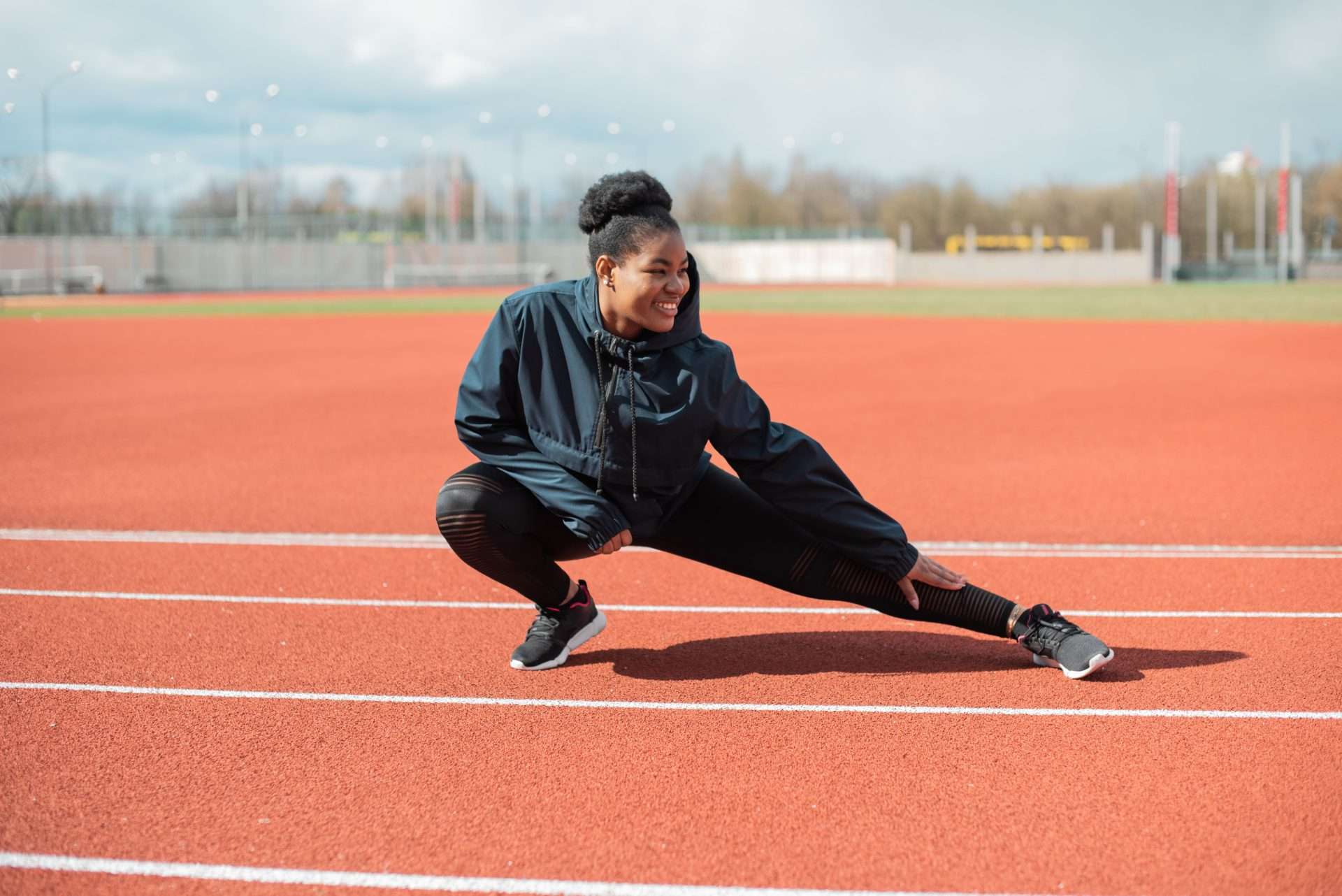
In good sports injury rehabilitation, your provider adjusts marathon training rather than defaulting to total rest. You should know how much to run, how to use pain as a guide and how mileage comes back, so your return to running holds up through long runs and race day.
Training load details your plan should spell out
- How many days a week you run during recovery.
- The longest run allowed in the current week.
- Which cross-training, like cycling or swimming, fits your recovery.
- How you adjust the next session based on pain during and after a run.
- When we retest strength and single-leg control.
- Whether your race date still fits, or a later race makes more sense.
- Which warning signs mean you stop and call us.
With some injuries, you can keep running within limits. In a randomized trial of 38 patients with Achilles tendinopathy on a calf-loading exercise program, no negative effects could be demonstrated from continued running and jumping guided by a pain-monitoring model. That doesn’t hold for every injury, so your provider should spell out your limits.
Checkpoints in a graded return to running
- Fast walking and stairs feel normal before your first test jog.
- First runs stay short, easy and flat, sometimes broken up with walking.
- Total running time grows before pace or hill work does.
- Soreness that fades overnight means you’re ready for the next step.
- With lingering or worsening pain, you drop back one stage.
- The weekly long run returns once shorter runs feel routine.
- Intervals and race-pace work come back at the end.
Why a single mileage rule isn’t enough
- Researchers in one randomized trial followed 532 novice runners preparing for a 4-mile event.
- Runners on a graded 13-week program based on the popular 10% rule had 20.8% versus 20.3% injury incidence against a standard 8-week program.
- The authors found no preventive effect from the graded program.
- Researchers in a separate retrospective study surveyed 662 marathon finishers, and 68 self-reported an injury after the race.
- After adjusting for previous injury and past marathons, runners averaging below 30 km a week had a relative injury risk of 2.02 compared with runners averaging 30 to 60 km.
- The authors wrote that runners may be advised to run a minimum of 30 km a week before a marathon.
Related: Can Lower Back Pain in Vienna Keep Returning?
If you’re ready to address marathon training injuries in Vienna, our team at RxWellness is here to help. Call (703) 991-7067 to schedule your consultation today.
Which Home Exercises Help Marathon Runners Recover and Keep Running for Years?
Home strength work is a core part of sports injury rehabilitation for marathon runners in Vienna. When you train your calves, hips, thighs and trunk, you build tolerance for more load, and you can keep the same routine long after this race.
Home strength exercises runners can do between visits
- Calf raises on a step, progressing to single-leg raises.
- Bent-knee calf raises for the deeper soleus muscle.
- Split squats or step-ups for the thighs and hips.
- Side-lying leg lifts or band walks for the outer hip.
- Single-leg balance holds, progressing to a softer surface.
- Bridges for the glutes and hamstrings.
- Side planks for trunk control.
Researchers have reason to favor strength work. Researchers who pooled randomized trials across many sports found that strength training for injury prevention reduced sports injuries to less than 1/3, while stretching had no beneficial effect.
Habits for healthy running in the decades ahead
Relief from pain is only the first goal. Running is also associated with a longer life: in an observational study of 55,137 adults, runners had 30% and 45% lower adjusted risks of all-cause and cardiovascular mortality than nonrunners. The CDC says adults need at least 2 days of muscle-strengthening activity each week.
- A strength routine that stays in your week after race day.
- An easier week built into each training block.
- Cross-training days that rest your legs from impact.
- Shoes replaced before the cushioning breaks down.
- Sleep and fueling that match your mileage.
- A recheck with our team before your next big training block.
- Regular rest days between hard sessions.
Related: Can ACL Injury Recovery in Vienna Improve Knee Stability?
Why Choose RxWellness Vienna for Marathon Training Injury Care?
At RxWellness Spine & Health Vienna, our chiropractors read your training log as closely as your exam results. We factor in mileage, race date and past injuries, then check calf and hip strength again before your long runs grow.
- RxWellness is listed at No. 1,230 on the 2026 Inc. 5000, with 283% revenue growth across three years.
- Inc. added a regional honor in 2025, listing RxWellness No. 45 among Mid-Atlantic Regionals honorees.
- On the 2024 Inc. 5000, RxWellness landed 118th among DMV/WV honorees.
- After a three-decade career building an integrated healthcare network, our CEO and co-founder received Life University’s 2025 Distinguished Alumni Award.
- Through our co-founder and COO, RxWellness is among the 50 high-growth women-led companies on the Women Presidents Organization’s Women2Watch 2025 list.
- Add up every RxWellness clinic and you’ll find more than 150,000 patients in our care history.
- Our running list of five-star patient reviews now goes beyond 7,500.
We don’t judge a sore Achilles by a ranking, so we use your retest results to pace each long run.
The RxWellness Three-Phase Care Model
We tie a runner’s care to three phases and rewrite the plan as symptoms ease and race goals shift.
- In Relief Care, you cut your mileage for a short time and come in more often while we settle an irritated heel, shin, knee or hip.
- During Corrective Care, you rebuild calf, hip and trunk strength with home exercises while your runs lengthen step by step.
- Once you’re back to full training, you carry strength work into every week during Wellness Care, and we reassess before your next marathon block starts.
We draw each step of your marathon recovery plan from the Vienna treatments described next.
Related: Best Chiropractor Near Me in Vienna, VA: Solutions for Chronic Pain
Which Vienna Treatments Help Marathon Runners Return to Running?
For marathon runners in Vienna, our team pairs hands-on care with the home program above. Chiropractic care, Active Release Technique, massage therapy and dry needling can help with stiff joints and tight muscles, while Kinesio Taping and Foot Levelers orthotics are options as your return to running builds.
Hands-on care for marathon runners in Vienna
- Our team uses chiropractic care at RxWellness Spine & Health Vienna to improve motion in stiff spine, hip and foot joints.
- We use Active Release Technique on calf, hamstring and hip muscles that feel tight on your runs.
- Our team uses massage therapy to ease muscle tension during heavy training weeks.
- We may add dry needling for stubborn trigger points in the calves, glutes or thighs.
- We may include cupping treatments for muscle tightness after long runs.
- We apply Kinesio Taping around the knee, ankle or arch as you ease back into running.
- We fit Foot Levelers custom orthotics when we find during your exam that your feet need extra support.
Recovery support beyond hands-on care
- We may recommend spinal decompression therapy when back pain or leg symptoms that start in the spine flare after long runs.
- If a tendon or joint problem lingers despite exercise-based care, our team may talk with you about regenerative medicine.
- Runners with recurring injuries can ask about Inflammation Management, where we check blood work and allergen test results for possible causes of chronic inflammation.
- We coordinate with your physician when imaging or a referral is part of your plan.
- We review your home exercises at each visit and progress them as you get stronger.
- We adjust your visit spacing as your long runs return and symptoms settle.
- We note which running injuries you’ve had before, so we can plan your next training block around them.
Related: How Does a Dry Needling Chiropractor Near Me in Vienna Relieve Pain?
Ready to take the next step toward recovery? Schedule your consultation online to visit RxWellness Vienna today and begin your path to relief.
FAQs
Can I still run my marathon if I get hurt during training?
Sometimes, but it depends on the injury and how many weeks you have left. With a mild muscle or tendon problem that settles with adjusted training, you may still race. With a suspected stress fracture, see a physician promptly, since racing usually isn’t an option. We’ll talk through your options, including whether a later race is the smarter goal.
Is cross-training a good substitute while a running injury heals?
Yes, for many runners, cycling, swimming, an elliptical or pool running can help you keep aerobic fitness while the injured area settles. The best choice depends on which movement your injury tolerates without pain. We help you pick an option that loads the injured tissue less than running does.
What should I bring to my first visit as a marathon runner?
Marathon runners in Vienna get the most from a first visit by bringing a training log or running app data, the shoes they train in and any imaging reports. Notes on when the pain started, what makes it worse and your race date help too. With those details, our team can connect your symptoms to your training and make your plan more specific.
How do I know I’m ready for my first run back?
You’re usually ready for a short test run once everyday walking, stairs and single-leg balance feel normal and pain-free. Our team also checks strength and tenderness before that first jog. If a physician is managing a bone injury, their go-ahead comes first.
Can I get a massage the week of my marathon?
Many runners choose a lighter massage in race week. It’s smart to avoid a deep or brand-new treatment right before the race, because your muscles may feel sore after deep work. We’ll match the pressure and timing to your race date.
How can I tell muscle soreness from an injury after a long run?
General muscle soreness usually affects both legs, feels worst after hard efforts and eases as you keep moving. Pain on one side, in one small spot, or sharper as you run is more likely an injury. If you’re limping or the pain lingers, have it examined before your next long run.
Will my running injury come back after I recover?
It can, which is why the last part of your plan matters as much as the first. Rebuilding strength, raising mileage gradually and keeping a home routine after race day can all help lower the odds. We recheck you before a new training block, so small problems get attention early.
Key Takeaways
- Marathon runners in Vienna should look for an assessment that reviews mileage, race date and injury history, not just the sore spot.
- In one systematic review, previous injury in the last 12 months was the main risk factor for running injuries.
- Achilles tendinopathy, shin pain, runner’s knee, plantar fasciitis and ankle sprains rank among the most common injuries in runners.
- Marathon runners in Vienna with a suspected stress fracture need a physician first, since these fine breaks often don’t show on X-rays.
- In a graded return to running, you add total running time before pace and use your pain response to set each step.
- Home strength work for the calves, hips and trunk is a core part of sports injury rehabilitation for marathon runners.
- Our team guides runners through Relief Care, Corrective Care and Wellness Care, with years of healthy running as the goal.
Find Lasting Relief From Marathon Training Injuries
So, what should marathon runners in Vienna look for in sports injury rehabilitation? Look for a full review of your training load and injury history, a graded return to running with defined checkpoints, home strength work and fast communication with a physician when imaging is needed. If you have a red flag like a suspected stress fracture, see that physician first.
Our Vienna team treats pain relief as the opening step, not the finish line. The bigger aim is keeping you strong enough to train, race and keep moving well into later life, long after this marathon ends.
RxWellness Spine & Health Vienna Online Reservations
360 Maple Ave W, Vienna, VA 22180
Serving Vienna and nearby communities, including Dunn Loring, Merrifield, Fairfax, Falls Church, and Mantua, we help marathon runners recover from training injuries with conservative care.